

How to choose a helmet for toddler
Choose a toddler helmet by measuring head circumference, matching that measurement to the helmet’s stated range, and checking the fit on the child.
Measure the head before comparing helmets
Use a flexible tape around the widest part of the child’s head, keeping it level above the eyebrows and around the back of the skull. Record the result in both centimetres and inches if possible, then repeat the measurement to catch a loose or angled reading.
Do not choose by the word toddler, the child’s age, clothing size or bicycle wheel size. The relevant number is the child’s current head circumference. If that number does not fall within a listed helmet range, that size is not an appropriate match to try.
Compare the measurement with the size range
Start with the manufacturer’s stated circumference range. A child whose measurement falls inside a range may try that size, but the label is only the first check. Head shapes differ, and adjustment systems cannot correct a shell that is fundamentally the wrong shape or size.
- Below the smallest listed measurement: find a genuinely smaller helmet; do not rely on extra padding to make an oversized helmet fit.
- Inside one listed range: try that size and complete the position and strap checks.
- Inside two overlapping ranges: try both when possible. Choose according to secure, level fit and usable adjustment, not the larger size for future growth.
- Above the largest listed measurement: compare helmets with a larger stated range.
Never buy an oversized helmet simply to extend its useful life. A helmet must fit properly now, sit level, and have its straps used according to the manufacturer’s instructions.
Check the helmet on the child
Place the helmet level on the head rather than tipped back or pushed low over the eyes. Adjust it exactly as its manual directs. The helmet should feel secure around the head without creating painful pressure points, and it should not shift freely when the child moves their head.
Check that the straps lie flat rather than twisted and that the buckle and strap arrangement follow the product instructions. Ask the child about pinching or concentrated pressure, then remove the helmet and look for signs of an uncomfortable fit. If a correct adjustment still leaves the helmet unstable or painful, try another size or shape.
Repeat the complete fit check after hairstyle changes, a growth spurt, or any adjustment. A previous fit is not proof of a current fit.
How the two XBikes options compare
The supplied catalog options help by providing exact circumference ranges to compare with the measurement. Both start at 52 cm, so neither is relevant for a child measuring below 52 cm. Their titles and colours do not establish toddler fit.
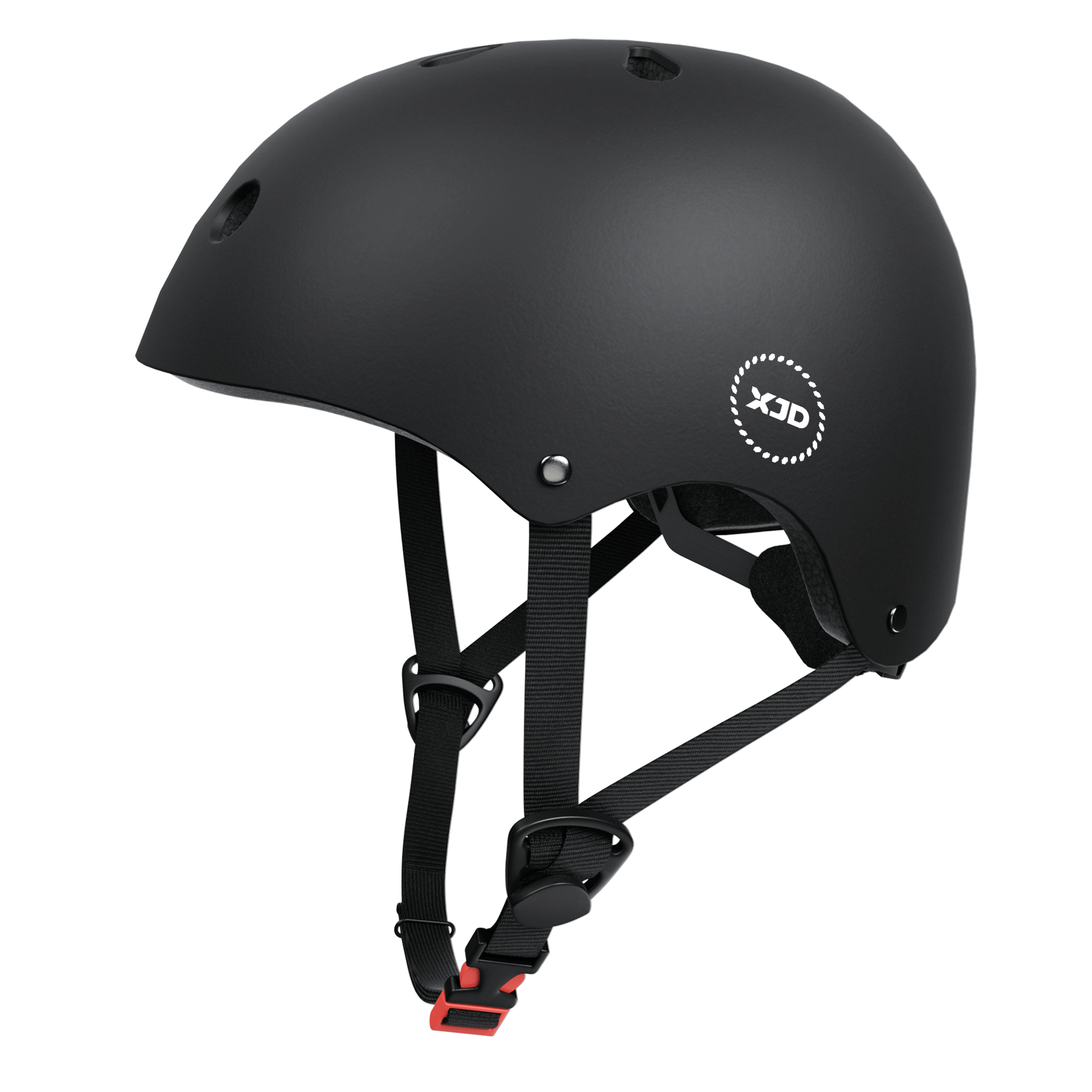 7-in-1 Kids Helmet & Protective Gear Set from XJD – Black or Blue
Relevant only when the toddler’s measured head circumference fits the supplied M range of 52–56 cm or L range of 55–58 cm; available in Black or Blue as a seven-piece gear set.
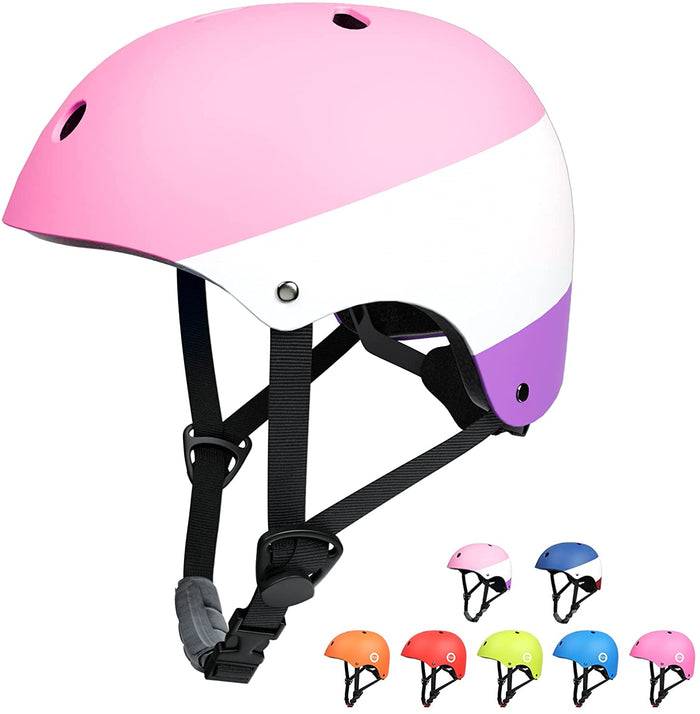 XJD Kids Bike Helmet for Boys & Girls, B White / Pink White
A helmet comparison option for measured head circumferences of 52–56 cm in M or 55–58 cm in L, with B White and Pink White catalog choices.
7-in-1 Kids Helmet & Protective Gear Set from XJD – Black or Blue is offered in Black or Blue. Its M label covers 20.47–22.05 inches / 52–56 cm, while its L label covers 21.65–22.83 inches / 55–58 cm. The catalog identifies it as a seven-piece helmet and protective-gear set, but supplies no details about the other pieces’ sizing; consult the exact product information before assuming they fit.
XJD Kids Bike Helmet for Boys & Girls, B White / Pink White is offered in B White or Pink White. It uses the same listed helmet ranges: M at 20.47–22.05 inches / 52–56 cm and L at 21.65–22.83 inches / 55–58 cm.
For a measurement from 55 through 56 cm, the catalog ranges overlap. That does not make M and L equivalent: the child should try the sizes and keep only the one that can be adjusted to sit level and remain secure without painful pressure. No supplied fact establishes differences in weight, material, certification or other performance characteristics, so colour and the presence of the gear set are the only additional catalog distinctions available here.
Do not use bicycle size as helmet evidence
A bicycle fit and a helmet fit answer different questions. XBikes lists a 12-inch bicycle as a starting point for ages 3–4 and rider heights of 34–40 inches / 86–102 cm, but that does not predict head circumference or helmet size. Age is never a substitute for either measurement.
If selecting a bicycle as well, have the child try it and prioritize measured height, inseam, stand-over clearance, reach, brake control and current confidence. Do not buy an oversized bicycle merely for growth. Keep that assessment separate from the helmet decision.
What to do next
- Measure the child’s head twice and record the circumference.
- Discard any option whose stated range excludes that measurement.
- Have the child try each remaining size, checking level position, stability, comfort and strap routing.
- Read and follow the exact helmet manual for adjustment, use, care and replacement instructions.
- If fit remains uncertain, use a qualified bicycle mechanic or knowledgeable helmet fitter.
For this toddler, choose only a helmet whose printed range contains today’s head measurement and whose on-head check confirms a level, secure and comfortable fit.
Bikes for your next adventure
-

Kids Bike Helmet by XJD for Boys & Girls – Black, Blue, Green, Pink, Purple
The XJD Kids Bike Helmet covers a wide 2-to-8-year age range thanks to two head-…$59.99
-
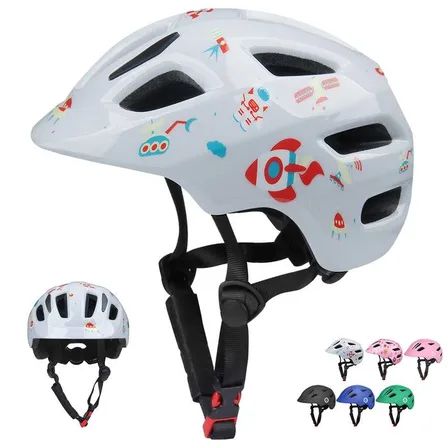
White Astronaut Bike Helmet for Kids by XJD – Toddler to Youth Sizes
4 reviews
The XJD White Astronaut kids' bike helmet is made for toddlers through younger e…$59.99
-
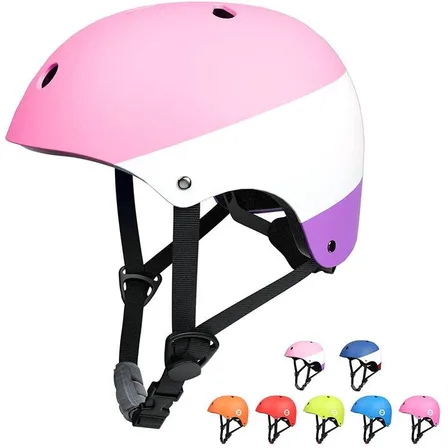
XJD Kids Bike Helmet for Boys & Girls, B White / Pink White
The XJD Kids Bike Helmet covers a wide age range — suggested for ages 2 through …$59.99