

How to measure toddler head for bike helmet
Measure your toddler’s head circumference at its widest point, then compare that number in centimetres with the helmet’s stated size range. Do not choose by age alone.
What you need to measure
Use a flexible, non-stretch measuring tape. If you do not have one, wrap a non-stretch cord around the head, mark where it overlaps, and measure the cord against a ruler.
Measure around the widest part of the head: pass the tape just above the eyebrows, above the ears, and around the fullest area at the back. Keep it level rather than allowing it to slope upward or downward. The tape should rest against the hair without squeezing the head.
Take the measurement three times and record the largest consistent result in centimetres. If thick hair, braids, clips or a hat change the reading, remove bulky items and measure with the hairstyle the child will normally wear while riding. A helmet should not be fitted over a thick hat unless its manufacturer specifically permits that use.
How to compare the number with a helmet size
Find the circumference range printed for the exact helmet size or SKU. Your measurement must fall inside that range. A size marked 52–56 cm, for example, is not suitable when the measured circumference is below 52 cm or above 56 cm.
Being inside the stated range makes a helmet a candidate, not a confirmed fit. If the measurement is close to an endpoint, try the helmet on carefully. Do not buy an oversized helmet merely to leave growing room: extra adjustment cannot make every shell size fit every head shape.
When two sizes overlap, such as 52–56 cm and 55–58 cm, do not decide from the number alone. Compare both sizes if possible and keep only the one that can sit level, remain stable and follow the adjustment and strap directions in its exact product manual.
Check the fit on your toddler
- Place it level. The helmet should cover the forehead rather than tilt back, and it should not sit so low that it obstructs vision.
- Use the fitted adjustment system. Follow the manufacturer’s instructions; do not add homemade padding or modify the helmet.
- Set the straps as directed. Fasten and adjust them according to the manual. The helmet should remain level when the child moves their head.
- Check comfort and stability. Reject pressure points, obvious gaps, persistent slipping or a fit that requires overtightening.
A toddler’s cooperation matters during this check. If the helmet cannot be positioned and secured correctly while the child is calm, do not assume it will work during a ride. Recheck fit before each use and repeat the circumference measurement as the child grows.
How the supplied XBikes options compare
Both supplied catalog options begin at 52 cm and use the same two labeled circumference ranges. They are relevant only if your toddler’s measured head falls within one of those ranges and the individual try-on confirms a proper fit. Their listed differences are product format and color choices, not evidence that one will fit a particular head shape better.
| Catalog option | Supplied size labels | Listed colors |
|---|---|---|
| 7-in-1 Kids Helmet & Protective Gear Set from XJD – Black or Blue | M: 20.47"–22.05" / 52–56 cm; L: 21.65"–22.83" / 55–58 cm | Black or Blue |
| XJD Kids Bike Helmet for Boys & Girls, B White / Pink White | M: 20.47"–22.05" / 52–56 cm; L: 21.65"–22.83" / 55–58 cm | B White or Pink White |
These particular catalog options help answer the sizing question because their SKU labels provide exact circumference ranges to compare with your measurement. The first is cataloged as a helmet and protective gear set; the second is cataloged as a kids bike helmet. No further construction, certification or fit differences are supplied.
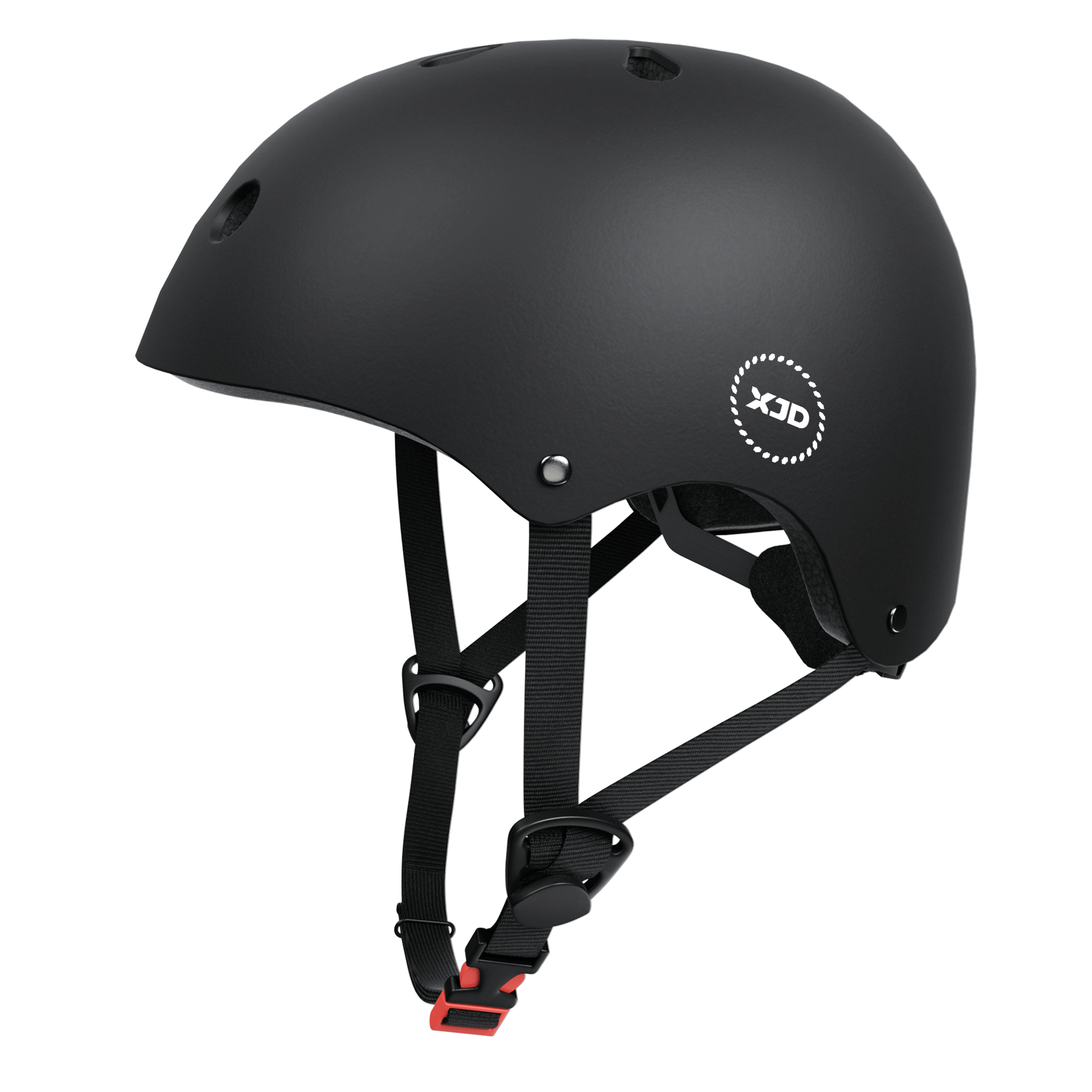 7-in-1 Kids Helmet & Protective Gear Set from XJD – Black or Blue
Relevant when the measured head circumference falls within its supplied M 52–56 cm or L 55–58 cm range and a try-on confirms fit; offered in Black or Blue.
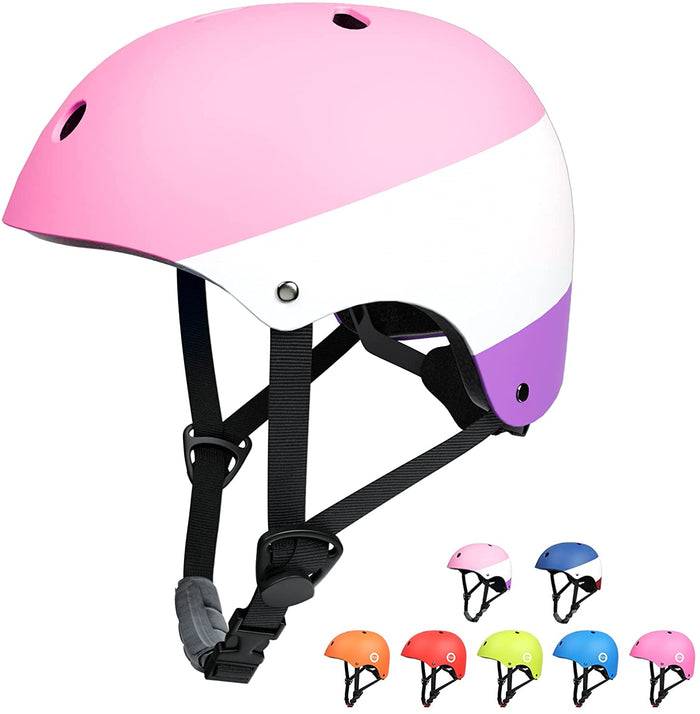 XJD Kids Bike Helmet for Boys & Girls, B White / Pink White
Provides M 52–56 cm and L 55–58 cm comparison ranges in B White or Pink White; it is not relevant if the toddler’s measurement falls outside both ranges.
When these products are not relevant
If the measured circumference is under 52 cm or over 58 cm, neither supplied product has a listed size that contains the measurement. If the head measures within a range but the helmet will not sit level and remain stable when adjusted according to its manual, that option is also not suitable.
Do not substitute bicycle wheel-size guidance for helmet sizing. Rider height, inseam, reach, brake control and confidence help assess a bicycle, but they do not reveal head circumference. Likewise, a child’s age cannot confirm helmet fit.
Your next decision
Write down the largest repeatable head measurement, compare it with 52–56 cm and 55–58 cm, and arrange a try-on only for a range that contains it. If neither range contains the number—or neither helmet passes the level, stable fit check—choose a different helmet size and follow that product’s manual.
Bikes for your next adventure
-

Kids Bike Helmet by XJD for Boys & Girls – Black, Blue, Green, Pink, Purple
The XJD Kids Bike Helmet covers a wide 2-to-8-year age range thanks to two head-…$59.99
-
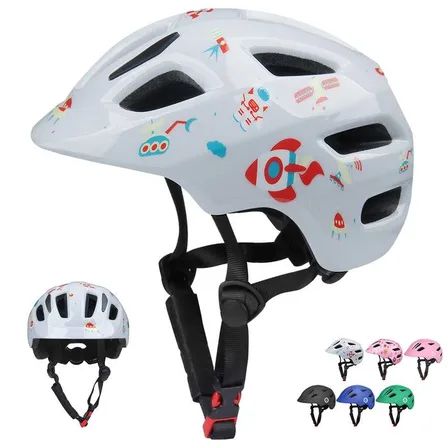
White Astronaut Bike Helmet for Kids by XJD – Toddler to Youth Sizes
4 reviews
The XJD White Astronaut kids' bike helmet is made for toddlers through younger e…$59.99
-
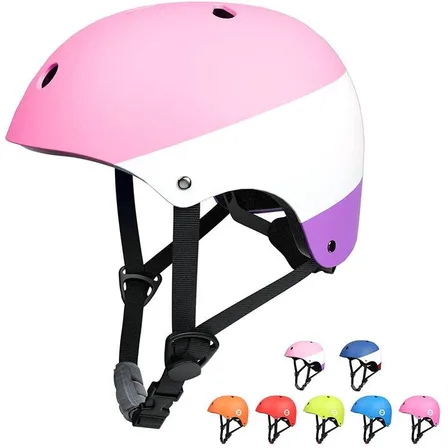
XJD Kids Bike Helmet for Boys & Girls, B White / Pink White
The XJD Kids Bike Helmet covers a wide age range — suggested for ages 2 through …$59.99