

What size bike for 4'6 boy
For a 4'6" boy—54 inches or about 137 cm—start by comparing both 20-inch and 24-inch bikes, then choose only after checking his inseam, reach, stand-over clearance, brake control and confidence on the actual bike.
Why 54 inches falls between two useful choices
XBikes lists a 20-inch bike as a starting point for riders 48–60 inches tall and a 24-inch bike for riders 54–64 inches tall. At exactly 54 inches, he is within both ranges: near the middle of the 20-inch range and at the lower edge of the 24-inch range.
That overlap does not make the sizes equivalent. A 20-inch model may feel easier to manage, especially for a cautious or less experienced rider. A 24-inch model may fit if its frame shape, saddle adjustment, reach and controls suit his proportions. Age alone should not decide between them.
Measure him before comparing bikes
- Confirm standing height: Have him stand barefoot against a wall, looking straight ahead, and measure from the floor to the top of his head. If he is meaningfully below or above 54 inches, compare that measured height with the XBikes ranges again.
- Measure inseam: With shoes off and feet slightly apart, place a firm book upward between his legs to represent the saddle area. Measure from the floor to the top edge of the book.
- Note riding shoes: Use the shoes he normally rides in during the hands-on fit check, because they affect how securely he reaches the ground and pedals.
Inseam is essential for checking the individual bicycle, but wheel diameter alone does not reveal stand-over height or the lowest usable saddle position. Confirm those details on the exact bike rather than calculating a fit from wheel size.
What to check on each actual bike
Have him try both candidate sizes where possible. The American Academy of Pediatrics advises against buying an oversized bicycle merely for future growth. He should be able to mount, start, stop and turn without struggling against the bike.
- Stand-over: When he straddles the frame with both feet on the ground, the frame should not press into him. Frame shapes differ, so test the exact model.
- Saddle position: Set it according to the product manual. Check that he can start and stop confidently without leaning excessively or losing balance.
- Reach: His hands should meet the handlebar naturally. He should not have to stretch, lock his elbows or slide forward to steer.
- Brake control: He must comfortably reach and operate the fitted controls while maintaining his grip and steering position.
- Confidence: Ask him to demonstrate a controlled start, straight ride, turn and stop in a suitable traffic-free area.
If either size compromises stand-over clearance, steering, stopping or control, reject that particular bike even though the height chart includes him.
How the supplied XBikes models help
The catalog provides one 20-inch BMX comparison and two 24-inch beach-cruiser comparisons, matching the two starting sizes that meet at 54 inches. They help narrow the hands-on comparison, but their categories and wheel sizes do not establish individual fit.
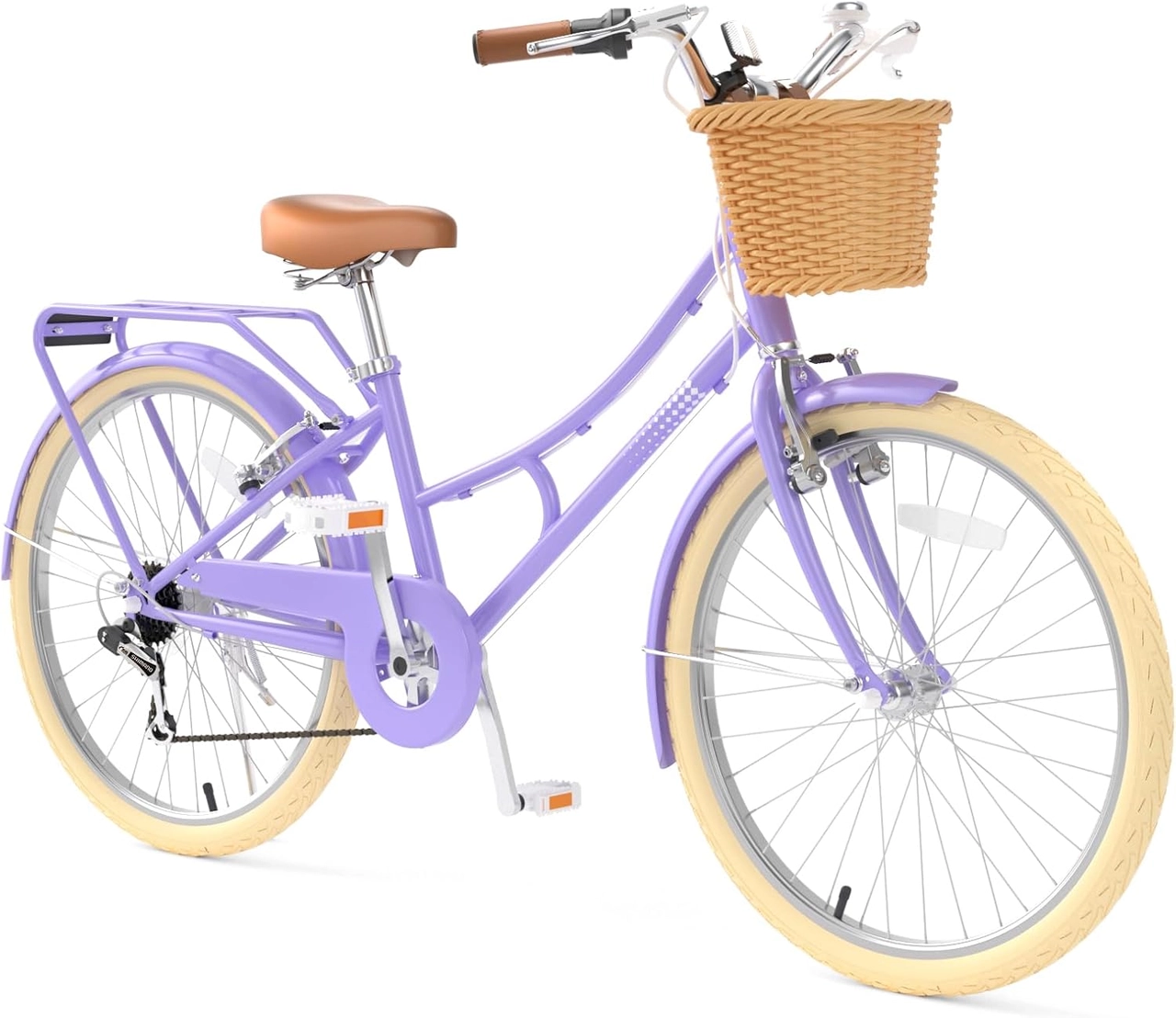 24-Inch Purple XJD Beach Cruiser Bike with U-Brake
This 24-inch beach cruiser is a relevant comparison because 54 inches is the lower boundary of XBikes’ 24-inch rider-height range. Confirm stand-over, reach and control on the actual bike.
 Blue XJD Freestyle BMX Bike, 20-Inch – No Pegs
This 20-inch kids’ BMX bike falls within XBikes’ 48–60-inch starting range for a 54-inch rider. Its exact frame and controls still require an individual fit check.
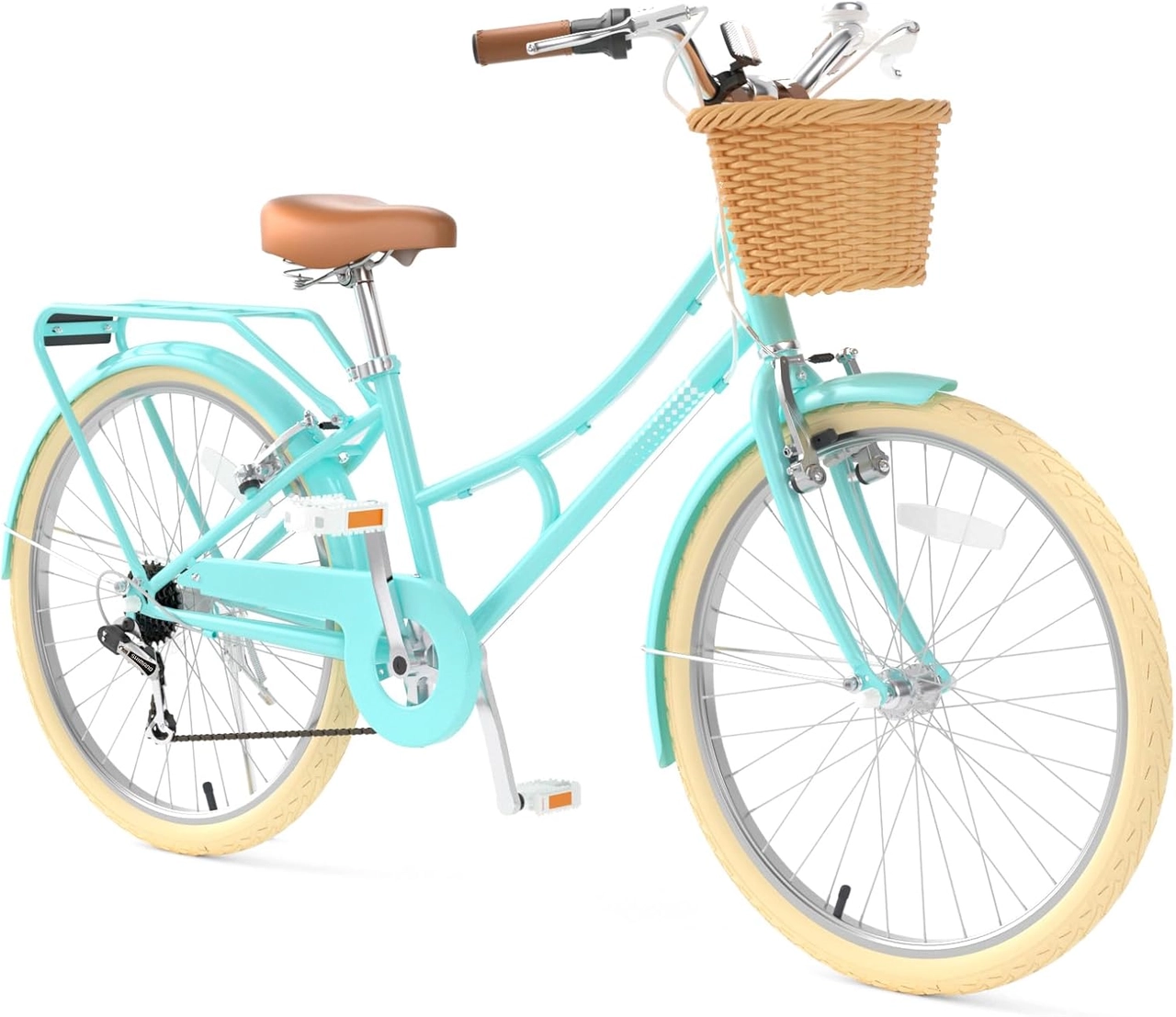 XJD 24-Inch Green Beach Cruiser Bike with U-Brake
This 24-inch beach cruiser is a comparison option at the lower edge of the 24-inch height range. Its listed 26-inch SKU is not a substitute for a 54-inch rider.
The Blue XJD Freestyle BMX Bike, 20-Inch – No Pegs represents the 20-inch starting point. Because 54 inches sits within the supplied 48–60-inch range, it is relevant for a fit check, but the title and category do not prove that its frame dimensions or controls suit this rider.
The 24-Inch Purple XJD Beach Cruiser Bike with U-Brake and XJD 24-Inch Green Beach Cruiser Bike with U-Brake represent the 24-inch starting point. At 54 inches, the boy is exactly at the lower boundary of the supplied 54–64-inch range, so neither should be chosen without especially careful checks of stand-over, reach and brake operation.
The green cruiser also has catalog SKU labels for Green / 24 Inch, Pink / 24 Inch and Pink / 26 Inch. The 26-inch option is not appropriate merely because it appears on the same listing: XBikes starts 26-inch sizing above 60 inches, and a 54-inch rider is below that point.
Make the final 20-inch versus 24-inch decision
Compare the two sizes with the saddle adjusted only within the exact product manual’s directions. Favor the bike on which he demonstrates relaxed reach, reliable brake control and confident starts, turns and stops. If the 24-inch bicycle feels awkward or oversized, do not buy it for growth; choose a correctly fitting 20-inch model or keep comparing exact frames. If both fit well, use his present control and confidence—not the promise of longer future use—as the deciding evidence.
For assembly, adjustment, maintenance, load limits, compatibility and torque values not supplied here, follow the exact bicycle manual or consult a qualified bicycle mechanic. Before riding, provide a properly fitting bicycle helmet that sits level and has its straps adjusted according to the helmet manufacturer’s instructions.
For this 4'6" rider, the next action is simple: measure his height and inseam, test one 20-inch and one 24-inch bike, and buy only the size on which he can stand over, reach, brake and ride with control today.
Bikes for your next adventure
-

Blue XJD Kids Bike Helmet for Boys & Girls
The Blue XJD Kids Bike Helmet is a lightweight, adjustable multi-sport helmet fo…$59.99
$99 -

Light Purple XJD Toddler Bike Helmet, Adjustable, Size XS (46–51 cm)
This Light Purple XJD toddler bike helmet is made for the smallest riders — the …$20.39
-

Black XJD Toddler Bike Helmet, Adjustable – Kids' Protective Helmet
The XJD Toddler Bike Helmet in black is an adjustable protective helmet for kids…$20.39