

What size bike for 8-10 year old boy
Most 8–10-year-old boys start with a 20-inch bike if they are 48–60 inches (122–152 cm) tall. Measure him and confirm the fit before buying.
The short answer by height
Age points you toward a wheel size, but height and real-world control decide whether the bike fits. Under the XBikes starting points, a 20-inch bike covers ages 7–12 and heights of 48–60 inches (122–152 cm), so it is the usual starting point for an 8-, 9-, or 10-year-old boy.
A shorter rider may still need an 18-inch bike, while a taller 10-year-old may be ready to try a 24-inch model. Do not move up merely to leave room for growth: an oversized bicycle can make starting, stopping, steering and reaching the brakes harder.
| Wheel size | XBikes starting range | Relevance at ages 8–10 |
|---|---|---|
| 18 Inch | Ages 5–9; 43–52 in / 109–132 cm | Worth checking for a shorter or less-confident 8- or 9-year-old. |
| 20 Inch | Ages 7–12; 48–60 in / 122–152 cm | The main starting point for this age group. |
| 24 Inch | Ages 10–14; 54–64 in / 137–163 cm | A comparison for a sufficiently tall 10-year-old, subject to a fit check. |
Measure before comparing bikes
Measure the child’s height without shoes, standing straight against a wall. Then measure inseam from the floor to the crotch while he stands naturally with feet slightly apart. Record both measurements in inches or centimetres.
Use measured height to select the first wheel size to try. Inseam is then useful when checking clearance over the bicycle itself, because wheel size alone does not reveal the frame’s exact shape or stand-over height.
If his height falls where two ranges overlap, do not automatically choose the larger wheels. Compare both bicycles in person when possible and favor the one he can mount, balance, steer and stop with calm control.
What to check during the test ride
Have the child try the actual bicycle rather than relying only on an age label. The American Academy of Pediatrics’ fit guidance emphasizes stand-over clearance, control and brake reach, and advises against buying an oversized bike just for future growth.
- Stand-over: With the child straddling the bike, confirm that he can stand securely rather than being forced onto tiptoes or against the frame.
- Starting and stopping: He should be able to set off, stop and put a foot down without panic or a pronounced lean.
- Reach: He should hold the handlebars without stretching, locking his elbows or losing a comfortable riding posture.
- Brake control: He must be able to reach and operate the brake controls reliably with his hands in a normal position.
- Confidence: Watch a slow turn and a controlled straight-line stop. If the bike makes familiar skills suddenly awkward, reconsider the size.
When the available 24-inch bicycle is relevant
The supplied catalog includes the 24-Inch Purple XJD Beach Cruiser Bike with U-Brake. Because it is a 24-inch Beach Cruiser Bike, it can help a parent compare the next size up for a 10-year-old who measures within the 24-inch starting range of 54–64 inches (137–163 cm).
This catalog option is a nearest-size comparison point for the broader 8–10 question, not a substitute for the more typical 20-inch starting size. It is not supported by the supplied fit standard for an 8- or 9-year-old based on age alone, and even a tall 10-year-old must pass the individual fit and control checks.
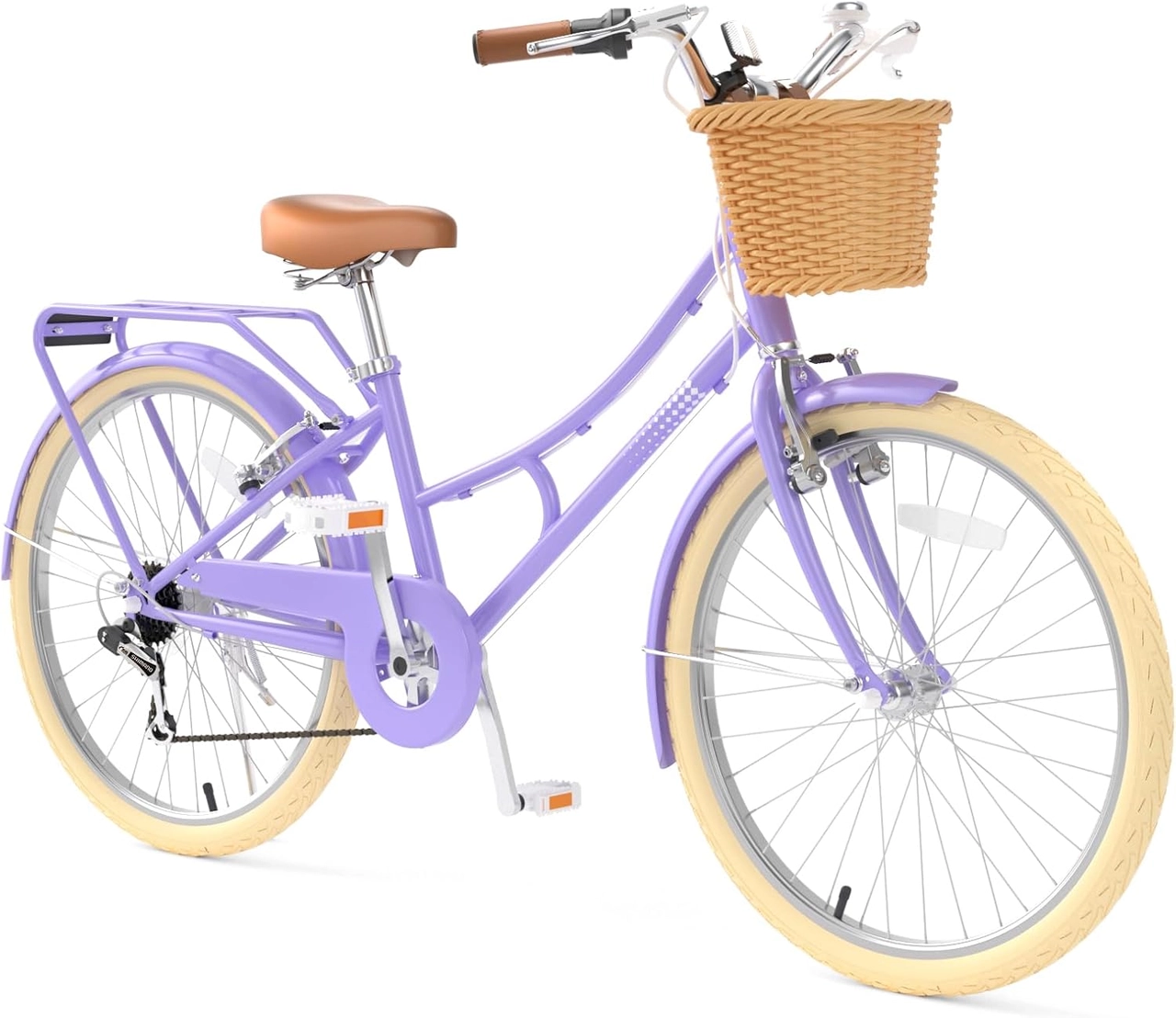
The “U-Brake” wording is part of the exact catalog title, but the supplied facts do not provide brake dimensions, adjustment details or suitability for a particular hand size. Confirm actual brake reach on the bicycle. Follow the exact product manual or ask a qualified bicycle mechanic about assembly, adjustment, compatibility, load limits, maintenance and torque.
Make the final size decision
- Measure height and inseam.
- Start with 20 inches when height is 48–60 inches (122–152 cm).
- Compare an 18-inch bike for a shorter rider or a 24-inch bike only for a 10-year-old within the relevant height range.
- Reject any bicycle that compromises stand-over clearance, reach, braking, steering or confidence.
Complete the setup with a properly fitting bicycle helmet. Following U.S. Consumer Product Safety Commission guidance, position it level and adjust its straps according to the helmet manufacturer’s instructions.
For an 8–10-year-old boy, choose the wheel size he controls comfortably today: usually 20 inches, with 18 or 24 inches considered only when his measurements and hands-on fit check support that change.
Bikes for your next adventure
-

Light Purple XJD Toddler Bike Helmet, Adjustable, Size XS (46–51 cm)
This Light Purple XJD toddler bike helmet is made for the smallest riders — the …$20.39
-

Black XJD Toddler Bike Helmet, Adjustable – Kids' Protective Helmet
The XJD Toddler Bike Helmet in black is an adjustable protective helmet for kids…$20.39
-

XJD Girls Bike for Kids Ages 3-8, 12/14/16 Inch with Training Wheels – Purple
The XJD Girls Bike in Purple is a training-wheel bicycle for kids ages 3 to 8, f…$149
$169