

What size do youth boys bikes start at
Youth boys’ bikes start at 12-inch wheels in the supplied XBikes sizing range. That size is a starting point for riders 34–40 in (86–102 cm) tall, usually ages 3–4, but the child must pass an individual fit check.
Start with a 12-inch bike, then confirm the fit
“12-inch” describes the wheel size, not the child’s height or the bicycle’s frame size. It is the smallest wheel size in the XBikes starting points and is the first size to consider for a young boy who measures 34–40 in (86–102 cm).
Do not choose from age alone. Ages 3–4 are only a starting reference, and children of the same age can differ substantially in height, leg length, reach and confidence. Measure the rider before comparing sizes, then have him try the actual bicycle.
What to measure before choosing
- Overall height: Have the child stand without shoes against a wall, looking straight ahead. Measure from the floor to the top of his head.
- Inseam: With feet slightly apart, measure from the floor to the crotch. Compare this measurement with the bicycle’s stand-over clearance and saddle adjustment information in the exact product manual.
- Reach: On the bicycle, check that he can hold the handlebar without stretching, locking his elbows or leaning excessively.
- Brake control: Confirm that his hands can comfortably reach and operate the bicycle’s brakes. Consult the manual or a qualified bicycle mechanic for adjustment procedures.
- Current confidence: Consider whether he can start, stop, steer and remain in control. A less-confident rider should not be moved up merely because a larger bicycle leaves more growing room.
Compare his height with the wheel-size range
| Wheel size | Rider height | Age starting point |
|---|---|---|
| 12 Inch | 34–40 in / 86–102 cm | 3–4 |
| 14 Inch | 37–45 in / 94–114 cm | 3–6 |
| 16 Inch | 40–48 in / 102–122 cm | 4–7 |
| 18 Inch | 43–52 in / 109–132 cm | 5–9 |
| 20 Inch | 48–60 in / 122–152 cm | 7–12 |
| 24 Inch | 54–64 in / 137–163 cm | 10–14 |
| 26 Inch | Over 60 in / 153 cm | Youth and adults |
Overlapping height ranges are intentional starting points, not proof that two sizes fit equally well. If the child falls in an overlap, compare both sizes in person. Favor the bicycle on which he has suitable stand-over clearance, a comfortable reach, effective brake control and confident handling.
Why the supplied bikes are relevant
All three supplied catalog options are available with 12 Inch, 14 Inch and 16 Inch labels, so they let you compare the starting 12-inch size with the next two wheel sizes. They are relevant only when the rider’s measurements and hands-on fit support one of those sizes.
 XJD Kids' Training Wheel Bike for Boys & Girls, 12/14/16 Inch – White
Available in 12 Inch, 14 Inch and 16 Inch labels, this Training Wheel Bike includes the 12-inch size that starts the supplied XBikes range. Confirm height, inseam, reach and control on the actual bicycle.
 XJD Boys & Girls BMX Bike with Training Wheels, 12/14/16" – Blue
This Kids’ BMX Bike with training wheels is available in 12 Inch, 14 Inch and 16 Inch labels. Its 12-inch option is relevant to the starting size, subject to an individual fit check.
 Black XJD Kids Bike for Boys – 12, 14 & 16 Inch Sizes
This boys’ Training Wheel Bike is offered in 12 Inch, 14 Inch and 16 Inch labels. The 12-inch option matches the smallest supplied starting point, but the catalog wording is not fit evidence.
XJD Kids' Training Wheel Bike for Boys & Girls, 12/14/16 Inch – White is categorized as a Training Wheel Bike and is offered in 12 Inch, 14 Inch and 16 Inch labels. Its 12-inch option makes it directly relevant to the smallest XBikes starting point.
XJD Boys & Girls BMX Bike with Training Wheels, 12/14/16" – Blue is categorized as a Kids’ BMX Bike and likewise has 12 Inch, 14 Inch and 16 Inch labels. Compare its correctly sized option only after measuring the rider.
Black XJD Kids Bike for Boys – 12, 14 & 16 Inch Sizes is categorized as a Training Wheel Bike and supplies the same three size labels. The word “Boys” identifies the catalog presentation; it does not replace an individual fit assessment.
None of these supplied products has an 18-inch, 20-inch, 24-inch or 26-inch label. If the child’s measurements and trial indicate one of those wheel sizes, these products are smaller comparison points, not substitutes for the required size.
What a successful try-on looks like
Have the child straddle the bicycle and check for appropriate clearance rather than contact with the top of the bike. Once seated, he should reach the handlebar naturally, steer without fighting the bicycle and operate the brakes with control. Follow the American Academy of Pediatrics guidance reflected here: let the child try the bicycle and do not buy an oversized model solely for future growth.
Do not infer assembly steps, load limits, component compatibility, maintenance procedures or torque settings from wheel size. Use the exact product manual for those details, or ask a qualified bicycle mechanic when the instructions or fit are uncertain.
Finish the choice with helmet and control checks
A properly fitting bicycle helmet is required regardless of wheel size. It should sit level and its straps should be used according to the helmet manufacturer’s instructions. Recheck bicycle fit after adjustments and as the child grows.
The practical decision is simple: begin with a 12-inch candidate only if the boy measures within 34–40 in (86–102 cm), then approve it only after his inseam, stand-over clearance, reach, brake operation and confidence all work on the actual bike. If they do not, compare the next measurement-appropriate size instead of buying for growth.
Bikes for your next adventure
-

Black XJD Toddler Bike Helmet, Adjustable – Kids' Protective Helmet
The XJD Toddler Bike Helmet in black is an adjustable protective helmet for kids…$20.39
-

Kids Bike Helmet by XJD for Girls – Pink
The XJD Kids Bike Helmet in Pink is a lightweight multi-sport helmet for girls r…$59.99
$99 -
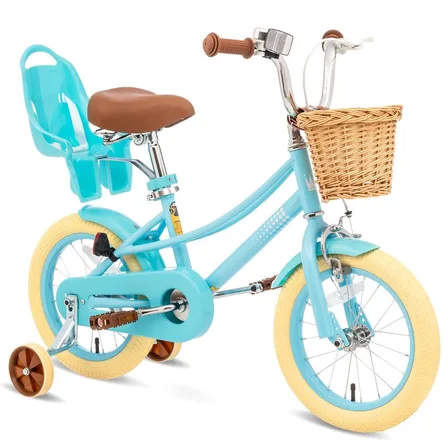
Girls' Training Wheel Bike by XJD, 12–20 Inch Wheels – Blue
This XJD girls' training wheel bike in Blue covers one of the widest fit ranges …$139
$159