

Coaster Brake vs Hand Brake for Kids: How to Choose
A coaster brake vs hand brake for kids comparison should focus on whether the child can operate the exact bicycle, not on declaring one system universally better. A coaster brake works by back-pedaling; a hand brake uses a lever and cable or hydraulic mechanism. Some bikes combine systems. Fit, lever reach, hand strength and the child's starting habits all affect the choice.
Understand how each system changes the ride
With a coaster brake, backward pedal movement slows the rear wheel, which can make repositioning a pedal for the next start less direct. A hand brake allows the pedals to move independently, but the child must reach and squeeze the lever with control. Demonstrate each method while stationary and follow the bicycle manual before a moving test.

Check hand-brake reach and force
The rider should reach the lever while maintaining a secure grip and straight wrist. An adjustable lever must stay within its approved setting. Ask for a gradual squeeze rather than a sudden grab. If the child cannot produce reliable braking force or the lever touches the grip, the system needs professional adjustment or a different bicycle.

Test coaster-brake coordination
At walking speed, have the child place the pedals in a comfortable position and press backward smoothly. Observe whether braking surprises the rider or disrupts balance. Practice stopping before a line, then setting up the pedal for a new start. Never assume coaster braking is intuitive simply because it does not require a hand lever.
Choose through a complete fit-and-stop test
The right bike must also allow safe mounting, steering and foot contact when stopped. Test on level, traffic-free pavement with a fitted helmet and adult supervision. Inspect brakes before every ride. When comparing bicycles with different wheel sizes or geometry, avoid attributing every handling difference to the brake alone.
How the current product examples fit
The pink XJD training-wheel bike lists a rear coaster brake, while the mint XJD cruiser lists V-brakes. They provide real examples of the control differences, not a shortcut around fitting the child. See Pink 12/14/16/20" XJD Girls Bike with Training Wheels & Basket, XJD Kids Beach Cruiser Bicycle, Rear Rack & V-Brakes, Mint Green for the exact current options and specifications.
Quick checklist
- Identify every brake on the bike.
- Check lever reach and hand strength.
- Practice back-pedal coordination.
- Test gradual stops on level ground.
- Inspect and maintain the actual system.
Common questions
Are hand brakes only for older kids?
No fixed age decides readiness. The child must fit the bicycle and reliably reach, squeeze and release the specific lever.
Can training wheels replace brake practice?
No. Training wheels affect low-speed balance, not the need to understand and operate the bicycle's brakes.
Explore related guides
Use the training-wheel collection and beach-cruiser collection and kids-bike collection to compare other suitable configurations without assuming every model has the same features.
Bottom line
Choose the brake system the child can understand and operate repeatedly on a correctly fitted bike, then practice starts and controlled stops together.
Bikes for your next adventure
-
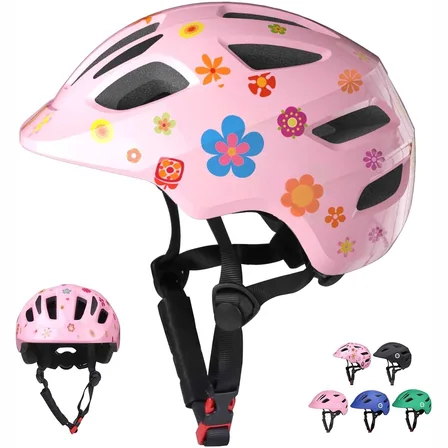
XJD Kids Bike Helmet for Girls, Pink Flowers, Adjustable (XS–S)
The XJD Kids Bike Helmet in Pink Flowers is an adjustable toddler-and-kids helme…$21.24
$24.99 -

Kids Bike Helmet by XJD for Girls – Pink
The XJD Kids Bike Helmet in Pink is a lightweight multi-sport helmet for girls r…$59.99
$99 -
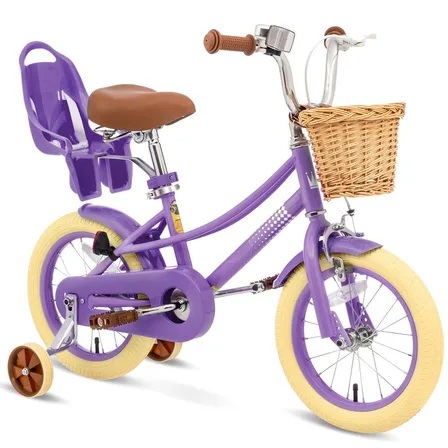
XJD Girls' Bike with Training Wheels, 12/14/16/20 Inch – Purple
The XJD girls' bike with training wheels in Purple is built to grow with your ri…$139
$159