

How to get my child to ride a bike
To get your child to ride a bike, begin with a correctly fitted bicycle, practise one skill at a time in a quiet open space, and stop before fear or fatigue takes over.
Measure before asking them to ride
Measure your child’s standing height and inseam while they wear the shoes they will use for riding. Age can suggest a starting wheel size, but it cannot confirm fit. Have your child try the bicycle rather than buying an oversized model for future growth.
During the fit check, confirm that they can stand over the bicycle comfortably, reach the handlebar without stretching, turn it while remaining balanced, and operate the brakes with control. Their measured height, inseam, reach, brake control and current confidence should decide whether a bicycle works.
| Wheel size | Starting age | Rider height |
|---|---|---|
| 12 Inch | 3–4 | 34–40 in / 86–102 cm |
| 14 Inch | 3–6 | 37–45 in / 94–114 cm |
| 16 Inch | 4–7 | 40–48 in / 102–122 cm |
| 18 Inch | 5–9 | 43–52 in / 109–132 cm |
| 20 Inch | 7–12 | 48–60 in / 122–152 cm |
| 24 Inch | 10–14 | 54–64 in / 137–163 cm |
| 26 Inch | Youth and adults | Over 60 in / 153 cm |
These ranges are starting points, not permission to skip the individual fit check. If your child falls between ranges, compare the candidate bicycles in person and choose the one they can presently control.
Remove the reasons they do not want to start
Ask one neutral question: “What part feels difficult?” A child may dislike wobbling, braking, pushing off, falling, or being watched. The answer tells you which skill to isolate. Avoid races, surprise pushes and comparisons with siblings. Let the child choose when to repeat a drill, while you choose a low-traffic, level practice area away from obstacles.
Check clothing and shoelaces, then fit a bicycle helmet before every session. The helmet should fit properly, sit level, and have its straps adjusted according to the helmet manufacturer’s instructions. A helmet does not correct a poorly fitted bicycle or replace supervision.
Teach control before pedalling
- Walking: Have the child walk beside the bicycle while holding it, then practise steering and stopping it.
- Mounting: Let them get on and off repeatedly until neither movement feels rushed.
- Braking: While stationary and then at very low speed, practise using the bicycle’s braking controls smoothly.
- Balance: With the child seated and able to put feet down, encourage short glides only if the bicycle’s setup and product manual permit that exercise.
- Starting: Practise one deliberate push-off, a short straight ride and a controlled stop.
- Turning: Add wide turns only after starts and stops are dependable.
Keep sessions brief enough that the child can finish with one successful repetition. If frustration rises, return to the last comfortable step or end the session. Progress means more control and willingness, not simply travelling farther.
Decide whether training wheels are relevant
Training wheels can give a hesitant beginner a supported introduction to pedalling and steering, but they do not remove the need to learn balance, braking and safe stopping. A child who already glides confidently may instead need practice combining balance with pedalling. Follow the exact bicycle manual for fitting or adjusting training wheels; if instructions are unclear, use a qualified bicycle mechanic.
The catalog choices below are useful comparison points because they cover supported 12-, 14- and 16-inch options, plus larger cruiser sizes. Compare only sizes that match your child’s measurements and hands-on fit check.
 XJD Light Purple Girls Bike with Basket, Training Wheels, 12/14/16/20 Inch
A training-wheel bicycle offered in available 12 Inch, 14 Inch and 16 Inch SKU labels; relevant when supported practice suits the child and hands-on fit is confirmed.
 XJD Kids Beach Cruiser Bicycle, Rear Rack & V-Brakes, Mint Green
A beach cruiser offered in available 20 Inch, 24 Inch and 26 Inch SKU labels, relevant for taller riders who can demonstrate suitable fit and control of its V-brakes.
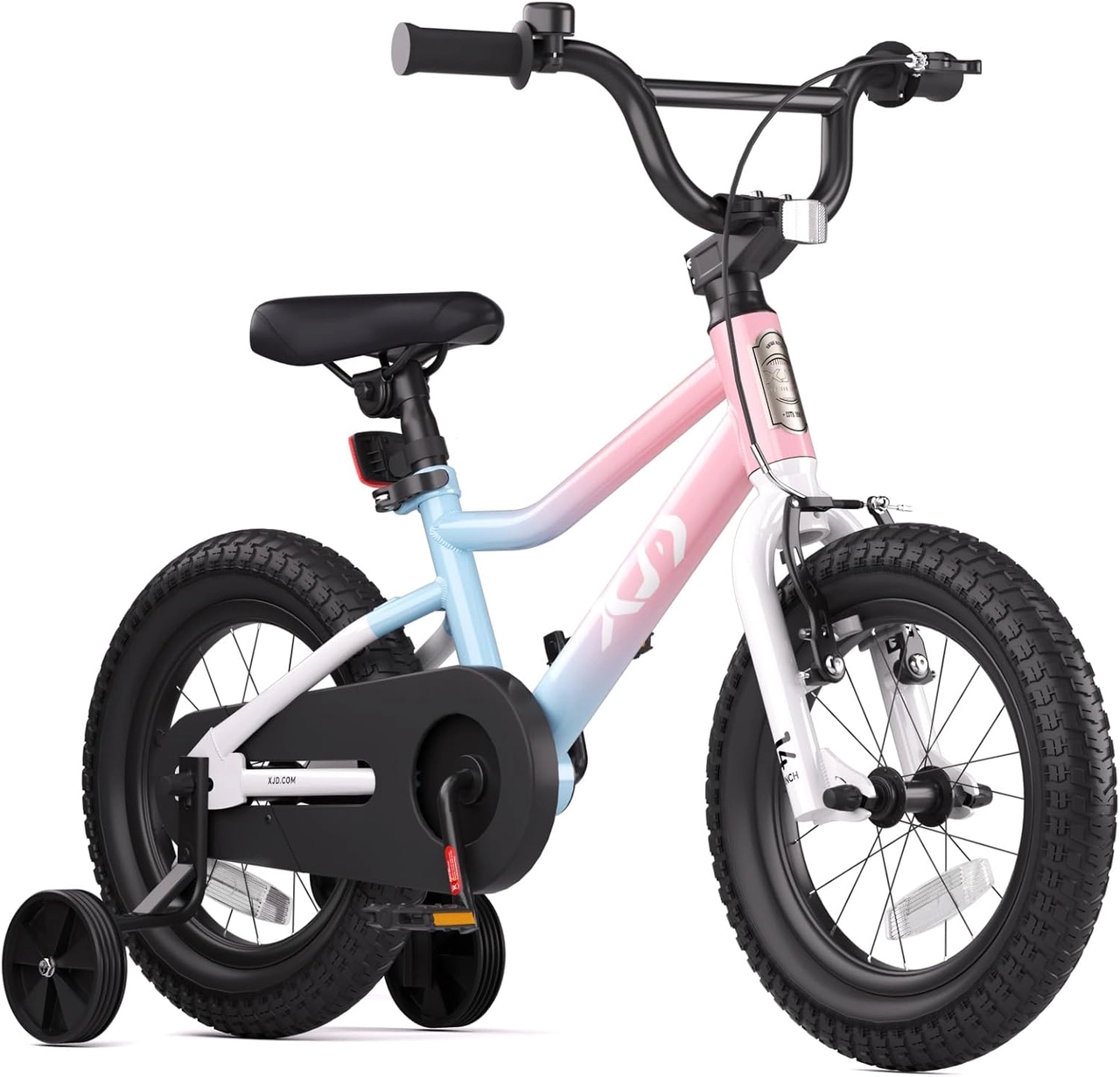 XJD Girls BMX Bike 12/14/16 Inch with Training Wheels – Pink Blue
A Kids' BMX Bike with training wheels and available 12 Inch, 14 Inch and 16 Inch SKU labels; compare fit and confidence with the other supported option.
Compare the three catalog options
The XJD Light Purple Girls Bike with Basket, Training Wheels, 12/14/16/20 Inch is listed under Training Wheel Bikes, with available 12 Inch, 14 Inch and 16 Inch SKU labels. It is relevant when supported practice may help and one of those sizes fits now.
The XJD Girls BMX Bike 12/14/16 Inch with Training Wheels – Pink Blue is a Kids' BMX Bikes option with available 12 Inch, 14 Inch and 16 Inch SKU labels. Compare it with the other training-wheel option on actual stand-over clearance, reach, brake control and the child’s confidence—not on title wording alone.
The XJD Kids Beach Cruiser Bicycle, Rear Rack & V-Brakes, Mint Green is listed under Beach Cruiser Bikes, with available 20 Inch, 24 Inch and 26 Inch SKU labels. Its larger size range makes it relevant for taller riders who can demonstrate control. Confirm that the child can comfortably reach and operate its V-brakes.
None of these products has an available 18 Inch SKU label. If your measurements point toward 18 Inch, these products are nearest-size comparison points, not substitutes; a 16 Inch or 20 Inch bicycle is not equivalent to an 18 Inch fit.
Know what to do next
Before the next session, write down your child’s height and inseam, identify the starting wheel-size range, and arrange a hands-on check of stand-over clearance, reach and braking. Select only a bicycle they can control today. Then practise walking, mounting, braking, gliding, starting and wide turning in that order, pausing whenever confidence drops.
If the bicycle needs assembly, adjustment or maintenance beyond its supplied instructions, follow the exact product manual or ask a qualified bicycle mechanic. The immediate goal is simple: choose a current fit and give your child one calm, controllable riding success to repeat.
Bikes for your next adventure
-

Green XJD Toddler Bike Helmet with Adjustable Fit, XS (46–51 cm)
The XJD toddler bike helmet in Green is built for the youngest riders — the size…$20.39
$23.99 -

Kids Bike Helmet by XJD for Boys & Girls – Black, Blue, Green, Pink, Purple
The XJD Kids Bike Helmet covers a wide 2-to-8-year age range thanks to two head-…$59.99
-

Kids Bike Helmet by XJD for Girls – Pink
The XJD Kids Bike Helmet in Pink is a lightweight multi-sport helmet for girls r…$59.99
$99