

How to help your kid ride a bike
Help your kid ride a bike by checking fit first, choosing a quiet practice area, teaching one skill at a time, and stopping before frustration replaces confidence.
Measure the rider before choosing a bike
Measure your child’s height without shoes. Then measure inseam from the floor to the crotch while the child stands straight. Height gives you a wheel-size starting point; inseam helps you judge whether the child can stand over and stabilize the actual bicycle.
Use age only as a rough secondary clue. The American Academy of Pediatrics advises having the child try the bicycle and avoiding an oversized model bought merely for future growth. On the actual bike, check that the rider can stand over it, reach the handlebar without stretching, turn it comfortably, and operate the brakes with control.
| Wheel size | XBikes age starting point | Rider height starting point |
|---|---|---|
| 12 Inch | 3–4 | 34–40 in / 86–102 cm |
| 14 Inch | 3–6 | 37–45 in / 94–114 cm |
| 16 Inch | 4–7 | 40–48 in / 102–122 cm |
| 18 Inch | 5–9 | 43–52 in / 109–132 cm |
| 20 Inch | 7–12 | 48–60 in / 122–152 cm |
| 24 Inch | 10–14 | 54–64 in / 137–163 cm |
| 26 Inch | Youth and adults | Over 60 in / 153 cm |
Overlapping ranges are comparison points, not proof that every listed size will fit. Measured height, inseam, reach, brake control and current confidence take priority.
Check control on the exact bicycle
Have your child hold the bike upright and mount and dismount without being lifted into place. Confirm that feet can provide dependable support when stopping, the knees and handlebar do not interfere, and steering does not pull the torso into an awkward reach.
Ask the child to squeeze each available brake control while stationary. They should reach it naturally and understand what it does. Follow the exact product manual for adjustments, assembly, maintenance and compatibility; if anything is uncertain, use a qualified bicycle mechanic rather than improvising a procedure or setting.
Set up a calm first practice
Choose a flat, open area away from traffic, parked cars, steep slopes and obstacles. A properly fitting bicycle helmet is essential: the U.S. Consumer Product Safety Commission says it should fit properly, sit level, and have its straps used according to the helmet manufacturer’s instructions.
- Start with stopping. Show the child where to look, how to slow down, and where to place their feet after stopping.
- Practise balance and direction. Let the rider move at a manageable pace while looking ahead rather than down at the front wheel.
- Add pedalling. Help only enough to create a steady start, then reduce support as control improves.
- Repeat short runs. Finish after a small success instead of continuing until the child is tired or upset.
If training wheels are fitted, treat them as a learning aid rather than evidence of correct sizing. The child still needs suitable stand-over clearance, reach and brake access. Follow the bicycle manual for installation and adjustment.
Compare the supplied XBikes options
These catalog options help because they provide wheel-size comparison points across 12, 14, 16, 20, 24 and 26 inches, including two training-wheel bike listings. Compare only sizes that match the measurement starting points, then verify the individual fit and controls in person.
 XJD Boys & Girls BMX Bike with Training Wheels, 12/14/16" – Blue
A Kids’ BMX Bikes option offered in 12 Inch, 14 Inch and 16 Inch sizes, relevant for comparing smaller wheel-size starting points when training wheels match the child’s current learning stage.
 XJD Pink Beach Cruiser for Girls – Rear Rack & V-Brake
A Beach Cruiser Bikes option available in 20 Inch, 24 Inch and 26 Inch sizes, useful for comparing larger starting points after confirming the rider’s height, inseam, reach and brake control.
 Girls' Training Wheel Bike by XJD with Basket – Purple
A Training Wheel Bikes option offered in 14 Inch, 16 Inch and 20 Inch sizes, relevant when measurements align and the child currently benefits from a training-wheel format.
XJD Boys & Girls BMX Bike with Training Wheels, 12/14/16" – Blue is listed under Kids’ BMX Bikes with 12 Inch, 14 Inch and 16 Inch options. It is relevant when the rider’s measurements place them within one of those starting ranges and training wheels suit their present learning stage.
Girls' Training Wheel Bike by XJD with Basket – Purple is listed under Training Wheel Bikes in 14 Inch, 16 Inch and 20 Inch options. Its size span provides comparison points for riders progressing across those ranges, but the larger option should not be chosen simply to allow room for growth.
XJD Pink Beach Cruiser for Girls – Rear Rack & V-Brake is listed under Beach Cruiser Bikes with 20 Inch, 24 Inch and 26 Inch options. It is relevant to taller riders whose measurements align with those starting points and who can demonstrate comfortable reach and brake control on the exact bike.
None of these products is offered in an 18 Inch option. If measurements indicate 18 Inch, the supplied 16 Inch and 20 Inch products are nearest-size comparison points only, not substitutes or equivalent sizes.
Know when to pause or change course
Pause if your child cannot start, steer or stop without panic; cannot reach the controls; struggles to support the bike; or repeatedly looks uncomfortable. Recheck the fit before assuming more practice will solve the problem. A different size may be appropriate even when age guidance suggests otherwise.
For the next ride, measure height and inseam, shortlist the matching wheel-size starting point, test stand-over, reach and braking on the exact bicycle, and practise stopping before adding speed or distance.
Bikes for your next adventure
-
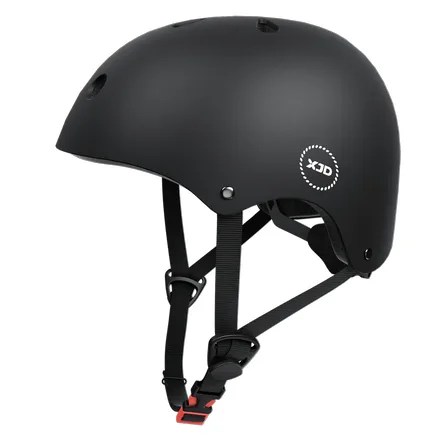
7-in-1 Kids Helmet & Protective Gear Set from XJD – Black or Blue
If you're outfitting one kid (or a couple of siblings) for biking, scootering, o…$59.99
-
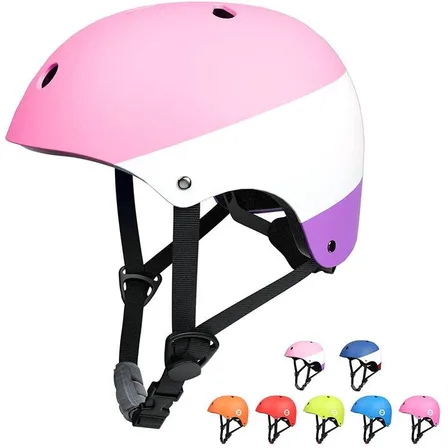
XJD Kids Bike Helmet for Boys & Girls, B White / Pink White
The XJD Kids Bike Helmet covers a wide age range — suggested for ages 2 through …$59.99
-

Blue XJD Girls Bike with Training Wheels – 12/14/16 Inch
If you're shopping for a first pedal bike for a daughter roughly 3 to 8 years ol…$149
$169