

How to safely transport a child on a bike
Safely transport a child on a bike only in a purpose-built child seat, trailer or passenger cycle that is approved for the child and compatible with the bicycle. Check both manuals, fit a helmet correctly, secure every restraint and test control before riding.
Choose the transport method before the bicycle
A child who cannot reliably ride and follow traffic instructions should travel as a secured passenger, not balance on an improvised perch. Never place a child on handlebars, the top tube or a rack that is not specifically approved for carrying that child.
For a child seat, trailer or passenger-equipped cycle, compare the child’s measured size with the carrier’s stated limits. Then confirm bicycle compatibility, mounting requirements and total load limits in the exact manuals. Those details are not interchangeable between products. If anything is missing, ambiguous or difficult to install, use a qualified bicycle mechanic.
If the child will ride a separate bicycle alongside you, wheel size and individual fit become the relevant questions. The XBikes products below are children’s bicycles for that situation; none of the supplied catalog facts identifies them as child seats, trailers or adult-bike passenger equipment.
Measure the child and check the fit
Measure standing height and inseam in the shoes the child will wear. Age is only a starting point. Have the child try the bicycle and check that they can stand over it, reach the controls without stretching, steer confidently and operate the brake controls reliably. Do not buy an oversized bicycle merely to allow room for growth.
| Wheel size | XBikes starting point |
|---|---|
| 12 Inch | Ages 3–4; height 34–40 in / 86–102 cm |
| 14 Inch | Ages 3–6; height 37–45 in / 94–114 cm |
| 16 Inch | Ages 4–7; height 40–48 in / 102–122 cm |
| 20 Inch | Ages 7–12; height 48–60 in / 122–152 cm |
| 24 Inch | Ages 10–14; height 54–64 in / 137–163 cm |
Where size ranges overlap, choose by the actual stand-over clearance, reach, brake control and current confidence—not by age alone. A wheel-size chart cannot confirm that a particular frame fits.
Compare the supplied bicycles correctly
Pink Girls' 12/14/16" Bike by XJD – Basket & Doll Seat offers 12 Inch, 14 Inch and 16 Inch labels, so it provides three starting points for a smaller child who will ride independently. The doll seat named in the title is not evidence of a child-passenger seat and must never be treated as one.
Blue XJD Freestyle BMX Bike, 20-Inch – No Pegs is a 20-inch comparison for an independent rider whose measured height falls near that starting range. 24-Inch Purple XJD Beach Cruiser Bike with U-Brake is a 24-inch comparison for a taller independent rider. The supplied facts do not establish either bicycle as passenger-carrying equipment.
These particular catalog options help answer the title by showing the difference between transporting a secured passenger and selecting a correctly fitted bicycle for a child riding alongside you. They span 12, 14, 16, 20 and 24 inches, but each remains only a starting point until the child completes an individual fit and control check.
 Pink Girls' 12/14/16" Bike by XJD – Basket & Doll Seat
A 12, 14 or 16-inch comparison for a child riding independently. Its basket and doll seat do not establish child-passenger capability; choose among the supplied size labels only after measuring height and checking fit and control.
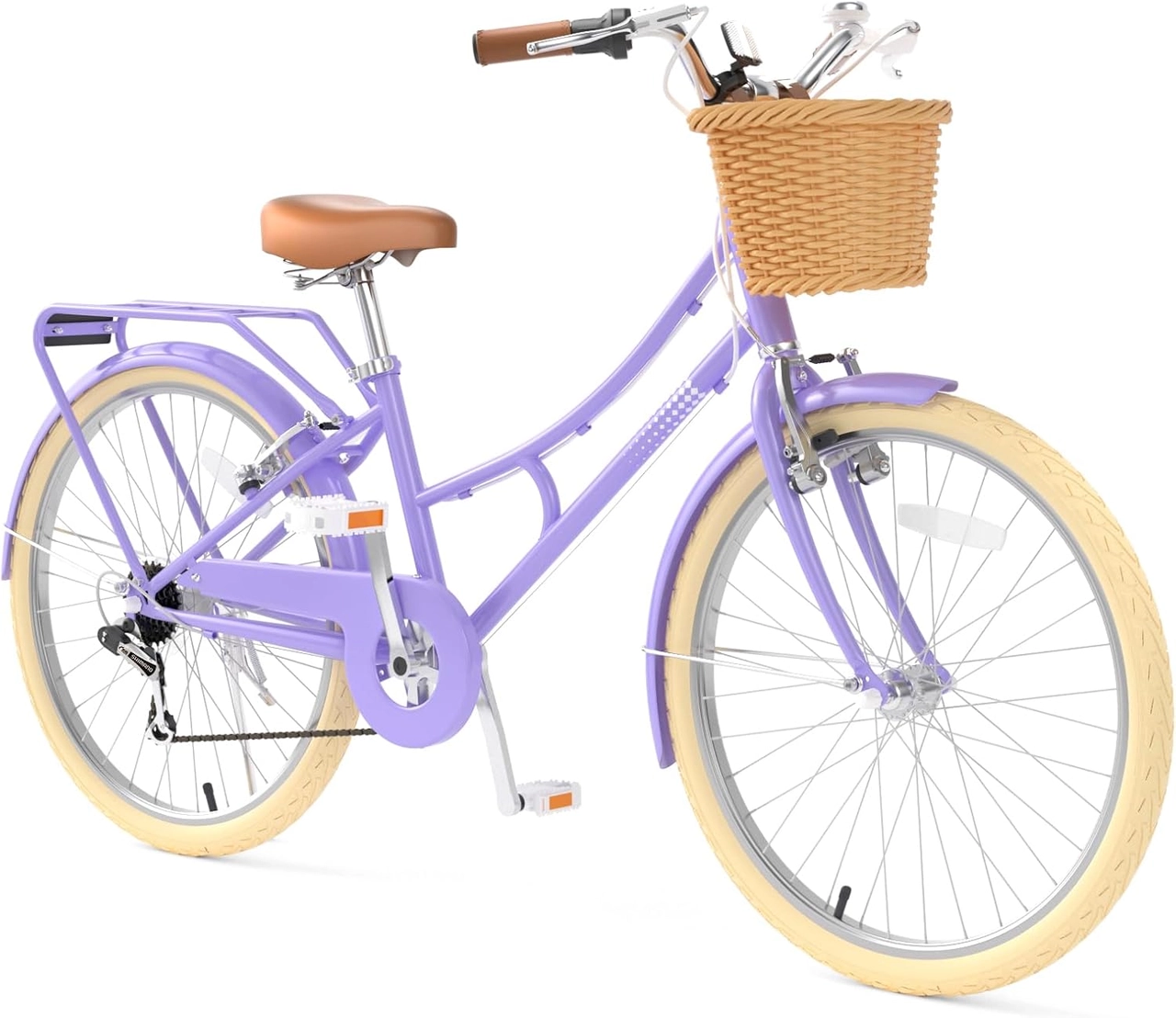 24-Inch Purple XJD Beach Cruiser Bike with U-Brake
A 24-inch beach cruiser comparison for a taller child riding independently, with a U-brake stated in its title. It is not identified by the supplied facts as passenger-carrying equipment, so an individual fit and brake-control check remains necessary.
 Blue XJD Freestyle BMX Bike, 20-Inch – No Pegs
A 20-inch BMX comparison for a child riding independently. The supplied title specifies no pegs, but provides no passenger-transport capability; use the 20-inch height starting point and confirm stand-over, reach, control and confidence in person.
Fit the helmet and secure the passenger
Use a bicycle helmet that fits the child properly. It should sit level, and its straps must be adjusted and fastened according to the helmet manufacturer’s instructions. Replace guesswork with the directions for that exact helmet.
For passenger travel, follow the carrier manual in the stated order. Confirm that every harness, foot restraint, buckle, guard and attachment required by that model is present and secured. Keep loose clothing, straps and shoelaces away from moving parts. Do not invent a mounting method, torque setting or weight allowance; follow the product manuals or ask a qualified bicycle mechanic.
Perform a control check before every trip
- Inspect the bicycle and passenger equipment for looseness, damage or missing parts.
- Confirm the child is correctly positioned, restrained and wearing a properly fitted helmet.
- Check that clothing and feet cannot reach wheels, spokes, the chain or other moving parts.
- With the child aboard, assess balance and practise starting, steering and braking in a traffic-free area.
- Do not ride if the bicycle feels unstable, the child exceeds a stated limit or any attachment is uncertain.
A passenger changes a bicycle’s balance and stopping behaviour. Choose a calm route away from fast traffic and abrupt hazards, ride conservatively and allow more room for every manoeuvre. If the child rides separately, match the route to their demonstrated control and ability to follow instructions.
Make the go-or-no-go decision
Ride only when the child fits the selected arrangement, every component is approved and compatible, the restraints and helmet fit correctly, and you can control the loaded bicycle confidently. Otherwise, stop: correct the fit, choose suitable passenger equipment, or have a mechanic verify the installation before transporting the child.
Bikes for your next adventure
-

Kids Bike Helmet by XJD for Boys & Girls – Black, Blue, Green, Pink, Purple
The XJD Kids Bike Helmet covers a wide 2-to-8-year age range thanks to two head-…$59.99
-

Kids Bike Helmet by XJD for Girls – Pink
The XJD Kids Bike Helmet in Pink is a lightweight multi-sport helmet for girls r…$59.99
$99 -

XJD Kids Bike for Girls – Pink, 12/14/16/20 Inch with Training Wheels
The XJD Kids Bike for Girls in Pink is a training-wheel bike built to carry your…$139
$159