

How to teach your child to ride a dirt bike
Teach your child to ride a dirt bike by confirming a proper fit first, then practising one control at a time in a flat, closed area under direct adult supervision.
Start with fit, readiness and the right setting
Measure your child’s standing height and inseam before choosing a bike. Have the child sit on the actual dirt bike and compare seat height, reach to the handlebars, access to the foot controls and ability to operate the brakes. They should remain balanced while reaching every essential control without stretching, twisting or shifting away from a stable riding position.
Do not buy an oversized machine for a child to grow into. Age labels are only starting points; measured fit, control reach and current confidence matter more. Consult the exact dirt-bike manual for its rider limits, setup, starting procedure and control operation. If fit or adjustment is uncertain, use a qualified mechanic or experienced youth-riding instructor.
Choose a level practice area closed to traffic, spectators and obstacles. A properly fitting helmet intended for the activity should sit level, with its straps secured according to the helmet manufacturer’s instructions. Add the protective clothing and equipment required by the bike manufacturer, riding venue and instructor.
Teach the controls before movement
With the bike switched off, ask your child to identify the brakes, throttle if fitted, stop or kill switch and any other controls described in the manual. Have them demonstrate how to reach and operate each one while looking ahead. Do not assume two dirt bikes start, stop or shift in the same way.
Establish simple signals before starting: “go,” “slow,” “stop” and an immediate shutdown signal. The supervising adult should stay close enough to intervene during the earliest exercises, while everyone else remains outside the practice path.
Use a short, progressive lesson
- Balance first: let the child become comfortable with the bike’s weight and riding position using the manufacturer-approved procedure.
- Start and stop: practise only smooth departures and controlled stops over a short, straight path. Repeat until braking is deliberate rather than panicked.
- Control speed: keep the pace low enough that the child can respond calmly to the stop signal. End the exercise if throttle control becomes abrupt or attention fades.
- Add wide turns: use generous space and visible markers. Teach the child to look toward the intended path, not down at the front wheel.
- Combine skills: ride a simple start, straight line, wide turn and stop sequence. Introduce uneven ground, tighter turns or greater speed only after consistent control.
Keep sessions short and finish while the child is still attentive. Fatigue, repeated missed signals, uncontrolled acceleration, forgotten braking or visible fear are reasons to stop and return to an easier exercise another day.
Where the supplied bicycles fit
The supplied XBikes products are training-wheel pedal bicycles, not dirt bikes. They may help a child rehearse steering, pedalling and following stop instructions before motorized riding, but they do not teach throttle, engine shutdown, dirt-bike braking or off-road handling. Training wheels can support early pedalling confidence, yet independent two-wheel balance must still be assessed separately.
The XJD Kids' Training Wheel Bike for Boys & Girls, 12/14/16 Inch – White offers catalog size labels of 12, 14 and 16 Inch. The Girls' Training Wheel Bike by XJD, 12–20 Inch Wheels – Blue offers 12, 14, 16 and 20 Inch labels. These options are relevant only as pedal-bike preparation and fit-comparison points; neither is a substitute for a properly fitted dirt bike.
 XJD Kids' Training Wheel Bike for Boys & Girls, 12/14/16 Inch – White
A 12, 14 or 16 Inch training-wheel pedal bicycle that may support preliminary steering and instruction-following practice, but it is not a dirt bike or a substitute for dirt-bike control training.
 Girls' Training Wheel Bike by XJD, 12–20 Inch Wheels – Blue
This training-wheel pedal bicycle adds a 20 Inch catalog option alongside 12, 14 and 16 Inch sizes. It can serve as a measured-fit preparation option, not as dirt-bike equipment or training.
Choose the bicycle size by measurement
If you use either training-wheel bicycle for preliminary practice, compare the child’s measured height with these XBikes starting points, then perform an individual stand-over, reach, brake-control and confidence check on the assembled bicycle.
| Wheel size | Age starting point | Rider height |
|---|---|---|
| 12 Inch | 3–4 | 34–40 in / 86–102 cm |
| 14 Inch | 3–6 | 37–45 in / 94–114 cm |
| 16 Inch | 4–7 | 40–48 in / 102–122 cm |
| 18 Inch | 5–9 | 43–52 in / 109–132 cm |
| 20 Inch | 7–12 | 48–60 in / 122–152 cm |
| 24 Inch | 10–14 | 54–64 in / 137–163 cm |
| 26 Inch | Youth and adults | Over 60 in / 153 cm |
The White model has no supplied 20 Inch option; the Blue model does. Neither supplied product includes an 18, 24 or 26 Inch label, so it must not replace one of those sizes when that is the measured fit. Follow the exact product manual for assembly, maintenance, compatibility and load limits, or ask a qualified bicycle mechanic.
Decide whether to continue
Move beyond basic drills only when your child can identify the controls, start smoothly, follow signals, regulate speed, turn while looking ahead and stop predictably without help. If the dirt bike cannot provide comfortable control reach, or the child freezes, rushes or loses focus, pause instruction and change the fit, setting or level of support. The next step should be another controlled drill—not more speed.
Bikes for your next adventure
-
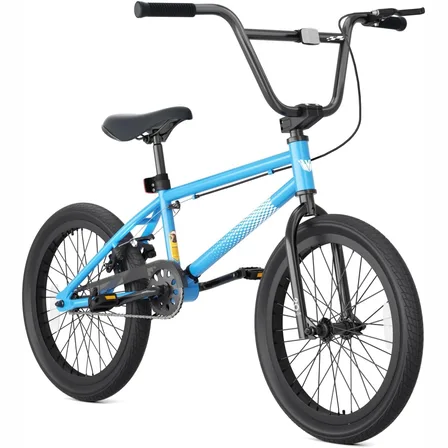
Blue XJD Freestyle BMX Bike, 20-Inch – No Pegs
The XJD 20-Inch Blue Freestyle BMX is an entry-level BMX bike for boys and girls…$189.99
-
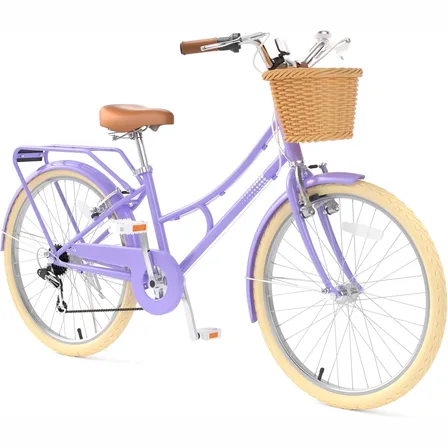
24-Inch Purple XJD Beach Cruiser Bike with U-Brake
The XJD 24-Inch Purple Beach Cruiser is built for girls and young women roughly …$159.99
-
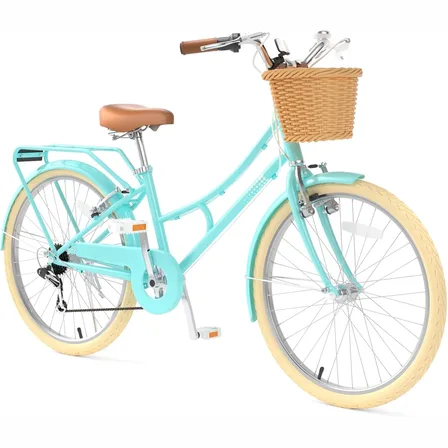
XJD 24-Inch Green Beach Cruiser Bike with U-Brake
This XJD 24-inch beach cruiser in green is made for riders about 4'8" to 5'4" ta…$159.99
$199.99