

What age can a baby ride in a bike seat
A baby can ride in a bicycle child seat only after meeting the seat maker’s minimum requirements and having enough head, neck and trunk control to sit securely while wearing a properly fitted helmet. Age alone is not a safe go-ahead.
Check readiness before planning a ride
Start with the exact child-seat manual. Check its stated minimum passenger requirements, maximum load, permitted bicycle types and mounting instructions. Because those details vary and were not supplied here, do not assume that a seat is suitable based on its appearance or a general age recommendation.
Your child should be able to remain upright without being propped up and keep their head stable while wearing a helmet. Consider whether normal riding movement, starts, stops and bumps would overwhelm that control. If you are uncertain about developmental readiness, ask the child’s healthcare professional before riding.
Also check applicable local passenger and helmet rules. A legal minimum and an individual child’s readiness are separate tests; both must be satisfied.
What to measure and compare
- Child and equipment load: Compare the child’s current measured weight, plus anything else counted by the manufacturer, with the exact seat manual’s limits.
- Harness fit: Confirm that the restraint can be adjusted as directed, without loose or improvised routing.
- Helmet fit: Use an appropriately sized bicycle helmet. It should sit level and its straps should be adjusted according to the helmet manufacturer’s instructions.
- Bicycle compatibility: Match the bicycle, rack or frame requirements to the seat manual. Do not infer compatibility from wheel size alone.
- Rider control: The adult must be able to mount, balance, steer, brake and dismount with the changed weight distribution.
If a load limit, fastener torque, rack requirement or mounting procedure is unclear, follow the exact product manuals or have a qualified bicycle mechanic inspect the setup. Do not estimate these details.
Do a stationary check before the first trip
- Install the seat exactly as its manufacturer directs, including every supplied restraint and retention component.
- With another adult supporting the bicycle, place the helmeted child in the seat and adjust the harness according to the manual.
- Check that feet, clothing, straps and fingers cannot reach wheels, spokes, brakes or other moving parts.
- Look for interference with steering, pedaling, braking or mounting the bicycle.
- Recheck the complete installation before each ride and stop using it if anything is loose, damaged or outside the manual’s limits.
Begin only with a short ride in a low-complexity setting. Stop if the child cannot stay comfortably positioned or if the adult cannot control the loaded bicycle predictably.
Why the supplied kids’ bikes are a later-stage comparison
The supplied products are complete children’s bicycles with training wheels, not bicycle-mounted baby seats. They do not answer whether a baby is ready to ride as a passenger. They become relevant later, when a child is ready to control a bicycle independently and can complete an individual fit check. Their available sizes provide useful starting points for that separate decision.
 Girls' Training Wheel Bike by XJD with Basket – Purple
A later-stage independent-riding comparison offered in 14 Inch, 16 Inch and 20 Inch sizes; it is a training-wheel bicycle, not a baby passenger seat.
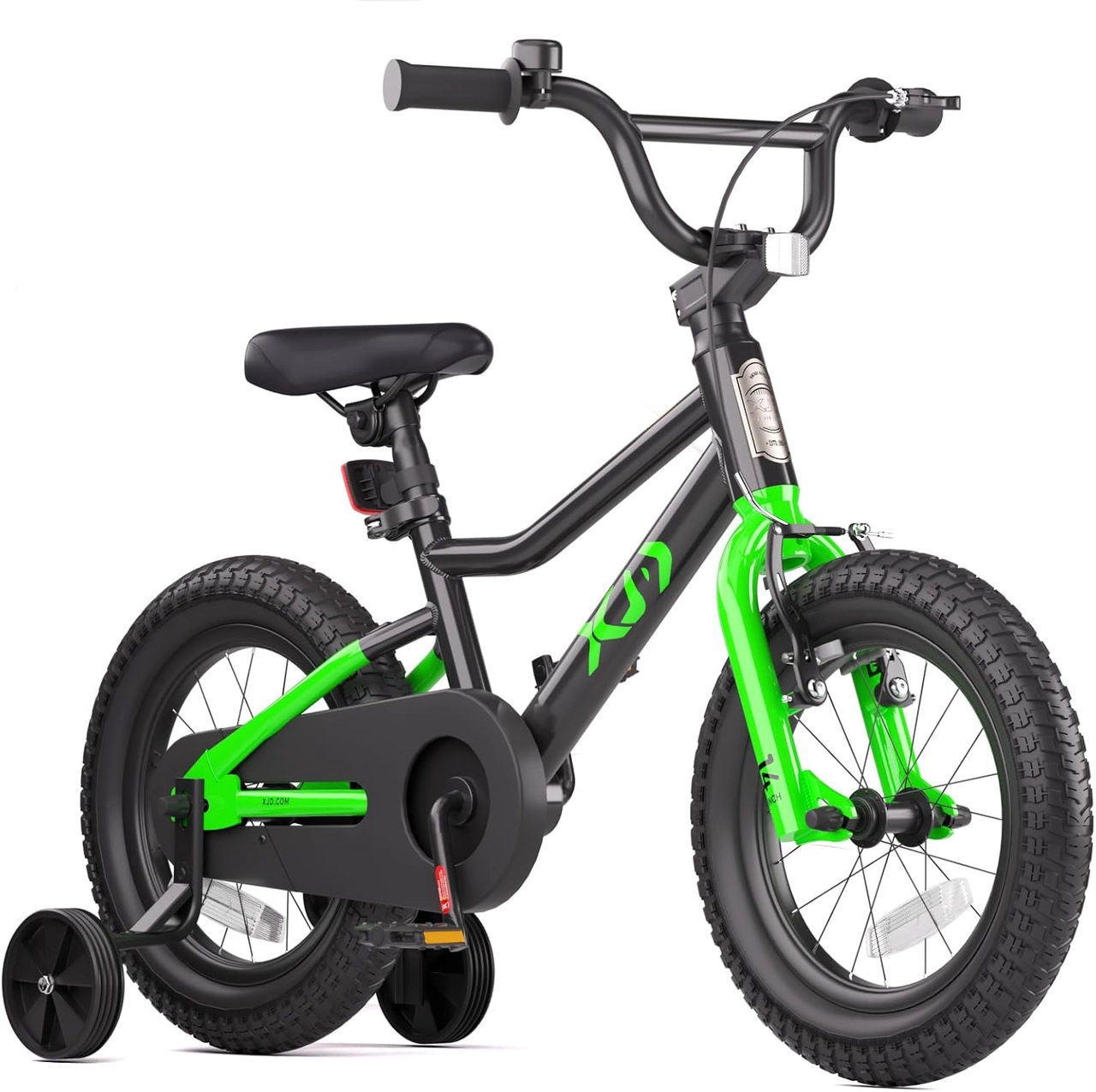 Black XJD Kids' BMX Bicycle with Training Wheels
A later-stage independent-riding comparison available in 12 Inch, 14 Inch and 16 Inch sizes; it does not determine whether a baby is ready for a child seat.
Girls' Training Wheel Bike by XJD with Basket – Purple is listed in 14 Inch, 16 Inch and 20 Inch options. Black XJD Kids' BMX Bicycle with Training Wheels is listed in 12 Inch, 14 Inch and 16 Inch options. Those labels identify available wheel-size options; they do not establish passenger-seat readiness.
| Wheel size | XBikes age starting point | Rider-height starting point | Supplied options |
|---|---|---|---|
| 12 Inch | Ages 3–4 | 34–40 in / 86–102 cm | Black XJD model |
| 14 Inch | Ages 3–6 | 37–45 in / 94–114 cm | Both models |
| 16 Inch | Ages 4–7 | 40–48 in / 102–122 cm | Both models |
| 20 Inch | Ages 7–12 | 48–60 in / 122–152 cm | Purple XJD model |
These are starting points, not automatic fit decisions. Measure the child’s standing height and inseam, then have them try the bicycle. Check stand-over clearance, reach, brake control and present confidence. Do not buy an oversized bicycle merely to allow room for growth.
When to wait
Wait if the child cannot sit steadily with a helmet, does not meet every passenger requirement in the child-seat manual, or cannot be secured exactly as directed. Also wait if the seat’s compatibility or installation is uncertain, the adult loses confident control, or any body part or strap could contact a moving component.
The practical decision is simple: verify the child’s physical readiness, measure the required load and fit factors, compare them with the exact manuals and local rules, and inspect the installed system. If every check does not clearly pass, postpone the baby-seat ride.
Bikes for your next adventure
-

Black XJD Toddler Bike Helmet, Adjustable – Kids' Protective Helmet
The XJD Toddler Bike Helmet in black is an adjustable protective helmet for kids…$20.39
-

Kids Bike Helmet by XJD for Girls – Pink
The XJD Kids Bike Helmet in Pink is a lightweight multi-sport helmet for girls r…$59.99
$99 -
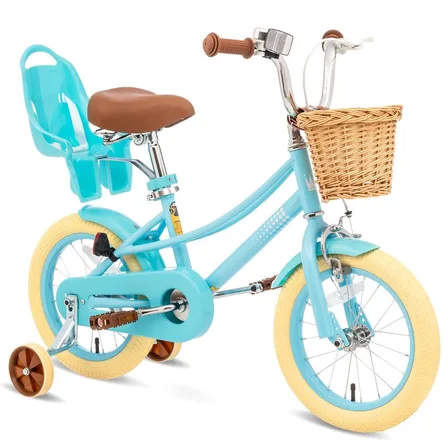
Girls' Training Wheel Bike by XJD, 12–20 Inch Wheels – Blue
This XJD girls' training wheel bike in Blue covers one of the widest fit ranges …$139
$159