

What age do kids usually learn to ride a bike
Most kids usually learn to ride a bike between ages 3 and 7, but readiness and a correctly fitted bicycle matter more than a birthday.
What is the usual learning age?
Many children begin somewhere in the 3–7 range because XBikes’ 12-, 14- and 16-inch starting points overlap those ages. That range is a practical expectation, not a deadline. A confident younger child may be ready sooner, while an older child may need more time or a different teaching approach.
Look for readiness rather than comparing siblings or classmates. A learner should be willing to practise, able to follow simple directions, and comfortable sitting on the bicycle while holding the handlebar. If fear is making the child rigid or unwilling to continue, pause and try again another day.
Measure before choosing a wheel size
Measure the child’s height without shoes. Also measure the inseam from the floor to the crotch while the child stands naturally. Height narrows the choices; an actual fit check confirms whether the frame, saddle position, reach and controls work for that rider.
| Wheel size | XBikes age starting point | Rider height starting point |
|---|---|---|
| 12 Inch | Ages 3–4 | 34–40 in / 86–102 cm |
| 14 Inch | Ages 3–6 | 37–45 in / 94–114 cm |
| 16 Inch | Ages 4–7 | 40–48 in / 102–122 cm |
| 18 Inch | Ages 5–9 | 43–52 in / 109–132 cm |
| 20 Inch | Ages 7–12 | 48–60 in / 122–152 cm |
| 24 Inch | Ages 10–14 | 54–64 in / 137–163 cm |
| 26 Inch | Youth and adults | Over 60 in / 153 cm |
These ranges overlap deliberately because children of the same age vary. Never move up merely because a child is near the top of an age band. An oversized bike bought “for growth” can make starting, stopping and steering harder to manage.
Perform the fit and control check
Have the child try the exact bicycle rather than relying on the wheel label alone. Check that the child can:
- stand over the bicycle with usable clearance rather than being pressed against the frame;
- reach the handlebar without stretching or locking the arms;
- turn the handlebar while remaining balanced and in control;
- reach and operate the available brake controls comfortably;
- start, place a foot down and stop without panic; and
- sit in a position that supports the child’s present confidence and skill.
If one size matches the height chart but the child cannot manage these tasks, compare an adjacent size or another frame. Height, inseam, reach, brake control and current confidence all outrank age.
How the supplied bikes help with comparison
The supplied catalog options span 12, 14, 16, 20 and 24 inches, so they help families compare early-learning sizes with bicycles associated with taller riders. They do not remove the need for an individual fit check.
 Pink Girls' 12/14/16" Bike by XJD – Basket & Doll Seat
Available in 12 Inch, 14 Inch and 16 Inch options, this bike provides direct comparison points across the usual early-learning window; measured height and an individual fit check should determine the option.
 24-Inch Purple XJD Beach Cruiser Bike with U-Brake
This 24-inch beach cruiser with U-brake is a comparison point for riders matching the 24-inch starting range, not a substitute for a smaller learning bicycle or a hands-on fit check.
 Blue XJD Freestyle BMX Bike, 20-Inch – No Pegs
This 20-inch freestyle BMX bike without pegs offers a comparison for a taller or later learner whose measured height, reach, stand-over clearance and brake control suit a 20-inch bicycle.
Pink Girls' 12/14/16" Bike by XJD – Basket & Doll Seat is the most directly relevant comparison for the usual 3–7 learning window because its listed options are 12 Inch, 14 Inch and 16 Inch. Choose among those labels by measured height and the hands-on checks above, not by appearance or room to grow.
Blue XJD Freestyle BMX Bike, 20-Inch – No Pegs provides a 20-inch comparison point. The XBikes starting range for that wheel size is ages 7–12 and heights 48–60 in / 122–152 cm. It may be relevant to a taller or later learner only when reach, stand-over and brake control also fit.
24-Inch Purple XJD Beach Cruiser Bike with U-Brake is a 24-inch comparison point. The corresponding starting range is ages 10–14 and heights 54–64 in / 137–163 cm. It is not an appropriate substitute for a smaller learning size merely because a child could grow into it.
What to do during the first sessions
- Use a flat, open area away from traffic and obstacles.
- Begin with short sessions focused on looking ahead, steering and controlled stopping.
- Let the child practise starting and putting a foot down before expecting continuous riding.
- Stay close enough to assist without pulling the handlebar away from the child.
- Stop while the learner is still attentive; repeat on another day rather than forcing progress.
A bicycle helmet should fit properly, sit level and have its straps adjusted according to the helmet manufacturer’s instructions. Follow the exact bicycle manual for assembly and maintenance details not supplied here, or use a qualified bicycle mechanic.
Make the age decision
Use ages 3–7 as the usual learning window, then make the actual decision from the child in front of you. Measure height and inseam, shortlist the matching wheel sizes, and have the child demonstrate stand-over clearance, comfortable reach, brake control, starting and stopping. If those checks fail—or confidence disappears—choose a different fit or wait before the next attempt.
Bikes for your next adventure
-
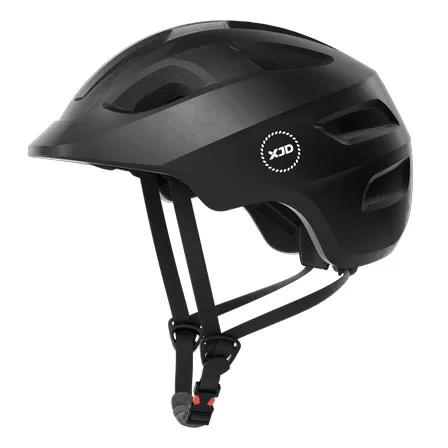
Kids Multi-Sport Bike Helmet by XJD – Black
7 reviews
The XJD Kids Multi-Sport Bike Helmet in Black is a lightweight, adjustable helme…$59.99
$49 -

Kids Bike Helmet by XJD for Boys & Girls – Black, Blue, Green, Pink, Purple
The XJD Kids Bike Helmet covers a wide 2-to-8-year age range thanks to two head-…$59.99
-

Kids Bike Helmet by XJD for Girls – Pink
The XJD Kids Bike Helmet in Pink is a lightweight multi-sport helmet for girls r…$59.99
$99