

What age to teach child to ride bike
Most children are ready to learn to ride a bike between ages 3 and 7, but readiness and measured fit matter more than a birthday.
When should you start teaching?
Begin when your child wants to try and can follow simple directions, look ahead, steer, and stop on request. Some children are ready at 3 or 4; others become comfortable later. There is no deadline, and pressure can make learning harder.
Confidence also affects the right starting point. A cautious child may need more time practicing balance and stopping, even when a size chart suggests a suitable wheel size. A confident child still needs a bicycle that fits; confidence cannot compensate for excessive height or reach.
Measure before choosing a bike
Measure your child’s standing height without shoes. Also measure the inseam from the floor to the crotch, because two children of equal height can have different leg lengths. Compare those measurements with the bicycle’s exact geometry and adjustment information in its product manual.
Then have the child try the bicycle. The American Academy of Pediatrics advises against buying an oversized bike for a child to grow into. During the fit check, confirm that the child can:
- Stand over the bicycle with appropriate clearance.
- Reach the handlebars without stretching or losing an easy upright posture.
- Place their feet securely for the learning method being used.
- Turn the handlebars while remaining balanced and in control.
- Reach and operate the brakes confidently with their hands in a normal riding position.
If any of these checks fail, compare another size or model. Wheel diameter is only a starting point; it does not establish stand-over height, reach, or brake accessibility.
Compare age and height starting points
| Wheel size | Starting age | Rider height |
|---|---|---|
| 12 Inch | 3–4 | 34–40 in / 86–102 cm |
| 14 Inch | 3–6 | 37–45 in / 94–114 cm |
| 16 Inch | 4–7 | 40–48 in / 102–122 cm |
| 18 Inch | 5–9 | 43–52 in / 109–132 cm |
| 20 Inch | 7–12 | 48–60 in / 122–152 cm |
| 24 Inch | 10–14 | 54–64 in / 137–163 cm |
| 26 Inch | Youth and adults | Over 60 in / 153 cm |
Overlapping ranges are intentional: age cannot choose between two sizes. When a child falls into an overlap, compare actual stand-over clearance, inseam, reach, brake control, and confidence on each candidate. Do not move up merely because the larger bicycle may last longer.
How the supplied bikes relate to learning age
These catalog options provide concrete wheel-size comparison points across early learners and older children. They help narrow the size conversation, but the listed size must still pass an individual fit and control check.
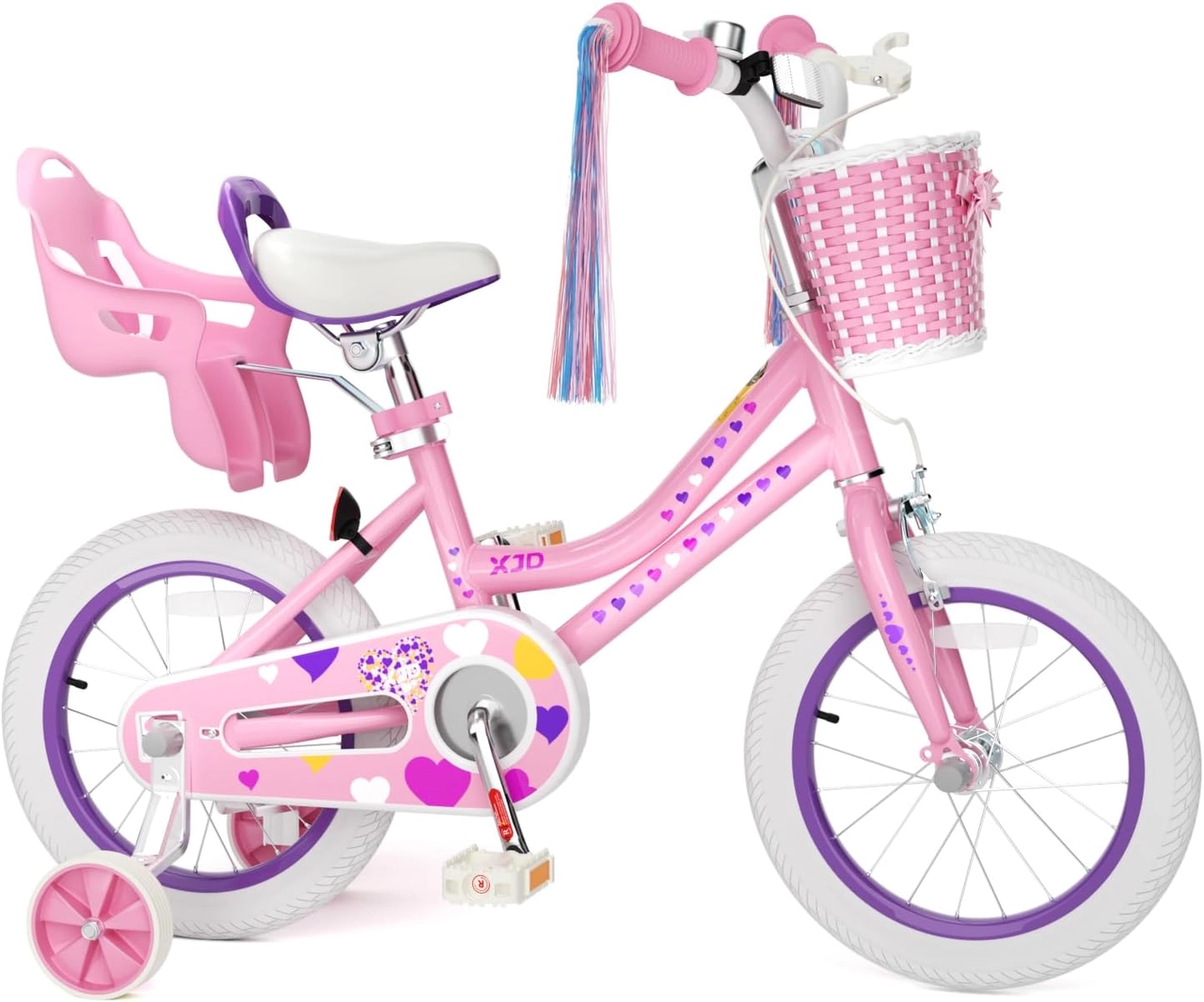 Pink Girls' 12/14/16" Bike by XJD – Basket & Doll Seat
A training wheel bike offered in 12 Inch, 14 Inch, and 16 Inch labels, making it relevant for comparing several early-learning size starting points after measuring the child.
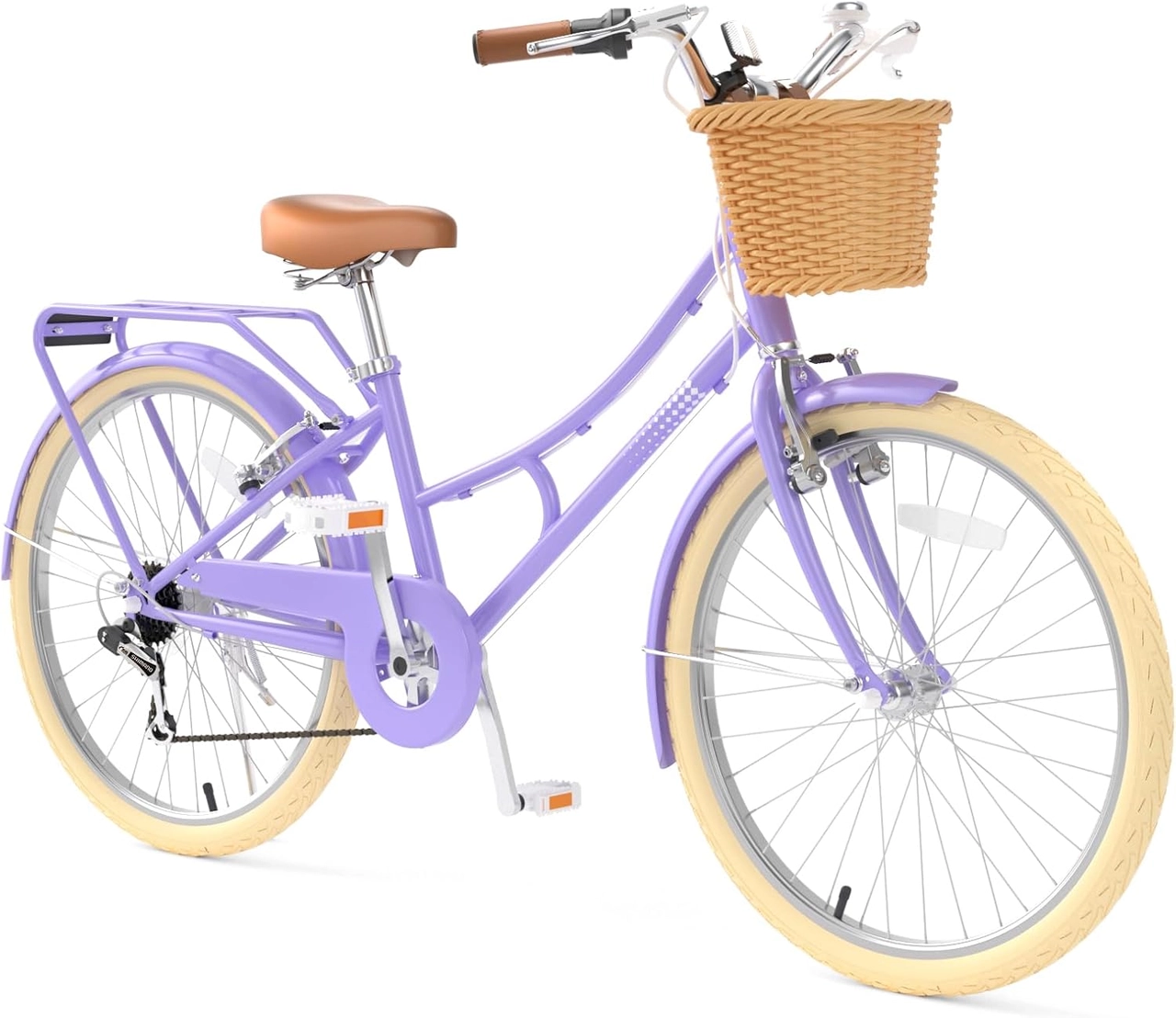 24-Inch Purple XJD Beach Cruiser Bike with U-Brake
This 24-inch beach cruiser is a comparison option for older or taller learners within the supplied 24-inch starting range, subject to individual fit and control checks.
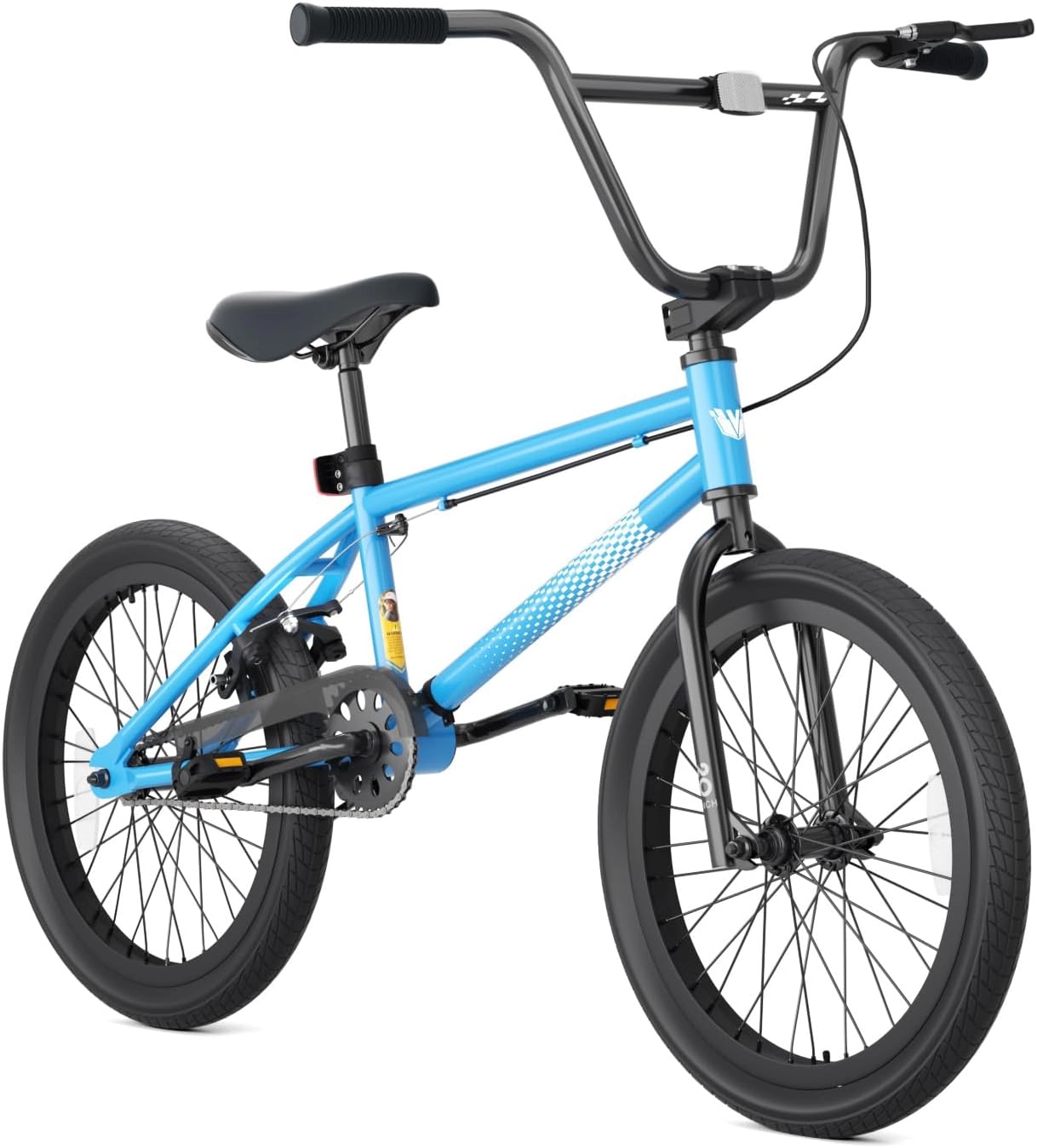 Blue XJD Freestyle BMX Bike, 20-Inch – No Pegs
This 20-inch kids’ BMX bike is relevant to learners within the supplied 20-inch starting range; its BMX category and no-pegs description do not replace a personal fit check.
The Pink Girls' 12/14/16" Bike by XJD – Basket & Doll Seat is categorized as a training wheel bike and offers 12 Inch, 14 Inch, and 16 Inch labels. Those sizes overlap the 3–7 starting ranges in the table, making it the supplied option most directly relevant to many first-time learners. Select among its labels by measured height and an actual fit check, not by age alone.
The Blue XJD Freestyle BMX Bike, 20-Inch – No Pegs is a kids’ BMX bike with a 20-inch wheel size. The XBikes starting point is ages 7–12 and heights 48–60 in / 122–152 cm. It may be relevant to an older or taller learner, but its category does not prove that it suits a particular beginner.
The 24-Inch Purple XJD Beach Cruiser Bike with U-Brake is a beach cruiser bike. A 24-inch wheel is a starting point for ages 10–14 and heights 54–64 in / 137–163 cm, so it is relevant when teaching an older child whose measurements and control support that size. It is not a substitute for a smaller learning bike.
Teach the first rides in manageable steps
- Choose a flat, open area away from traffic, obstacles, and steep slopes.
- First rehearse mounting, looking ahead, steering, and stopping.
- Let the child practice short, controlled attempts while a supervising adult stays close.
- Increase distance only after the child can start, steer, and stop without panic.
- Finish before fatigue or frustration replaces useful practice.
Training wheels can provide support, but their presence does not resolve poor fit or teach every child balance in the same way. Whatever method you use, follow the exact product manual for assembly, adjustment, maintenance, compatibility, load limits, and torque. If instructions are missing or a control cannot be adjusted correctly, use a qualified bicycle mechanic.
Check the helmet and make the decision
Use a bicycle helmet for every practice. The U.S. Consumer Product Safety Commission says it should fit properly, sit level, and have its straps used according to the helmet manufacturer’s instructions. Replace guesswork with a fit check before the first ride.
Your next step: measure height and inseam, shortlist the matching wheel sizes, and have your child try them. Start teaching now only if the child is willing and can stand over, reach, steer, and operate the brakes with control; otherwise choose a better-fitting bike or wait and try again.
Bikes for your next adventure
-

Kids Bike Helmet by XJD for Boys & Girls – Black, Blue, Green, Pink, Purple
The XJD Kids Bike Helmet covers a wide 2-to-8-year age range thanks to two head-…$59.99
-

Kids Bike Helmet by XJD for Girls – Pink
The XJD Kids Bike Helmet in Pink is a lightweight multi-sport helmet for girls r…$59.99
$99 -

XJD Kids Bike for Girls – Pink, 12/14/16/20 Inch with Training Wheels
The XJD Kids Bike for Girls in Pink is a training-wheel bike built to carry your…$139
$159