

What bike size for 10 year old
For most 10-year-olds, start by comparing 20-inch and 24-inch bikes. Measure the child first: 20-inch fits 48–60 in (122–152 cm), while 24-inch fits 54–64 in (137–163 cm). The correct choice depends on fit and control, not age alone.
Choose the starting size from measured height
Have the child stand straight without shoes and measure from the floor to the top of the head. Compare that result with the XBikes starting points:
| Wheel size | XBikes age guide | Rider-height guide |
|---|---|---|
| 20 Inch | Ages 7–12 | 48–60 in / 122–152 cm |
| 24 Inch | Ages 10–14 | 54–64 in / 137–163 cm |
| 26 Inch | Youth and adults | Over 60 in / 153 cm |
A 10-year-old between 54 and 60 inches falls within both the 20-inch and 24-inch starting ranges. That overlap does not make the sizes equivalent. It means the child should try both and choose according to stand-over clearance, reach, braking control and confidence.
If the rider is shorter than 54 inches, begin with a 20-inch bike. At 54–60 inches, compare 20-inch and 24-inch fits directly. Above 60 inches, include a 26-inch option in the fit check, while recognizing that geometry can differ between individual bicycles.
Measure inseam before trying the bike
Height narrows the choice, but inseam helps reveal whether the child can manage the frame. With shoes off, have the child stand against a wall with feet slightly apart. Place a firm, level book between the legs so it rests like a bicycle saddle, then measure from the floor to the top edge of the book.
Compare that measurement with the stand-over space on the actual bicycle. The child should be able to straddle the frame comfortably and get on and off without being trapped or forced onto tiptoes. Because no universal stand-over clearance number is supplied here, assess the real bicycle rather than relying on an invented formula.
Use a hands-on fit check
Do not buy an oversized bicycle solely to allow room for growth. A child who cannot comfortably control today’s bike may struggle to start, stop, steer or dismount. During a supervised trial, check all of the following:
- The child can straddle the frame comfortably.
- The seated position allows confident starts and stops.
- The handlebars can be reached without excessive stretching or a cramped posture.
- The child can steer smoothly at low speed.
- Each brake control can be reached and operated reliably with the child’s hands.
- The rider looks and feels in control rather than intimidated by the bicycle’s size.
If the child is between sizes, current control should decide the result. Recheck the fit after any permitted adjustments, following the exact product manual. Ask a qualified bicycle mechanic to handle assembly, compatibility questions or adjustments when the manual does not provide a clear procedure.
How the supplied XBikes products compare
The catalog options provide useful 20-inch and 24-inch comparison points for the two sizes most likely to be considered at age 10. They help turn the height ranges into a practical try-and-compare decision, but neither product should be selected from wheel size alone.
 Girls' Training Wheel Bike by XJD with Basket – Purple
Available in 14 Inch, 16 Inch and 20 Inch labels; its 20 Inch option is relevant for comparing the XBikes 48–60 in rider-height starting range.
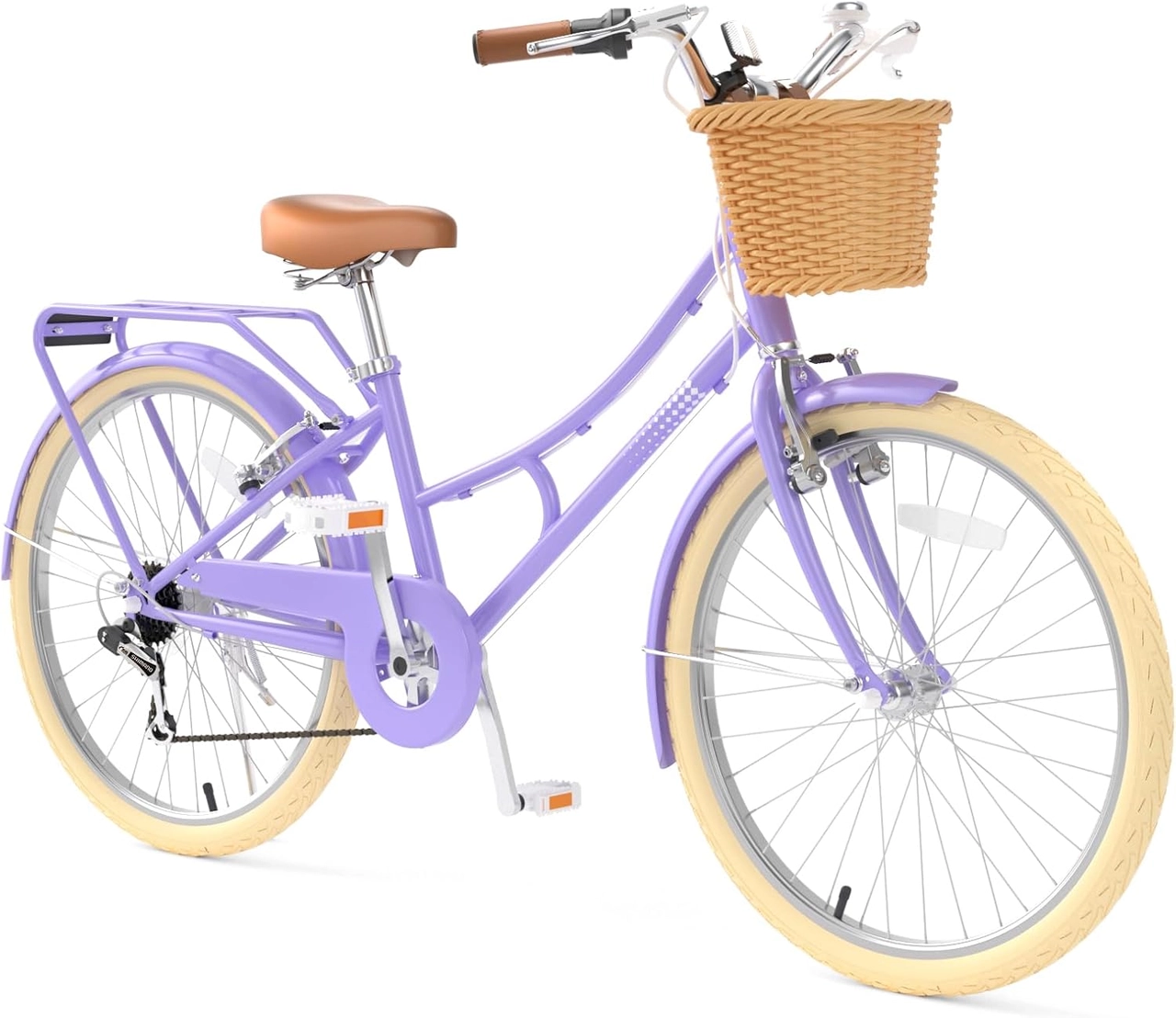 24-Inch Purple XJD Beach Cruiser Bike with U-Brake
A 24-inch Beach Cruiser Bike comparison for riders starting within the XBikes 54–64 in height range; confirm stand-over, reach, brake control and confidence individually.
Girls' Training Wheel Bike by XJD with Basket – Purple is listed in 14 Inch, 16 Inch and 20 Inch SKU labels. For this question, only its 20 Inch option aligns with the 20-inch starting range of ages 7–12 and heights 48–60 inches. The smaller listed options are outside the usual starting point for most 10-year-olds, although measured fit still governs.
24-Inch Purple XJD Beach Cruiser Bike with U-Brake is the supplied 24-inch comparison. The XBikes starting range for that wheel size is ages 10–14 and heights 54–64 inches. Its catalog SKU label is “Default,” so confirm the exact configuration shown on the product page and complete an individual fit check.
These bicycles are comparison candidates, not interchangeable substitutes. Their supplied categories also differ: the first is a Training Wheel Bike and the second is a Beach Cruiser Bike. The catalog facts do not establish frame dimensions, component compatibility, load limits or adjustment procedures; consult the exact manual or a qualified bicycle mechanic for those details.
Complete the decision safely
After identifying the better-fitting wheel size, check that the child can repeat controlled starts, turns and stops in a suitable supervised area. A bicycle helmet must fit properly, sit level and have its straps used according to the helmet manufacturer’s instructions.
For a 10-year-old, the next action is simple: measure height and inseam, shortlist 20-inch or 24-inch according to the ranges above, then have the child try the actual bike. Choose the size the child can straddle, reach, brake and control confidently today.
Bikes for your next adventure
-

Light Purple XJD Toddler Bike Helmet, Adjustable, Size XS (46–51 cm)
This Light Purple XJD toddler bike helmet is made for the smallest riders — the …$20.39
-

XJD Girls Bike for Kids Ages 3-8, 12/14/16 Inch with Training Wheels – Purple
The XJD Girls Bike in Purple is a training-wheel bicycle for kids ages 3 to 8, f…$149
$169 -

Pink Girls' 12/14/16" Bike by XJD – Basket & Doll Seat
The XJD Pink Girls' Bike with Basket & Doll Seat is made for riders 71–122 cm ta…$75.99
$99.99