

What bike size for a 10 year old
For a 10-year-old, start by comparing a 20-inch and 24-inch bike: choose by measured height and fit, not birthday. A 20-inch starts at 48–60 in (122–152 cm), while a 24-inch starts at 54–64 in (137–163 cm).
Which wheel size should you check?
Age ten falls within both XBikes starting ranges: ages 7–12 for a 20-inch bike and ages 10–14 for a 24-inch bike. That overlap is intentional: children of the same age can differ substantially in height, leg length, reach and confidence.
| Wheel size | XBikes age starting point | XBikes rider-height starting point |
|---|---|---|
| 20 Inch | 7–12 | 48–60 in / 122–152 cm |
| 24 Inch | 10–14 | 54–64 in / 137–163 cm |
| 26 Inch | Youth and adults | Over 60 in / 153 cm |
A rider below 54 inches will usually begin the comparison with a 20-inch bike. From 54 to 60 inches, compare 20-inch and 24-inch models in person because both ranges apply. Above 60 inches, the 24-inch and 26-inch starting points overlap, so actual control becomes decisive. These ranges narrow the search; they do not confirm fit.
Measure before choosing
Measure the child without shoes, standing straight against a wall. Record total height from the floor to the top of the head. Then measure inseam from the floor to the crotch, using a book held level to represent the bicycle saddle area.
Use height to identify the likely wheel sizes in the table. Use inseam during the physical fit check: the child needs comfortable clearance when standing over the bike rather than being pressed against it. Wheel size alone does not reveal frame shape, saddle adjustment or reach, so an inseam measurement cannot be converted into a guaranteed size without the exact bicycle’s fit information.
Do a real fit check
Have the child try the bicycle. Do not choose an oversized model merely to leave room for growth. While the bike is supported securely, check that the rider can:
- stand over the frame with comfortable clearance;
- get on and off without struggling or tipping;
- reach the handlebar without stretching or locking the elbows;
- turn the handlebar while remaining balanced;
- reach and operate the brakes with normal hand placement;
- start, stop and steer at a level appropriate to current confidence.
If the larger option makes any of these actions uncertain, choose the smaller properly fitting option and reassess later. A child who is tall enough on paper may still lack the reach or confidence to control that particular bicycle.
How the supplied bikes help with the comparison
The catalog provides one 24-inch option and two products that include or use a 20-inch size. They are useful comparison points for the two sizes most commonly considered at age ten, but their titles and categories do not prove that their frames will fit a particular child.
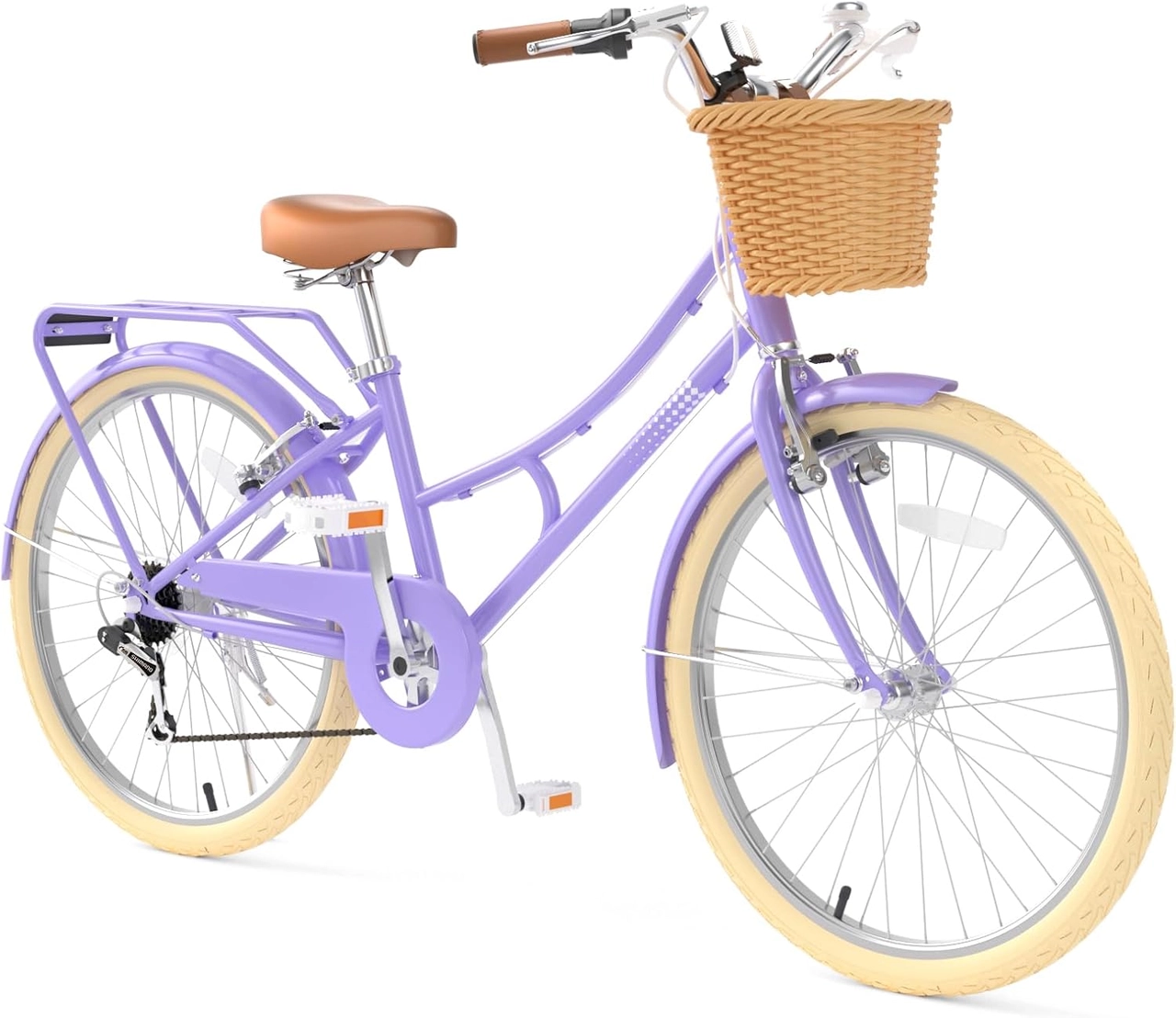 24-Inch Purple XJD Beach Cruiser Bike with U-Brake
A 24-inch Beach Cruiser Bike that provides a direct comparison for riders within the 54–64 in XBikes starting range; confirm stand-over clearance, reach and brake control.
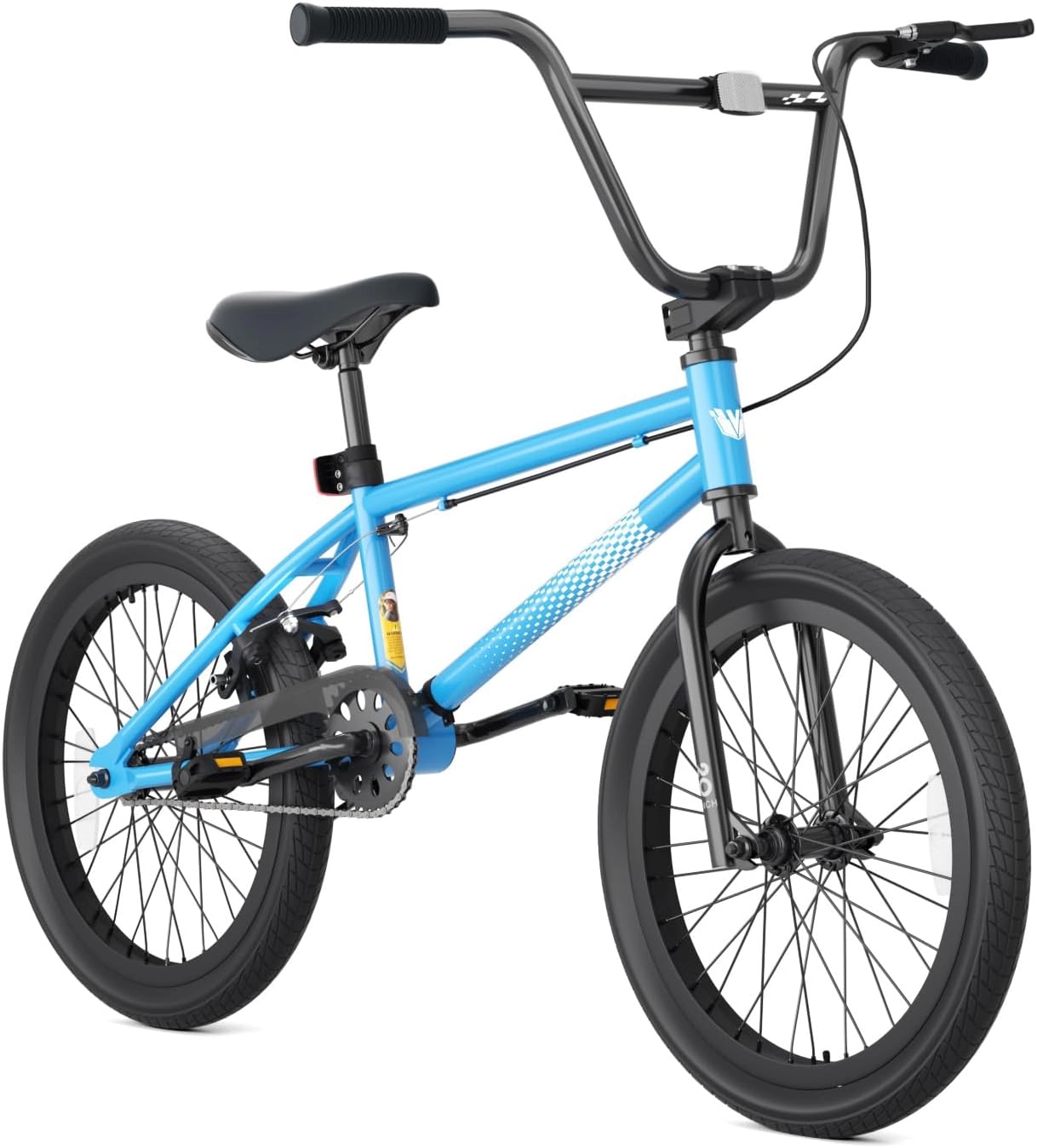 Blue XJD Freestyle BMX Bike, 20-Inch – No Pegs
A 20-inch Kids’ BMX Bike that provides a comparison for the 48–60 in XBikes starting range, subject to an individual fit and control check.
 Pink 12/14/16/20" XJD Girls Bike with Training Wheels & Basket
This Training Wheel Bike has 12-, 14-, 16- and 20-inch options. For this question, only the 20-inch SKU is a relevant starting comparison, not proof of fit.
The 24-Inch Purple XJD Beach Cruiser Bike with U-Brake is the direct 24-inch comparison. Because it is categorized as a Beach Cruiser Bike, compare its stand-over clearance, reach and brake control with the child on the actual bicycle.
The Blue XJD Freestyle BMX Bike, 20-Inch – No Pegs is a 20-inch comparison in the Kids’ BMX Bikes category. Its wheel size falls within the 48–60-inch starting range, but the category and wheel diameter do not replace an individual reach and control check.
The Pink 12/14/16/20" XJD Girls Bike with Training Wheels & Basket offers 12-, 14-, 16- and 20-inch SKU labels. Only its 20-inch version is a relevant starting comparison for a typical ten-year-old under this sizing standard. The smaller versions correspond to younger and shorter starting ranges and should not be treated as equivalent substitutes.
What to do when two sizes seem possible
Compare the candidate bicycles side by side with the saddle adjusted only as permitted by each product manual. Ask the child to repeat the same mounting, standing, reaching, braking and steering checks on both. Favor the bike the child can control now; anticipated growth is not a reason to accept poor stand-over clearance or difficult brake reach.
For assembly, adjustments, maintenance, load limits, compatibility and torque, follow the exact product manual or use a qualified bicycle mechanic. Do not improvise an adjustment beyond the manufacturer’s instructions.
Finish with the helmet check
Once the bicycle fits, fit the helmet separately. It should be the correct size, sit level on the head and have its straps positioned according to the helmet manufacturer’s instructions. A properly sized bike does not compensate for a loose, tilted or incorrectly strapped helmet.
For a 10-year-old, measure height and inseam today, shortlist 20-inch or 24-inch using the table, and buy only after the child demonstrates comfortable stand-over clearance, reach, braking and control on that exact bike.
Bikes for your next adventure
-

Light Purple XJD Toddler Bike Helmet, Adjustable, Size XS (46–51 cm)
This Light Purple XJD toddler bike helmet is made for the smallest riders — the …$20.39
-

Pink Girls' 12/14/16" Bike by XJD – Basket & Doll Seat
The XJD Pink Girls' Bike with Basket & Doll Seat is made for riders 71–122 cm ta…$75.99
$99.99 -

XJD Girls Bike for Kids Ages 3-8, 12/14/16 Inch with Training Wheels – Purple
The XJD Girls Bike in Purple is a training-wheel bicycle for kids ages 3 to 8, f…$149
$169