

What size bike frame for 26 inch wheels
A 26-inch wheel does not determine one universal bike-frame size. Measure the rider’s height and inseam, then check stand-over clearance, reach, brake control and confidence on the exact bicycle.
The direct answer for 26-inch wheels
In the XBikes starting points, 26-inch wheels are intended for youth and adults taller than 60 inches (153 cm). That threshold helps identify a wheel-size category; it does not specify a universal frame measurement. Two bicycles with 26-inch wheels can have different frame shapes, saddle ranges and cockpit dimensions.
Start with the rider’s measured height. If the rider is not over 60 inches (153 cm), do not assume a 26-inch bicycle will fit. A 24-inch bicycle is the adjacent XBikes starting point for riders 54–64 inches (137–163 cm), ages 10–14, but the overlap is a reason to try both sizes—not permission to choose either without checking control.
| Wheel label | XBikes starting point | How to use it |
|---|---|---|
| 20 Inch | Ages 7–12; 48–60 in / 122–152 cm | A smaller comparison when 26 inches is clearly too large |
| 24 Inch | Ages 10–14; 54–64 in / 137–163 cm | The closest comparison for riders around the transition |
| 26 Inch | Youth and adults over 60 in / 153 cm | The requested wheel category, subject to an individual fit check |
Measure the rider before comparing frames
Measure height without shoes, standing straight against a wall. Then measure inseam from the floor to the crotch while the rider stands naturally. Use a firm book held level to imitate the pressure of a saddle; measure from its top edge to the floor.
Record both measurements in inches or centimetres. Height lets you compare the rider with the XBikes wheel-size starting point. Inseam helps assess whether the rider can straddle the actual frame comfortably. Do not convert the inseam into a frame size with a universal formula: frame geometry and measurement conventions differ.
Check the exact bicycle, not just its label
Have the rider try the assembled bicycle with suitable shoes. The American Academy of Pediatrics guidance emphasizes trying the bicycle, checking stand-over and control, and avoiding an oversized bike bought merely for future growth.
- Stand-over: With both feet on the ground and the bicycle upright, confirm the rider can straddle the top tube without being forced onto tiptoes or pressed against the frame.
- Starting and stopping: The rider should mount, begin riding, stop and put a foot down without panic or a loss of balance.
- Reach: Seated normally, the rider should reach the handlebar without stretching, locking the elbows or losing a stable posture.
- Brake control: The rider must reach and operate the brake controls confidently while keeping control of the handlebar.
- Steering: Ask for slow turns in both directions. Awkward steering or visible strain means the label alone has not produced a sound fit.
If any check fails, compare another frame or wheel size. Adjust only within the limits and procedures in the exact product manual, or ask a qualified bicycle mechanic to assess the setup.
How the supplied XBikes option helps
The XJD Kids Beach Cruiser Bicycle, Rear Rack & V-Brakes, Mint Green is offered with 20 Inch, 24 Inch and 26 Inch SKU labels. Because all three relevant comparison labels appear on one catalog item, these options help distinguish the requested 26-inch version from smaller 24-inch and 20-inch versions. They do not establish identical frame geometry or guarantee that any version fits a particular rider.

For a rider over 60 inches (153 cm), the 26 Inch option is the relevant starting point. For someone near the transition, the 24 Inch option is a genuine smaller-size comparison, not an equivalent substitute. The 20 Inch option corresponds to the smaller 48–60 inch (122–152 cm) starting range. Choose only after the rider tries the exact version and passes the fit checks.
Do not size up for growth
A bicycle that is difficult to straddle, steer or stop is not made suitable by the expectation that a child will grow. Age is less useful than current measurements and demonstrated control. Even when the rider falls within a listed height range, proportions, reach and confidence can change the result.
If the rider is over 60 inches but cannot comfortably control a particular 26-inch bicycle, try a different frame design or compare the adjacent wheel-size option. Do not force a 26-inch choice simply because the height threshold has been crossed.
Make the final decision
Measure height and inseam, use over 60 inches (153 cm) as the 26-inch starting point, and then test stand-over, reach, braking, steering, starts and stops on the exact bike. Follow its manual for assembly and adjustments, or use a qualified bicycle mechanic when specifications or procedures are unclear. Before riding, fit a bicycle helmet so it sits level and secure its straps according to the helmet manufacturer’s instructions. Choose the 26-inch version only when the rider can control it now—not when it merely looks like the next size to grow into.
Bikes for your next adventure
-
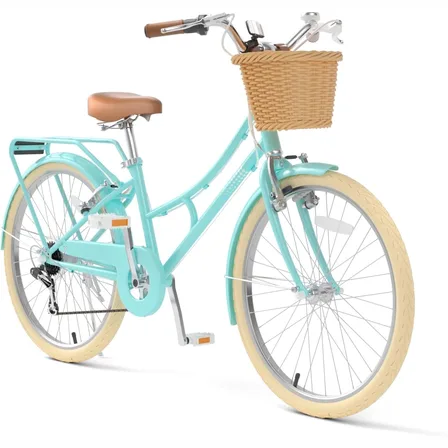
XJD Kids Beach Cruiser Bicycle, Rear Rack & V-Brakes, Mint Green
The XJD Beach Cruiser in Mint Green is a geared, multi-speed cruiser bike for ol…$179.99
$209.99 -
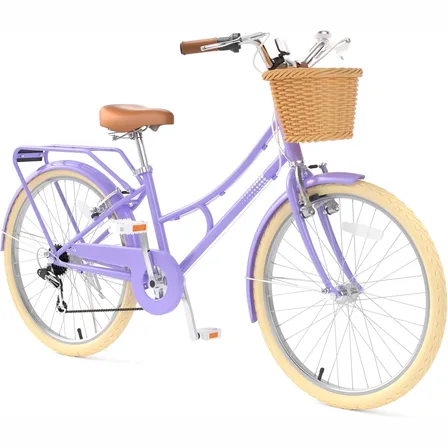
24-Inch Purple XJD Beach Cruiser Bike with U-Brake
The XJD 24-Inch Purple Beach Cruiser is built for girls and young women roughly …$159.99
-
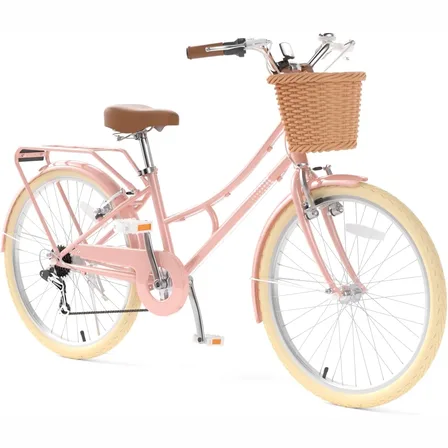
XJD Pink Beach Cruiser for Girls – Rear Rack & V-Brake
The XJD Pink Beach Cruiser for girls is the step-up bike for riders who've outgr…$179.99
$209.99