

When can a kid ride a 2 wheel bike
A kid can ride a two-wheel bike when the bike fits their body and they can balance, steer, stop and follow simple directions with confidence.
Readiness matters more than a birthday
There is no single age when every child is ready. Age is only a starting point because children of the same age can differ in height, reach, coordination and confidence. Look for a child who wants to try, can pay attention to instructions and can keep the bicycle moving in a reasonably straight line.
Before removing training wheels or choosing a bike without them, check whether the child can place their feet down promptly, turn the handlebar without overreaching and operate the brakes reliably. If they freeze, cannot stop on command or need an adult to hold the bike continuously, give them more practice rather than pushing the transition.
Measure the child before comparing bikes
Measure the child’s standing height without shoes. Then measure inseam from the floor to the crotch while the child stands upright. Compare those measurements with the bicycle itself, not merely with an age label or wheel number.
Have the child try the exact bike whenever possible. They should be able to straddle it with useful clearance, reach the handlebar without stretching and turn it while remaining in control. Check that their hands can reach and operate the brakes. Do not buy an oversized bicycle just to allow room for growth; a bike that is too large can make starting, stopping and steering harder.
Use wheel size only as a starting point
These XBikes ranges narrow the search, but they do not replace an individual fit check:
| Wheel size | Starting age | Rider height |
|---|---|---|
| 12 Inch | 3–4 | 34–40 in / 86–102 cm |
| 14 Inch | 3–6 | 37–45 in / 94–114 cm |
| 16 Inch | 4–7 | 40–48 in / 102–122 cm |
| 18 Inch | 5–9 | 43–52 in / 109–132 cm |
| 20 Inch | 7–12 | 48–60 in / 122–152 cm |
| 24 Inch | 10–14 | 54–64 in / 137–163 cm |
| 26 Inch | Youth and adults | Over 60 in / 153 cm |
Where ranges overlap, prioritize measured height, inseam, reach, brake control and present confidence. Wheel size alone cannot confirm fit because bicycle geometry and the child’s proportions can differ.
How to check two-wheel readiness
- Confirm the fit: Let the child straddle the bicycle, sit on it and reach every control comfortably.
- Check balance: In a clear practice area, see whether the child can move with their feet ready to touch down rather than relying on an adult to hold them upright.
- Check steering: Ask them to look ahead, travel straight and make broad, controlled turns.
- Check stopping: Make sure they understand how to brake and can stop on request without losing control.
- Watch confidence: Mild caution is normal, but distress or repeated loss of control means the child needs a smaller step or more practice.
Begin on a flat, open area away from traffic, slopes and obstacles. Keep sessions short enough that fatigue does not undermine control. A properly fitting bicycle helmet should sit level and use its straps according to the helmet manufacturer’s instructions.
Where the supplied XBikes options fit
The two supplied catalog bikes are relevant when a child is still using training wheels, is preparing for two-wheel riding, or needs a 12-, 14- or 16-inch size for an individual fit comparison. Their training-wheel configuration may support staged practice, but the catalog facts do not establish when a particular child should remove the wheels.
The Girls 12/14/16 Inch Kids Bike by XJD with Training Wheels – Peach is listed in 12 Inch, 14 Inch and 16 Inch options. The XJD Light Purple Girls Bike with Basket, Training Wheels, 12/14/16/20 Inch has supplied available SKU labels of 12 Inch, 14 Inch and 16 Inch; despite “20 Inch” appearing in its exact catalog title, a 20-inch available SKU was not supplied here. Compare only the verified size options, then check the child on the exact bicycle.
 Girls 12/14/16 Inch Kids Bike by XJD with Training Wheels – Peach
A training-wheel bike offered in verified 12 Inch, 14 Inch and 16 Inch options, useful for comparing a child’s measured height, reach, brake control and readiness before a two-wheel transition.
 XJD Light Purple Girls Bike with Basket, Training Wheels, 12/14/16/20 Inch
A training-wheel bike with verified available SKU labels of 12 Inch, 14 Inch and 16 Inch. Although its exact title mentions 20 Inch, that size is not included in the supplied available SKU labels.
These products are not relevant if the rider’s measurements and control require an 18-, 20-, 24- or 26-inch bike, because no such available SKU is verified in the supplied product facts. A nearby wheel size is a comparison point, not an equal substitute. For assembly, adjustments, compatibility, load limits and torque, follow the exact product manual or consult a qualified bicycle mechanic.
Make the decision
Move to two wheels when the child fits the exact bike, reaches and operates the brakes, balances and steers with control, stops on command and is willing to practise. If even one of those checks fails, keep building that skill or try a correctly fitting option—do not use age alone to force the transition.
Bikes for your next adventure
-

Blue XJD Girls Bike with Training Wheels – 12/14/16 Inch
If you're shopping for a first pedal bike for a daughter roughly 3 to 8 years ol…$149
$169 -

XJD Kids Bike for Girls – Pink, 12/14/16/20 Inch with Training Wheels
The XJD Kids Bike for Girls in Pink is a training-wheel bike built to carry your…$139
$159 -
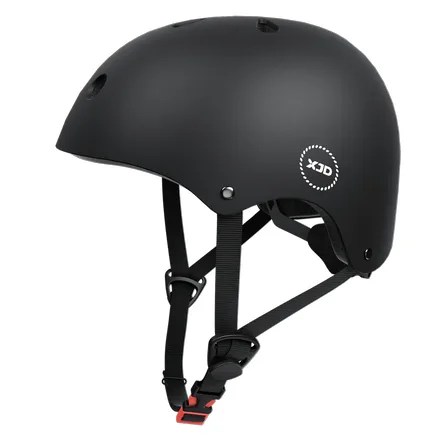
7-in-1 Kids Helmet & Protective Gear Set from XJD – Black or Blue
If you're outfitting one kid (or a couple of siblings) for biking, scootering, o…$59.99