

When can a toddler ride a bike
A toddler can ride a bike when a correctly sized bicycle fits their measured body and they can steer, stop, balance and follow simple directions with close adult supervision. Age alone is not enough.
Start with readiness, not a birthday
XBikes lists a 12-inch bike as a starting point for ages 3–4 and rider heights of 34–40 inches (86–102 cm). This does not mean every three-year-old is ready, or that a younger child should automatically use a 12-inch bike. If the child is below that age or height range, the supplied standard does not establish a suitable bicycle size.
Before choosing a bike, watch whether the child can walk and turn confidently, understand “stop,” keep attention on the riding area and cooperate with an adult. They should also be willing to try. Fear, poor control or an inability to stop are reasons to wait and practise foundational movement skills.
Measure the child before comparing bikes
Measure height without shoes, with the child standing straight against a wall. Then measure inseam from the floor to the crotch while the child stands naturally. Use these measurements to narrow the options, but complete the decision with an in-person fit check.
On the actual bicycle, check that the child can stand over it comfortably, reach the handlebars without stretching and turn them while remaining stable. Their hands must reach and operate the brakes with useful control. Do not buy an oversized bicycle merely to leave room for growth.
Compare the relevant wheel-size starting points
| Wheel size | Starting age | Rider height | Likely relevance |
|---|---|---|---|
| 12 Inch | 3–4 | 34–40 in / 86–102 cm | First comparison for many toddler-age riders who fall within the range |
| 14 Inch | 3–6 | 37–45 in / 94–114 cm | Compare when the measured child is tall enough and can control the larger fit |
| 16 Inch | 4–7 | 40–48 in / 102–122 cm | Usually outside the toddler decision unless the individual measurements and fit support it |
| 20 Inch | 7–12 | 48–60 in / 122–152 cm | Not a toddler starting point under this standard |
Overlapping height ranges are a reason to try both adjacent sizes, not permission to choose the larger one automatically. Compare stand-over clearance, reach, brake operation and the child’s current confidence. A smaller option that the child controls is more appropriate than a larger option they will supposedly grow into.
How the supplied XBikes option relates
The Pink 12/14/16/20" XJD Girls Bike with Training Wheels & Basket is cataloged as a training-wheel bike and offers 12 Inch, 14 Inch, 16 Inch and 20 Inch SKU labels. These particular options help because a parent can compare the 12- and 14-inch starting points against a toddler’s measurements, while recognizing that the larger labels serve older or taller ranges rather than equivalent substitutes.

For a measured rider 34–40 inches (86–102 cm), the 12 Inch label is the first catalog option to try. The 14 Inch label starts at 37 inches (94 cm), but it is relevant only if the child can comfortably stand over, reach, steer and brake on that exact bike. The 16 Inch and 20 Inch labels should not be treated as toddler choices merely because they appear on the same product listing.
Training wheels can change how a child experiences balance, but their presence does not prove that a bike fits or that the rider is ready. Follow the exact product manual for assembly, adjustment, maintenance, compatibility and limits not stated here. If anything is unclear, use a qualified bicycle mechanic.
Make the first rides controlled
- Choose a flat area away from traffic, slopes, obstacles and other riders.
- Stay close enough to intervene while the child learns to start, steer and stop.
- Practise stopping on command before allowing longer runs.
- End the session if the child becomes tired, distressed or loses consistent control.
Use a bicycle helmet that fits properly, sits level and has its straps adjusted according to the helmet manufacturer’s instructions. A helmet cannot compensate for an oversized bicycle, poor brake reach or an unsuitable riding area.
Decide what to do next
Measure height and inseam today, compare the result with the 12- and 14-inch starting ranges, and arrange an actual fit check. Proceed only when the child can stand over the bike, reach every control, steer and stop confidently. If those checks fail—or the child is below the supplied ranges—wait rather than sizing up or guessing.
Bikes for your next adventure
-
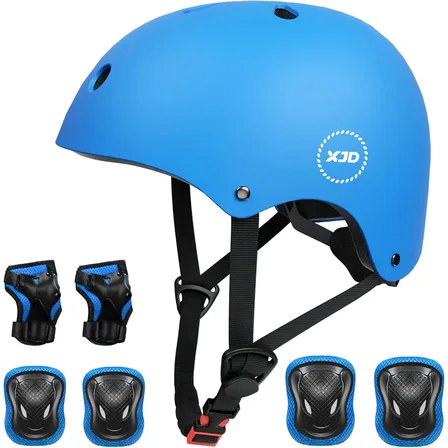
Blue XJD Helmet & Protective Gear Set for Kids, Sizes S/M
The Blue XJD Helmet & Protective Gear Set is made for kids roughly 3 to 8 years …$23.79
-
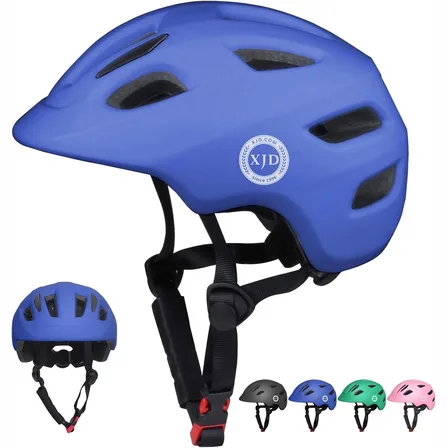
Blue XJD Kids' Bike Helmet, Adjustable Fit – Sizes XS & S
The Blue XJD Kids' Bike Helmet is a lightweight, adjustable helmet for toddlers …$20.39
-

Black XJD Toddler Bike Helmet, Adjustable – Kids' Protective Helmet
The XJD Toddler Bike Helmet in black is an adjustable protective helmet for kids…$20.39