

When can a toddler start riding a bike
A toddler can start riding when they can walk steadily, follow simple directions and control a correctly fitted bike; age alone does not decide readiness.
Check readiness before choosing a bike
“Toddler” covers a wide range of development. Before shopping, watch whether your child can balance while walking and running, stop on request, steer around an object and stay interested for a short practice session. A hesitant child can wait; there is no benefit in forcing the transition.
The supplied XBikes sizing standard begins with a 12 Inch bike at ages 3–4 and rider heights of 34–40 in (86–102 cm). This is a starting point, not permission to ride based on a birthday. A younger toddler, or any child below that height range, may not fit the catalog bikes discussed here.
Measure height and inseam
Measure your child without shoes, standing straight against a wall, for current height. Then measure inseam from the floor to the crotch while the child stands with feet slightly apart. Height helps identify a wheel-size starting point; inseam must then be compared with the actual bicycle’s stand-over clearance and saddle adjustment.
For the smallest relevant sizes, XBikes lists:
| Wheel size | Starting age | Rider height |
|---|---|---|
| 12 Inch | 3–4 | 34–40 in / 86–102 cm |
| 14 Inch | 3–6 | 37–45 in / 94–114 cm |
| 16 Inch | 4–7 | 40–48 in / 102–122 cm |
Use the child’s measured height first. Where ranges overlap, the correct choice depends on individual stand-over clearance, reach, brake access and confidence—not on choosing the larger wheel for longer use.
Perform an in-person fit check
Have the child try the exact bicycle. The American Academy of Pediatrics advises against buying an oversized bike merely for growth. Confirm that the child can stand over it comfortably, get on and off without struggling, sit in a controllable position and reach the handlebar without stretching or locking their arms.
Ask the child to demonstrate steering and braking while an adult closely supervises. Their hands must reach and operate the bicycle’s controls reliably. Because brake configuration and adjustment are not supplied here, consult the exact product manual or a qualified bicycle mechanic rather than assuming every model operates alike.
A bike is not ready for this rider if the child must lean excessively to reach, cannot place themselves securely when stopping, cannot use its brakes, or freezes when asked to steer. Choose by present control rather than anticipated growth.
How the supplied training-wheel bikes relate
The two catalog options are useful comparison points because both are Training Wheel Bikes and both offer 12 Inch, 14 Inch and 16 Inch labels, covering XBikes’ smallest listed starting sizes. One also extends to 20 Inch. Their labels narrow the sizes to try, but do not replace measuring or an individual fit check.
 Light Pink XJD Girls' Bicycle with Basket & Training Wheels
A Training Wheel Bike offered in 12, 14, 16 and 20 Inch labels. Its 12 and 14 Inch options are the most relevant toddler-size comparison points, subject to measured height and a complete individual fit check.
 Blue XJD Girls Bike with Training Wheels – 12/14/16 Inch
A Training Wheel Bike offered in 12, 14 and 16 Inch labels. Compare the size matching the child’s measured height, then verify stand-over clearance, reach, brake control and confidence on the exact bicycle.
The Light Pink XJD Girls' Bicycle with Basket & Training Wheels is listed in 12 Inch, 14 Inch, 16 Inch and 20 Inch options. For a toddler-sized comparison, begin only with the 12 Inch or 14 Inch option that corresponds to the child’s measured height; do not treat its larger labels as equivalent fits.
The Blue XJD Girls Bike with Training Wheels – 12/14/16 Inch is listed in 12 Inch, 14 Inch and 16 Inch options. Its title is a catalog name, not proof that a particular child fits. Compare the relevant exact size in person for stand-over, reach, brake control and confidence.
Prepare for the first rides
Choose a flat practice area away from traffic, driveways, slopes and obstacles. Keep sessions brief and stay close enough to intervene. Training wheels can support the bicycle upright, but they do not prove that the frame fits or that the child can steer, stop and judge hazards.
Use a bicycle helmet every ride. U.S. Consumer Product Safety Commission guidance calls for a properly fitting helmet that sits level, with straps positioned and fastened according to the helmet manufacturer’s instructions. Check the fit each time rather than relying on how it fitted previously.
Follow the exact bicycle manual for assembly, maintenance, adjustments and any limits not provided in the catalog facts. If the instructions are unclear or the controls need adjustment, use a qualified bicycle mechanic.
Make the start-or-wait decision
Start now only if your toddler falls within the relevant height range, fits the exact bike without stretching or crowding, can reach and operate its controls, follows stopping directions and remains calm enough to practise. If any one of those checks fails, wait and measure again later rather than moving up a size. The next step is to record height and inseam, try the corresponding 12 Inch or 14 Inch bike, and accept it only when the complete fit-and-control check succeeds.
Bikes for your next adventure
-
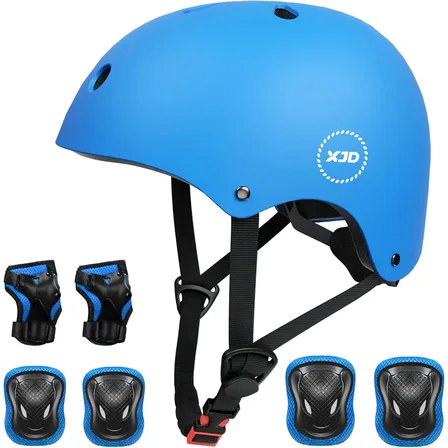
Blue XJD Helmet & Protective Gear Set for Kids, Sizes S/M
The Blue XJD Helmet & Protective Gear Set is made for kids roughly 3 to 8 years …$23.79
-
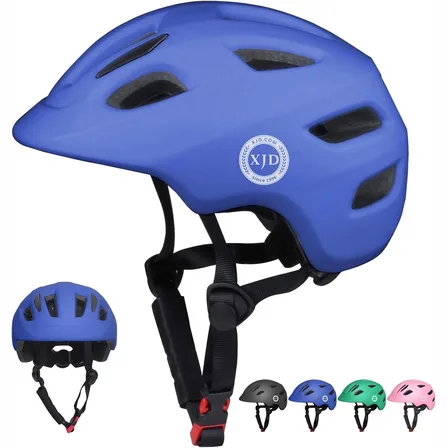
Blue XJD Kids' Bike Helmet, Adjustable Fit – Sizes XS & S
The Blue XJD Kids' Bike Helmet is a lightweight, adjustable helmet for toddlers …$20.39
-

Black XJD Toddler Bike Helmet, Adjustable – Kids' Protective Helmet
The XJD Toddler Bike Helmet in black is an adjustable protective helmet for kids…$20.39