

When can toddler ride bike
A toddler can ride a bike when they can balance, steer, stop and fit the bike securely. For XBikes, a 12-inch bike starts at ages 3–4 and 34–40 in (86–102 cm), but measurements and an individual fit check matter more than age.
Is your toddler ready now?
Age alone cannot answer this question. Before choosing a pedal bike, look for coordinated walking and running, the ability to follow simple directions, and enough attention to steer around an obstacle. The child should willingly sit on the bike and practise; fear, freezing or repeated loss of control means it is sensible to wait.
The smallest XBikes starting point is a 12-inch wheel for ages 3–4 and rider heights of 34–40 in (86–102 cm). A child younger or shorter than that range is not automatically ready for the supplied bike. Even a child inside the range must still demonstrate suitable reach, control and confidence.
Measure before comparing bikes
Measure height without shoes, with the child standing straight against a wall. Then measure inseam from the floor to the crotch while the child stands naturally. Record both measurements rather than relying on clothing size or an estimated age.
Height provides the first wheel-size comparison. Inseam helps you judge stand-over room and whether the child can get on and off without struggling. Because frame shapes and adjustments vary, inseam does not translate into a universal wheel size by itself; the child must try the exact bicycle.
| Wheel size | XBikes age starting point | Rider height |
|---|---|---|
| 12 Inch | Ages 3–4 | 34–40 in / 86–102 cm |
| 14 Inch | Ages 3–6 | 37–45 in / 94–114 cm |
| 16 Inch | Ages 4–7 | 40–48 in / 102–122 cm |
Where ranges overlap, do not automatically select the larger wheel. The American Academy of Pediatrics advises having the child try the bicycle and avoiding an oversized bike bought for future growth.
What to check during the bike fitting
Ask the child to wear ordinary riding shoes and try the bike with close adult support. Check these points before treating any size as suitable:
- Stand-over: The child can straddle the bicycle securely rather than being held above a frame that is too tall.
- Reach: They can hold the handlebar without stretching, locking their arms or losing a stable seated position.
- Steering: They can turn the handlebar both ways while remaining in control.
- Brake control: They can reach and operate the bicycle’s actual braking controls. Do not assume a particular brake type.
- Confidence: They can start, move and stop without panic or constant physical correction.
If one of these checks fails, adjustments should follow the exact product manual. If correct adjustment is unclear or the bicycle still does not fit, use a qualified bicycle mechanic or choose a different size.
How the supplied training-wheel bike applies
The supplied catalog option is the XJD Boys 12/14/16" Training Wheel Bike – Blue, categorized as a training-wheel bike and offered with 12 Inch, 14 Inch and 16 Inch SKU labels. Those three choices help a parent compare the measured rider with the relevant XBikes starting ranges; the product title itself is not evidence that every toddler will fit.
The following product display is useful only after you have measured the child and identified a plausible wheel size. Its 12-inch option is the closest starting point for many children described as toddlers, while the 14-inch and 16-inch options belong to progressively taller overlapping ranges and must not be treated as equivalent substitutes.

For a rider measuring 34–40 in (86–102 cm), compare the 12-inch option first. At 37–45 in (94–114 cm), the 14-inch option enters the starting range, but choose it only if stand-over, reach and control are right. The 16-inch option starts at ages 4–7 and 40–48 in (102–122 cm), so it will not be relevant to many toddlers.
Training wheels do not prove readiness or correct fit. They also do not justify moving up a size. For assembly, maintenance, compatibility, load limits or torque, follow the exact product manual or consult a qualified bicycle mechanic.
Prepare a safe first ride
Use a flat riding area away from traffic and fixed obstacles, with direct adult supervision. Begin with short sessions that let the child practise starting, steering and stopping. End the session if control deteriorates or the child becomes tired or distressed.
A bicycle helmet is essential. U.S. Consumer Product Safety Commission guidance says it should fit properly, sit level and have its straps used according to the helmet manufacturer’s instructions. A helmet that shifts, tips back or cannot be adjusted as directed needs attention before riding begins.
Make the decision
Measure height and inseam today, then compare height with the 12-inch starting range. If the child is within that range, can straddle the exact bike, comfortably reach and control it, operate its brakes and ride willingly, arrange a closely supervised first session. If any answer is no—or the child is below the range—wait and recheck rather than buying a larger bike for growth.
Bikes for your next adventure
-
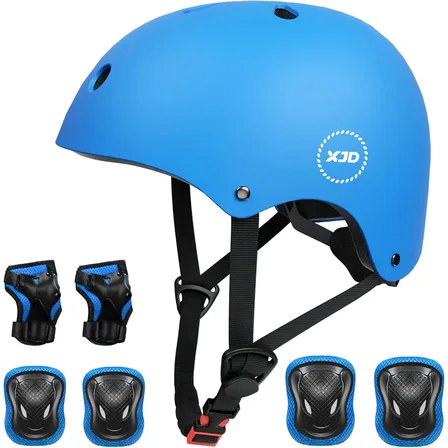
Blue XJD Helmet & Protective Gear Set for Kids, Sizes S/M
The Blue XJD Helmet & Protective Gear Set is made for kids roughly 3 to 8 years …$23.79
-
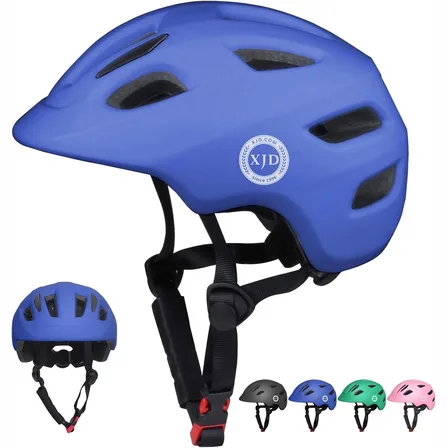
Blue XJD Kids' Bike Helmet, Adjustable Fit – Sizes XS & S
The Blue XJD Kids' Bike Helmet is a lightweight, adjustable helmet for toddlers …$20.39
-

Black XJD Toddler Bike Helmet, Adjustable – Kids' Protective Helmet
The XJD Toddler Bike Helmet in black is an adjustable protective helmet for kids…$20.39