

When can toddler start riding a bike
A toddler can start riding when they can control a correctly fitted bike; for a 12-inch bike, XBikes’ starting point is age 3–4 and 34–40 in (86–102 cm) tall.
Readiness matters more than a birthday
The age range is a screening tool, not permission by itself. A child is ready to try when they can sit securely, hold the handlebar, look ahead, follow simple directions and remain interested without being pressured. They must also be able to start, stop and steer with the level of help appropriate to the bicycle.
Confidence counts. A toddler who freezes, cannot keep the bike under control or cannot operate its stopping system needs more supported practice or a different fit. Waiting is appropriate if every available bicycle is too large. Do not buy an oversized bike simply to leave growing room.
Measure before comparing bicycles
Measure the child without shoes, standing straight against a wall. Record total height from floor to the top of the head. Then measure inseam from the floor to the crotch, using a rigid book held level to represent the bicycle’s saddle area.
Use measured height to identify a starting wheel size:
| Wheel size | XBikes age starting point | Rider height starting point |
|---|---|---|
| 12 Inch | Ages 3–4 | 34–40 in / 86–102 cm |
| 14 Inch | Ages 3–6 | 37–45 in / 94–114 cm |
| 16 Inch | Ages 4–7 | 40–48 in / 102–122 cm |
The overlapping ranges are deliberate starting points, not proof that two sizes fit equally well. Inseam, body proportions and bicycle geometry can change the result, so the child must try the exact bicycle.
Perform the individual fit check
With an adult holding the bicycle steady, check the child’s position and control rather than relying on the size printed on the box.
- Stand-over: Have the child straddle the bicycle. They should be able to stand securely rather than being forced onto tiptoes or trapped against the frame.
- Seat contact: Check whether they can sit comfortably and place their feet as intended for learning and stopping. Use the product manual for permitted saddle adjustment.
- Reach: Their hands should reach the handlebar without an extreme stretch, locked elbows or loss of steering control.
- Stopping control: Confirm that the child can reach and operate the bicycle’s braking or stopping system. Do not assume how a particular model stops unless its manual says so.
- Confidence: Ask the child to steer, start and stop in a controlled practice area. If they cannot do so predictably, reassess the size or pause.
If adjustment, assembly, compatibility, load limits or maintenance information is needed, follow the exact product manual or ask a qualified bicycle mechanic. Do not improvise settings or procedures.
How the supplied XBikes options are relevant
The catalog options help because both are training-wheel bicycles offered in 12-, 14- and 16-inch labels. That lets a parent compare the child’s measured height with the three relevant XBikes starting ranges, then arrange a real fit check instead of choosing from age alone.
 Black XJD Kids Bike for Boys – 12, 14 & 16 Inch Sizes
A Training Wheel Bike offered in 12 Inch, 14 Inch and 16 Inch labels. Its 12-inch option is relevant as a comparison for the XBikes 34–40 in height starting range, subject to an individual fit check.
 XJD Kids' Training Wheel Bike for Boys & Girls, 12/14/16 Inch – White
This Training Wheel Bike has 12 Inch, 14 Inch and 16 Inch SKU labels. Use the child’s measured height to select a comparison size, then verify stand-over, reach, stopping control and confidence on the exact bicycle.
Black XJD Kids Bike for Boys – 12, 14 & 16 Inch Sizes is listed under Training Wheel Bikes and has 12 Inch, 14 Inch and 16 Inch SKU labels. Its 12-inch option is the first catalog comparison for a child measuring 34–40 in (86–102 cm), but the label does not establish fit.
XJD Kids' Training Wheel Bike for Boys & Girls, 12/14/16 Inch – White is also a Training Wheel Bike with the same three available size labels. Compare it using the same height ranges and individual checks. The wording in either product title is a catalog label, not evidence that a particular child fits.
If the toddler is below the 12-inch starting height range, neither supplied product should be treated as a smaller-size substitute. If the child falls in an overlap, compare the exact bicycles for stand-over, reach, stopping control and confidence rather than assuming the larger wheel is preferable.
Prepare for the first rides
Use a bicycle helmet that fits properly, sits level and has its straps adjusted according to the helmet manufacturer’s instructions. Practice in a controlled area away from traffic, obstacles and other hazards, with close adult supervision.
Keep early sessions short enough that the child remains attentive. Stop if frustration, fatigue or declining control appears. Training wheels may provide support, but the category name does not remove the need for correct fit, steering and stopping practice.
Make the decision
Measure height and inseam now. If the child is within the 12-inch starting range, can stand over and reach the exact bicycle, can control its stopping system and wants to ride, proceed with a supervised fitting and practice session. If any check fails, adjust only as the manual permits, try another fit or wait—do not size up for future growth.
Bikes for your next adventure
-
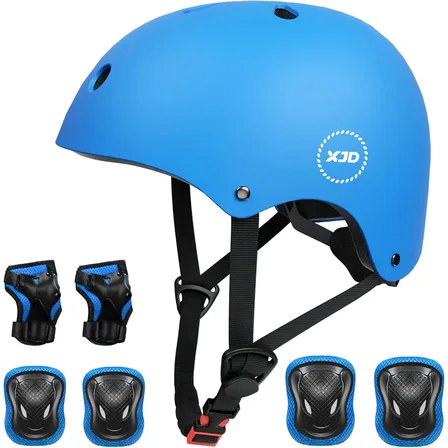
Blue XJD Helmet & Protective Gear Set for Kids, Sizes S/M
The Blue XJD Helmet & Protective Gear Set is made for kids roughly 3 to 8 years …$23.79
-
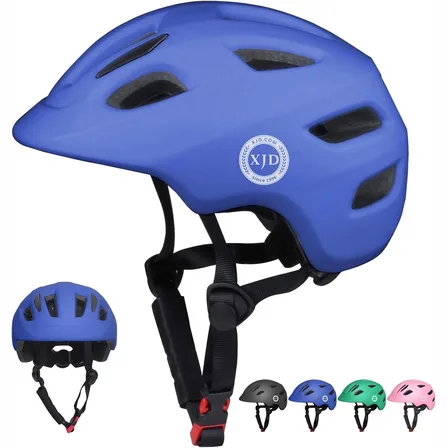
Blue XJD Kids' Bike Helmet, Adjustable Fit – Sizes XS & S
The Blue XJD Kids' Bike Helmet is a lightweight, adjustable helmet for toddlers …$20.39
-

Black XJD Toddler Bike Helmet, Adjustable – Kids' Protective Helmet
The XJD Toddler Bike Helmet in black is an adjustable protective helmet for kids…$20.39