

When is a kid supposed to be riding a bike
A child is ready to ride a bike when they can fit the bike, control it, use its brakes and follow simple safety directions—not when they reach one fixed age. Measure height and inseam, compare the wheel-size starting points below, and then have the child try the bicycle before deciding.
Readiness matters more than a birthday
Age can narrow the search, but it cannot confirm readiness. A prospective rider should be willing to practice, able to pay attention to an adult, and confident enough to steer and stop without panicking. Begin in a quiet, open area away from traffic and other hazards.
Wait and try again later if the child consistently resists, cannot remain in control, or cannot reach the essential controls. Pressure rarely improves the first experience. A correctly sized bike can still be premature for a child who is not ready to coordinate balancing, steering and braking.
Measure before choosing a wheel size
Measure the child’s height without shoes. Measure inseam from the floor to the crotch while the child stands straight with feet slightly apart. Height helps identify a starting wheel size; inseam helps assess whether the child can stand over and mount the actual bicycle comfortably.
| Wheel size | Age starting point | Rider height |
|---|---|---|
| 12 Inch | 3–4 | 34–40 in / 86–102 cm |
| 14 Inch | 3–6 | 37–45 in / 94–114 cm |
| 16 Inch | 4–7 | 40–48 in / 102–122 cm |
| 18 Inch | 5–9 | 43–52 in / 109–132 cm |
| 20 Inch | 7–12 | 48–60 in / 122–152 cm |
| 24 Inch | 10–14 | 54–64 in / 137–163 cm |
| 26 Inch | Youth and adults | Over 60 in / 153 cm |
These XBikes ranges are starting points, not a substitute for trying the bike. When age and measured height suggest different choices, prioritize measured height and the child’s individual fit, reach, brake control and current confidence.
Confirm the fit on the actual bicycle
Have the child try the bicycle rather than ordering solely from an age label. Check that they can mount and dismount without struggling, stand over the bike with appropriate clearance, reach the handlebar without stretching, turn it comfortably, and operate the brakes reliably.
Do not buy an oversized bicycle for the child to grow into. A larger wheel size is not equivalent to the correct current size, and extra growth room does not compensate for poor control. If the child falls between overlapping height ranges, compare both sizes in person and choose according to the complete fit check—not the larger number by default.
How the supplied 12, 14 and 16 Inch options help
The two catalog bicycles provide relevant comparison points for children whose measured height and individual fit lead to 12, 14 or 16 Inch wheels. The Black XJD Kids' BMX Bicycle with Training Wheels is categorized as a Kids' BMX Bike, while the Pink Girls' 12/14/16" Bike by XJD – Basket & Doll Seat is categorized as a Training Wheel Bike. Each has 12 Inch, 14 Inch and 16 Inch SKU labels, so compare the matching size rather than treating the models’ titles as proof of fit.
 Black XJD Kids' BMX Bicycle with Training Wheels
A Kids' BMX Bikes catalog option available with 12 Inch, 14 Inch and 16 Inch SKU labels. It is relevant only after the rider’s measurements and an individual control and fit check support one of those sizes.
 Pink Girls' 12/14/16" Bike by XJD – Basket & Doll Seat
A Training Wheel Bikes catalog option available with 12 Inch, 14 Inch and 16 Inch SKU labels. Training wheels do not replace checking the child’s height, inseam, reach, brake control and confidence on the actual bicycle.
These products are relevant only when a 12, 14 or 16 Inch starting point fits the rider and the actual bicycle passes the stand-over, reach and brake-control checks. If the child’s measurements instead indicate 18, 20, 24 or 26 Inch wheels, these catalog products are smaller-size comparison points, not substitutes for the indicated size.
Training wheels do not replace readiness or fit
Training wheels may support early practice, but their presence does not establish that a bicycle fits. The child still needs suitable stand-over clearance, comfortable reach, reliable access to the brakes and enough confidence to steer. Follow the exact product manual for assembly, adjustment, maintenance, compatibility and any limits; use a qualified bicycle mechanic whenever the instructions are unclear or the setup cannot be confirmed.
Prepare for the first ride
Use a bicycle helmet that fits properly, sits level and has its straps adjusted according to the helmet manufacturer’s instructions. Choose a controlled practice space and provide close adult supervision. Before every session, confirm that the bicycle appears secure and that the child can demonstrate starting, steering, braking and getting off while remaining in control.
The practical decision is simple: measure the child now, shortlist the wheel size by height, and approve the bicycle only after the child can stand over it, reach it and stop it comfortably. If any of those checks fail—or confidence is not there yet—the child is not supposed to ride that particular bike yet.
Bikes for your next adventure
-

XJD Kids Bike for Girls – Pink, 12/14/16/20 Inch with Training Wheels
The XJD Kids Bike for Girls in Pink is a training-wheel bike built to carry your…$139
$159 -

Blue XJD Girls Bike with Training Wheels – 12/14/16 Inch
If you're shopping for a first pedal bike for a daughter roughly 3 to 8 years ol…$149
$169 -
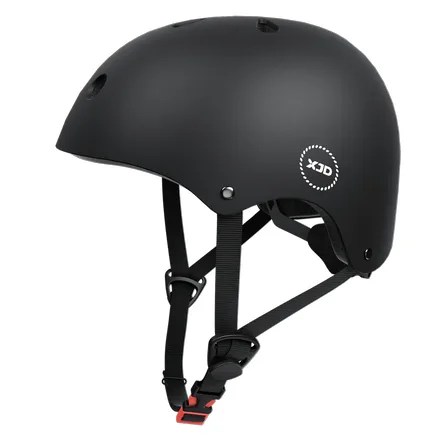
7-in-1 Kids Helmet & Protective Gear Set from XJD – Black or Blue
If you're outfitting one kid (or a couple of siblings) for biking, scootering, o…$59.99