

When kids learn to ride a bike
Most children learn to ride independently between about ages 3 and 8, but there is no required age. Readiness depends more on fit, balance, control and confidence than on a birthday.
Look for readiness, not a deadline
A child is ready to begin when they want to try, can follow simple directions and can stay engaged without becoming overwhelmed. Useful physical signs include walking or scooting a bicycle while keeping it upright, steering around a gentle turn and stopping on request.
Learning is not one single event. A child may first sit and scoot, then coast with both feet raised, add pedaling and finally start, turn and stop without help. Some children move through those stages quickly; others need short sessions spread over weeks or months.
Pause if the child is frightened, cannot control the bicycle at walking speed or repeatedly loses control while reaching the pedals or brakes. Pressure rarely improves readiness. Returning to an easier skill or checking the fit gives the child a clearer next step.
Measure before choosing a wheel size
Measure the child’s standing height without shoes. Also measure inseam from the floor to the crotch while the child stands straight. Height provides a starting range; inseam helps you judge whether the child can stand over and manage the actual frame.
| Wheel size | Starting age | Rider height |
|---|---|---|
| 12 Inch | 3–4 | 34–40 in / 86–102 cm |
| 14 Inch | 3–6 | 37–45 in / 94–114 cm |
| 16 Inch | 4–7 | 40–48 in / 102–122 cm |
| 18 Inch | 5–9 | 43–52 in / 109–132 cm |
| 20 Inch | 7–12 | 48–60 in / 122–152 cm |
| 24 Inch | 10–14 | 54–64 in / 137–163 cm |
| 26 Inch | Youth and adults | Over 60 in / 153 cm |
Overlapping ranges are intentional: age cannot decide fit by itself. Start with measured height, then compare inseam, reach, brake control and current confidence on the particular bicycle.
Confirm the fit on the actual bicycle
Have the child try the bicycle before deciding. Do not buy an oversized model for future growth. The child should be able to stand over it with stable footing, reach the handlebar without stretching and steer without their knees or body interfering.
Ask the child to operate every brake control while holding the handlebar normally. They need enough reach and hand control to use the braking system reliably. Check that they can mount, start, turn and put a foot down without panic. A nominally correct wheel size is still wrong if these tasks are not manageable.
Teach in small, observable steps
- Choose a flat, open area away from traffic, obstacles and steep slopes.
- Begin with walking and scooting so the child learns steering and stopping.
- Practice brief coasts, looking ahead rather than down at the front wheel.
- Add pedaling only after balance and controlled stopping are repeatable.
- Finish while the child is still attentive; repeat the weakest step next time.
Stay close enough to assist, but avoid twisting the handlebar for the rider. Judge progress by controlled starts, turns and stops—not by distance or speed. If control deteriorates, reduce the challenge instead of pushing through fatigue.
Use protection and equipment correctly
A bicycle helmet must fit properly, sit level and have its straps adjusted according to the helmet manufacturer’s instructions. Recheck the fit each session. Clothing and footwear should not interfere with pedals, wheels or controls.
Before riding, inspect the bicycle for anything loose, damaged or poorly adjusted. For assembly, maintenance, load limits, compatibility and torque requirements, follow the exact product manual or use a qualified bicycle mechanic. Do not guess at procedures or settings.
Where the supplied 24-inch bicycle fits
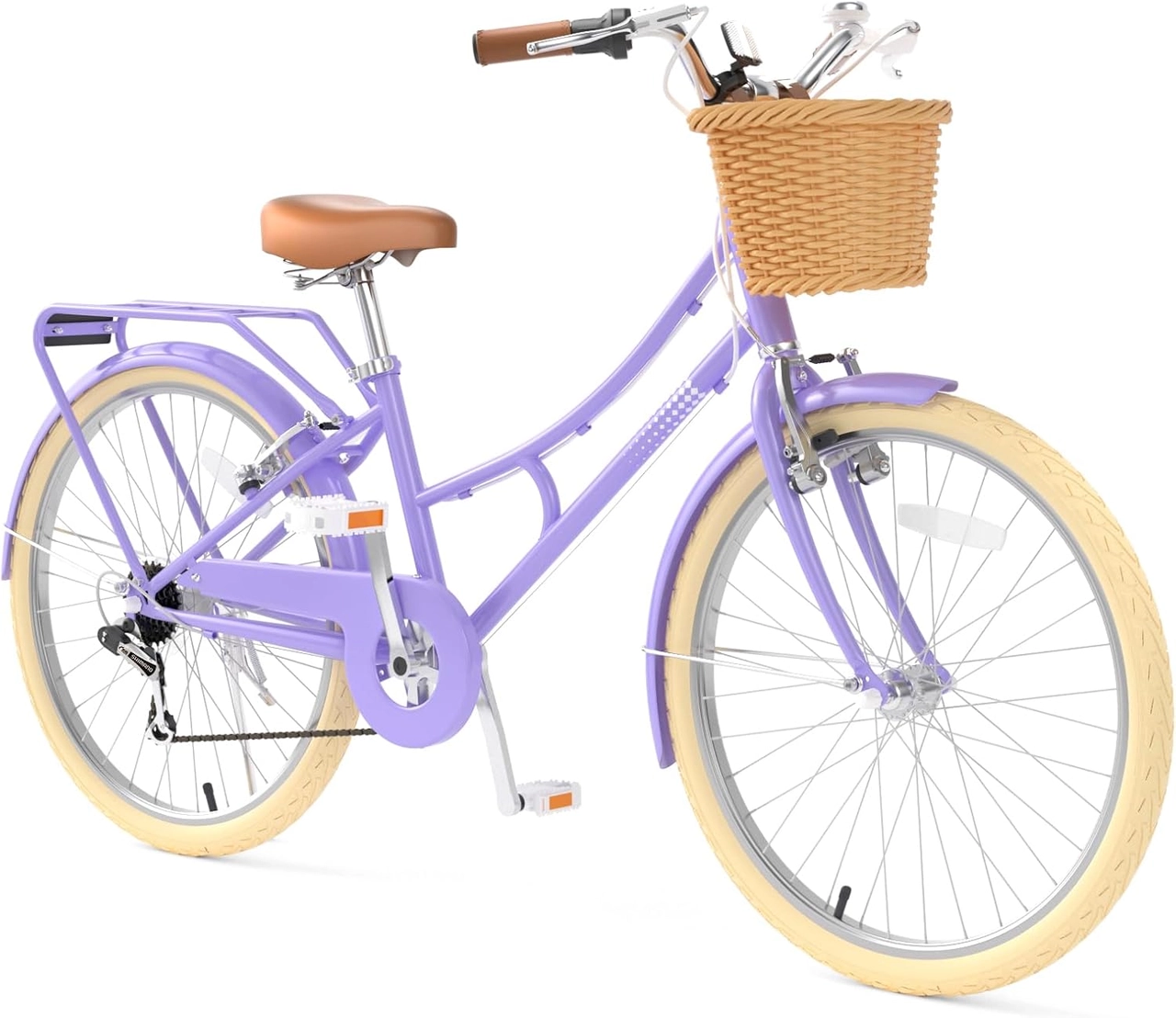
The 24-Inch Purple XJD Beach Cruiser Bike with U-Brake is a 24-inch beach cruiser bicycle and provides a useful catalog comparison for riders in the 24-inch starting range: ages 10–14 and heights 54–64 in / 137–163 cm. It is relevant to an older or taller learner only after the individual fit and control checks above. It is not an appropriate substitute for a smaller learning bicycle merely because a child may grow into it.
This particular catalog option helps answer the title by showing when a larger learner may begin on a 24-inch bicycle and when a parent should keep comparing smaller wheel sizes instead.
Measure height and inseam now, identify the starting wheel-size range, and have the child demonstrate stand-over clearance, comfortable reach, brake operation, steering and stopping on the actual bicycle. Begin lessons when those checks and the child’s confidence align—not when a calendar says they should.
Bikes for your next adventure
-

Black XJD Kids Bike for Boys – 12, 14 & 16 Inch Sizes
For a son between roughly 3 and 8 years old, the XJD Kids Bike in Black covers t…$169
$199 -

XJD Kids Bike for Girls – Pink, 12/14/16/20 Inch with Training Wheels
The XJD Kids Bike for Girls in Pink is a training-wheel bike built to carry your…$139
$159 -

Blue XJD Girls Bike with Training Wheels – 12/14/16 Inch
If you're shopping for a first pedal bike for a daughter roughly 3 to 8 years ol…$149
$169