

When should a child be able to ride a bike
Most children can learn to ride a bike when they can balance, steer, brake and follow simple directions—not at one fixed age. Measure the child, check the bicycle in person and choose a size they can control now.
Readiness matters more than a birthday
A child is ready to work toward independent riding when they willingly practise, understand when to stop and can pay attention to their surroundings. Some children develop these abilities earlier than others. Hesitation is a reason to slow down, not to move immediately to a different wheel size.
Watch what the child can do today. They should be able to hold the handlebar without stretching, steer intentionally and reach and operate the brakes with control. Their feet should also provide dependable support while starting, stopping and learning to balance. If they cannot control the bicycle at walking speed, they are not ready to ride it independently.
Measure before comparing wheel sizes
Measure standing height without shoes, then measure inseam from the floor to the crotch. Use height to identify a starting wheel size, but use inseam, stand-over clearance, reach, brake control and confidence to decide whether a particular bicycle actually fits.
| Wheel size | Starting age | Rider height |
|---|---|---|
| 12 Inch | 3–4 | 34–40 in / 86–102 cm |
| 14 Inch | 3–6 | 37–45 in / 94–114 cm |
| 16 Inch | 4–7 | 40–48 in / 102–122 cm |
| 18 Inch | 5–9 | 43–52 in / 109–132 cm |
| 20 Inch | 7–12 | 48–60 in / 122–152 cm |
| 24 Inch | 10–14 | 54–64 in / 137–163 cm |
| 26 Inch | Youth and adults | Over 60 in / 153 cm |
These ranges overlap because age is only a starting point. Do not move up merely because a child falls within an age band or will eventually grow into the bicycle. An oversized bike can make mounting, stopping, steering and brake use harder.
Make an in-person fit check
Have the child try the exact bicycle rather than relying on the wheel number alone. With the child standing over it, confirm that the frame does not prevent comfortable clearance. Then place them in the riding position and inspect their reach: they should not need to lock their elbows, lean excessively or release a hand to stay comfortable.
Ask them to demonstrate the controls while stationary, then in a quiet practice area with close adult supervision. Check whether they can:
- mount and start without the bicycle pulling them off balance;
- look ahead while steering a predictable line;
- reach and operate the brakes without shifting their grip;
- stop under control and place a foot down promptly;
- turn at low speed without panic or a stretched posture.
If any answer is no, adjust only as permitted by the exact product manual. If correct adjustment does not create a controlled fit, compare another size or bicycle. Use a qualified bicycle mechanic for uncertain assembly, compatibility, maintenance or adjustment questions.
How the supplied XBikes options relate
The supplied catalog options help compare two different stages: a multi-size training-wheel bicycle and a 20-inch BMX bicycle. They show why the title cannot be answered by age alone; the relevant option depends on measured fit, current balance and the kind of support the child needs.
 Blue XJD Freestyle BMX Bike, 20-Inch – No Pegs
A 20-inch Kids’ BMX Bike relevant when the rider’s measured height points toward the 20 Inch starting range, subject to individual stand-over, reach, brake-control and confidence checks.
 Pink 12/14/16/20" XJD Girls Bike with Training Wheels & Basket
A Training Wheel Bike offered in 12 Inch, 14 Inch, 16 Inch and 20 Inch labels, allowing comparison across several XBikes starting ranges while still requiring an individual fit and control check.
The Pink 12/14/16/20" XJD Girls Bike with Training Wheels & Basket is listed in the Training Wheel Bikes category and is offered in 12 Inch, 14 Inch, 16 Inch and 20 Inch labels. Compare only the label that matches the child’s measured-height starting point, then perform the full fit and control check. Training wheels do not prove that a child is ready to steer, brake or ride independently.
The Blue XJD Freestyle BMX Bike, 20-Inch – No Pegs is a Kids’ BMX Bike with a 20-inch wheel label. Under the XBikes starting points, 20 Inch corresponds to ages 7–12 and heights of 48–60 in / 122–152 cm, but the exact rider must still demonstrate stand-over clearance, manageable reach and brake control. Its “No Pegs” wording is a catalog fact, not evidence of fit or readiness.
If the child’s fit check points to 18, 24 or 26 Inch, neither supplied product provides that exact wheel-size label. In that situation, these products are comparison points only, not equal-size substitutes.
Prepare for the first independent ride
Use a quiet, level area away from traffic and obstacles. Keep sessions short enough that fatigue does not undermine control. A properly fitting bicycle helmet should sit level and be secured with its straps according to the helmet manufacturer’s instructions. Adult supervision should match the child’s abilities and the riding environment.
The next decision is simple: measure height and inseam, shortlist the matching starting size, and let the child demonstrate fit, braking and low-speed control. Choose only when the child can manage that exact bicycle now; otherwise practise, adjust according to its manual or compare another size.
Bikes for your next adventure
-

XJD Girls Bike for Kids Ages 3-8, 12/14/16 Inch with Training Wheels – Purple
The XJD Girls Bike in Purple is a training-wheel bicycle for kids ages 3 to 8, f…$149
$169 -

Pink 12/14/16/20" XJD Girls Bike with Training Wheels & Basket
The Pink XJD Girls Bike with Training Wheels & Basket is a first-bike pick f…$65.99
$75.99 -
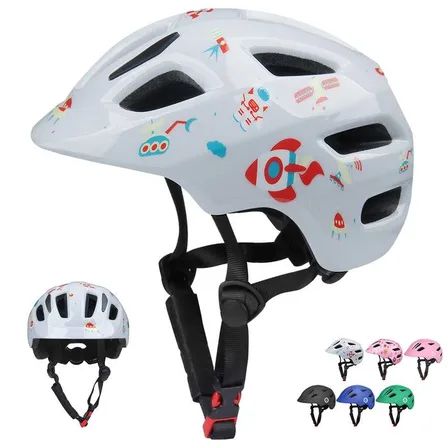
White Astronaut Bike Helmet for Kids by XJD – Toddler to Youth Sizes
4 reviews
The XJD White Astronaut kids' bike helmet is made for toddlers through younger e…$59.99