

When should kid learn to ride bike
Most children can start learning to ride between ages 3 and 6, but readiness and individual bike fit matter more than age. Measure height and inseam, then check balance, steering, braking and confidence before choosing a bike.
How to tell whether your child is ready
A child is ready to begin when they want to try, can follow simple safety directions and can stay attentive in a quiet practice area. They should also be able to walk or glide with a bicycle while controlling its direction. Hesitation is not failure; waiting a few weeks and trying again may be more productive than pushing through fear.
Physical readiness includes enough coordination to steer while moving and enough hand strength and reach to operate the bicycle's brakes. Do not use a birthday alone as the deciding test.
What to measure before choosing a bike
- Standing height: Measure the child without shoes, with their back against a wall.
- Inseam: Measure from the floor to the crotch while the child stands naturally. Compare this measurement with the bicycle's stand-over clearance and its manual.
- Reach: Have the child sit on the actual bicycle. They should reach the handlebar without stretching, locking their elbows or losing a stable riding position.
- Brake control: Confirm that they can reach and operate the brakes while keeping control of the handlebar.
Have the child try the bicycle whenever possible. Do not buy an oversized bike merely to allow room for growth; a bike that is too large can make starting, stopping and steering harder to control.
Wheel-size starting points
Use age only to narrow the search. Measured height, inseam, reach, brake control and current confidence must decide the final fit.
| Wheel size | Starting age | Rider height |
|---|---|---|
| 12 Inch | 3–4 | 34–40 in / 86–102 cm |
| 14 Inch | 3–6 | 37–45 in / 94–114 cm |
| 16 Inch | 4–7 | 40–48 in / 102–122 cm |
| 18 Inch | 5–9 | 43–52 in / 109–132 cm |
| 20 Inch | 7–12 | 48–60 in / 122–152 cm |
| 24 Inch | 10–14 | 54–64 in / 137–163 cm |
| 26 Inch | Youth and adults | Over 60 in / 153 cm |
Overlapping ranges are normal. They are an invitation to compare adjacent sizes on the child, not proof that either size will fit. If height suggests one size but the child cannot stand over, reach or brake comfortably, keep comparing.
How the supplied XBikes options compare
These catalog options help turn the readiness question into a practical size comparison: two cover 12, 14 and 16 Inch choices with training wheels, while one begins at 20 Inch and continues through 24 and 26 Inch sizes for taller riders.
 XJD Light Purple Girls Bike with Basket, Training Wheels, 12/14/16/20 Inch
Available in 12, 14 and 16 Inch SKU labels, this training-wheel model is relevant for beginning riders whose measurements and individual fit checks match one of those sizes.
 XJD Kids Beach Cruiser Bicycle, Rear Rack & V-Brakes, Mint Green
This kids' beach cruiser offers 20, 24 and 26 Inch SKU labels, making it a comparison option for taller riders who can comfortably stand over, reach and operate the bike.
 XJD Girls BMX Bike 12/14/16 Inch with Training Wheels – Pink Blue
With 12, 14 and 16 Inch SKU labels and a training-wheel format, this BMX-style model is relevant when the child's measured height, reach and control support the selected size.
The XJD Light Purple Girls Bike with Basket, Training Wheels, 12/14/16/20 Inch is supplied here with available 12, 14 and 16 Inch SKU labels. Its training-wheel category makes it relevant when a beginning rider still needs that format, but the correct size must follow the fit checks above.
The XJD Girls BMX Bike 12/14/16 Inch with Training Wheels – Pink Blue also has available 12, 14 and 16 Inch SKU labels. Compare it only after measuring the rider, and treat its BMX styling and training-wheel format as preferences rather than evidence of fit.
The XJD Kids Beach Cruiser Bicycle, Rear Rack & V-Brakes, Mint Green has available 20, 24 and 26 Inch SKU labels. It is relevant to taller children who fall within those starting ranges and can operate the controls. It is not a substitute for a smaller learning bike when the child's measurements indicate 12, 14, 16 or 18 Inch wheels.
None of these supplied products has an available 18 Inch SKU label. If the fit check points specifically to 18 Inch, the listed models are nearest-size comparison points only; another wheel size is not equivalent or an automatic substitute.
What to do during the first practice sessions
- Choose a flat, open area away from traffic, slopes and obstacles.
- Begin with mounting, stopping and walking the bicycle before expecting pedaling.
- Let the child practice looking ahead, steering a simple path and braking on command.
- Keep sessions short enough that fatigue and frustration do not replace attention.
A bicycle helmet should fit properly, sit level and have its straps adjusted according to the helmet manufacturer's instructions. Adult supervision and a controlled practice area remain necessary even when training wheels are used.
Make the decision from the fit check
Start now if the child is willing, attentive and able to control a correctly sized bicycle; wait if fear, poor control or an uncertain fit remains. Measure height and inseam today, shortlist the matching wheel sizes, and have the child demonstrate stand-over clearance, comfortable reach and reliable brake operation before you choose. For assembly, adjustment, maintenance, compatibility or torque details, follow the exact product manual or use a qualified bicycle mechanic.
Bikes for your next adventure
-

XJD Kids Bike for Girls – Pink, 12/14/16/20 Inch with Training Wheels
The XJD Kids Bike for Girls in Pink is a training-wheel bike built to carry your…$139
$159 -

Blue XJD Girls Bike with Training Wheels – 12/14/16 Inch
If you're shopping for a first pedal bike for a daughter roughly 3 to 8 years ol…$149
$169 -
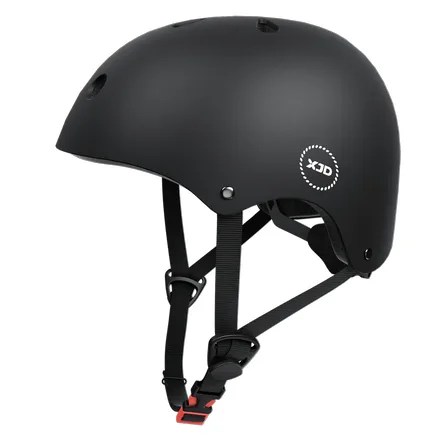
7-in-1 Kids Helmet & Protective Gear Set from XJD – Black or Blue
If you're outfitting one kid (or a couple of siblings) for biking, scootering, o…$59.99