

Which child bicycle seat
Choose a child’s bicycle by measured height and a hands-on fit check—not age alone. The child should clear the frame, reach the controls and operate the brakes confidently.
First, clarify what you need
If “child bicycle seat” means a complete bicycle for a child, start with wheel size, then confirm the individual fit described below. If you mean a child-carrying seat that attaches to an adult bicycle, none of the supplied products is relevant: all three are complete bicycles, and no mounting compatibility or load information has been provided.
Do not buy an oversized bicycle merely to leave room for growth. A bicycle that is difficult to stand over, steer or stop is not made suitable by an age label. The child should try the actual bicycle whenever possible.
Measure before comparing sizes
- Measure standing height: have the child stand upright without shoes against a wall and record the result.
- Measure inseam: measure from the floor to the crotch while the child stands naturally. Use this to assess frame clearance during the real fit check; the supplied standard does not specify a numerical stand-over gap.
- Check reach: seated in a normal riding position, the child should be able to hold the handlebar and steer without stretching or losing control.
- Check brake control: confirm that the child can reach and operate the bicycle’s brakes confidently. Follow the exact bicycle manual for adjustment instructions, or ask a qualified bicycle mechanic.
- Consider current confidence: a hesitant beginner may need a more manageable fit than a confident rider of the same height.
Use wheel size only as a starting point
| Wheel size | Starting age | Rider height |
|---|---|---|
| 12 Inch | 3–4 | 34–40 in / 86–102 cm |
| 14 Inch | 3–6 | 37–45 in / 94–114 cm |
| 16 Inch | 4–7 | 40–48 in / 102–122 cm |
| 18 Inch | 5–9 | 43–52 in / 109–132 cm |
| 20 Inch | 7–12 | 48–60 in / 122–152 cm |
| 24 Inch | 10–14 | 54–64 in / 137–163 cm |
| 26 Inch | Youth and adults over 60 in | Over 60 in / 153 cm |
Overlapping ranges are normal. Prioritize measured height, inseam, stand-over clearance, reach, brake control and confidence over age. If a child falls between sizes, compare both in person rather than automatically choosing the larger one.
How the supplied bicycles help your comparison
The catalog provides useful comparison points at 12, 14, 16, 20 and 24 inches. The Black XJD Kids' BMX Bicycle with Training Wheels offers 12 Inch, 14 Inch and 16 Inch SKU labels. The Blue XJD Freestyle BMX Bike, 20-Inch – No Pegs provides a 20-inch reference, while the 24-Inch Purple XJD Beach Cruiser Bike with U-Brake provides a 24-inch reference. These facts identify sizes and catalog categories; they do not establish that a bicycle fits a particular child.
These particular options help answer the title because they span several XBikes height starting points, allowing a parent to shortlist the labeled wheel size before arranging an individual fit check.
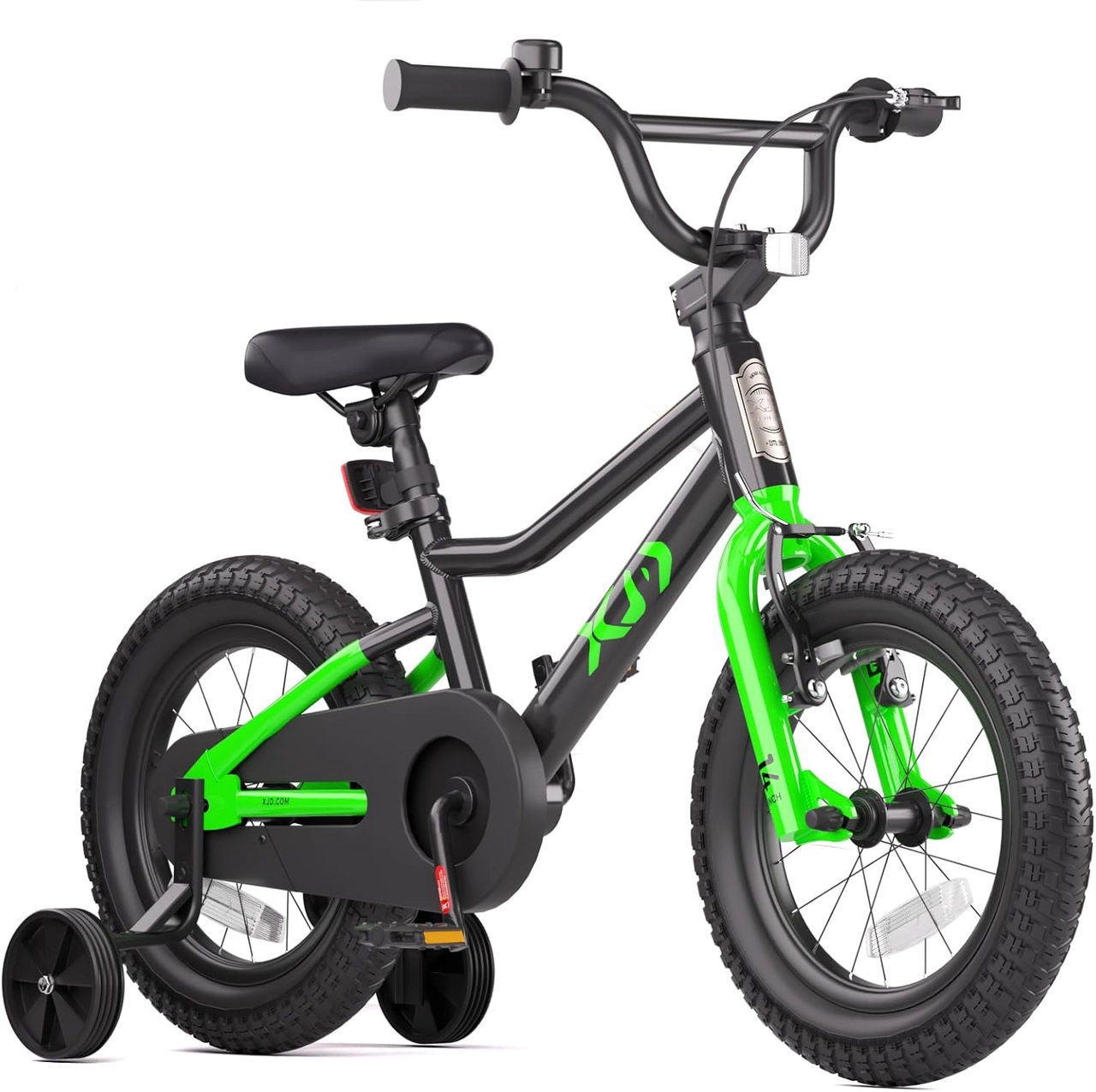 Black XJD Kids' BMX Bicycle with Training Wheels
Available in 12 Inch, 14 Inch and 16 Inch labels, this Kids' BMX Bikes option provides three starting points for smaller riders; measured height and an individual fit check must decide among them.
 24-Inch Purple XJD Beach Cruiser Bike with U-Brake
This 24-inch Beach Cruiser Bikes option is a comparison point for riders near the supplied 24-inch range of 54–64 inches; confirm stand-over, reach, brake operation and confidence before choosing it.
 Blue XJD Freestyle BMX Bike, 20-Inch – No Pegs
This 20-inch Kids' BMX Bikes option corresponds to the supplied 48–60-inch starting height range. Its stated wheel size narrows the shortlist but does not replace an individual fit check.
When these products are not the answer
None of the supplied products has an 18-inch or 26-inch label. If the child’s measurements point to either size, these products are nearest-size comparison points only—not substitutes, and another wheel size is not equivalent. Likewise, do not select the 20-inch or 24-inch bicycle solely because its title states that size; the child still needs to try it.
The products also cannot answer questions about weight, materials, assembly, maintenance schedules, load limits, torque values or compatibility because those facts were not supplied. Follow the exact product manual for such details. If the manual is unavailable or the fit or setup remains uncertain, use a qualified bicycle mechanic.
Complete the fit and safety check
- Confirm that the child can mount and dismount without struggling.
- Check stand-over clearance and make sure the frame does not obstruct comfortable control.
- Watch the child start, steer, brake and stop in a controlled setting.
- Reject a size that causes stretching, unstable steering or difficulty reaching the brakes.
- Use a properly fitting bicycle helmet. It should sit level, with its straps adjusted according to the helmet manufacturer’s instructions.
Your next decision is simple: measure the child, shortlist the matching wheel-size range, and choose only after the child demonstrates comfortable stand-over, reach, steering and braking on that exact bicycle.
Bikes for your next adventure
-
Black XJD Kids' BMX Bicycle with Training Wheels
The XJD Kids' BMX Bicycle with Training Wheels is built for children roughly 3 t…$99.99
$119.99 -
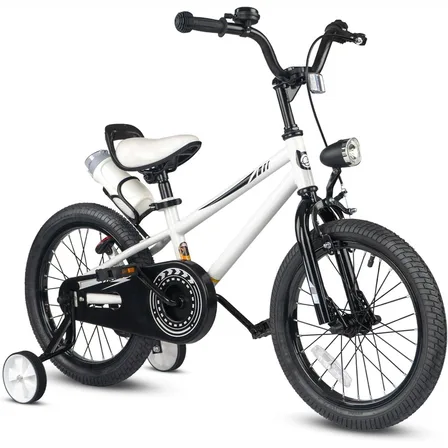
XJD Kids' Training Wheel Bike for Boys & Girls, 12/14/16 Inch – White
The XJD kids' training wheel bike in White is made for riders ages 3–8 (roughly …$169
$199 -
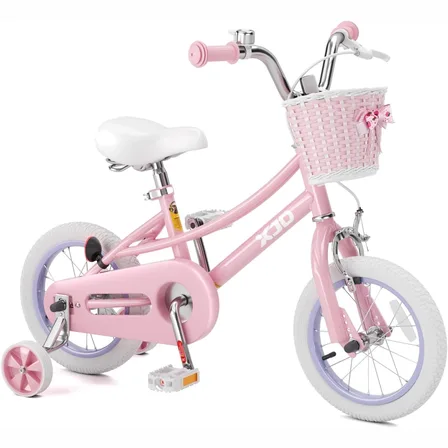
Pink 12/14/16/20" XJD Girls Bike with Training Wheels & Basket
The Pink XJD Girls Bike with Training Wheels & Basket is a first-bike pick f…$65.99
$75.99