

Which child bike seat
Choose a child bike seat only after matching the child, the carrying bicycle and the seat manual: check the child’s measurements, the seat’s stated limits, mounting compatibility, secure restraint, foot protection and the adult rider’s control.
Start with the child, not the seat style
Measure the child’s current height and weight, then note whether the child can sit upright steadily and follow simple riding instructions. Compare those observations with the exact seat manufacturer’s stated requirements. Do not estimate a load limit, extend an age label or assume that a seat will remain suitable until the child “looks too big.”
Age can be a useful prompt, but it is not a fit measurement. The child must fall within every limit in the manual, and the harness and foot supports must adjust to the child without improvised padding, knots or extensions.
Choose the mounting position deliberately
A front-mounted seat keeps the child within the adult rider’s view, but it can occupy steering and knee space. A rear frame-mounted seat places the child behind the rider and needs the exact frame and clearance required by its manual. A rear rack-mounted seat also requires a rack that the seat manufacturer explicitly accepts; the presence of a rack alone does not establish compatibility.
Compare the options on the bicycle that will actually carry the seat. Check frame shape, mounting points, cable routes, wheel and moving-part clearance, saddle position, steering movement and space for the adult to mount and dismount. Follow both manuals where the bicycle and seat instructions overlap. If compatibility or a load limit is unclear, stop and ask the manufacturer or a qualified bicycle mechanic.
Check fit and restraint before riding
- Confirm that every buckle closes correctly and that the restraint lies as the manual shows.
- Adjust foot supports and guards so feet and clothing cannot reach wheels or other moving parts.
- Check that the child’s helmet and the seat do not force the head into an awkward position.
- Look for interference through the bicycle’s full steering range and during normal pedaling.
- Use only the mounting hardware, assembly sequence and torque instructions specified for the exact products.
A bicycle helmet should fit properly, sit level and have its straps adjusted according to the helmet manufacturer’s instructions. A helmet does not make an incompatible or poorly installed child seat acceptable.
Make sure the adult can still control the bicycle
A child passenger raises and shifts the bicycle’s load. Before carrying the child, the adult should practise starting, stopping, turning, balancing and dismounting with the empty seat in a controlled area, following the seat manual. Then reassess whether steering, braking, heel clearance or balance feels compromised.
Inspect the attachment before each ride as directed by the manual. For assembly, maintenance, fastener torque, compatible accessories and maximum loads, use the exact instructions or a qualified bicycle mechanic; those details cannot safely be inferred from appearance.
Do not confuse a child seat with a child-sized bicycle
If the child is meant to ride independently rather than travel as a passenger, the decision changes from passenger-seat compatibility to bicycle fit. Have the child try the bicycle. Check stand-over clearance, comfortable reach, reliable access to the brake controls and the ability to start, stop and steer confidently. Do not buy an oversized bicycle merely for future growth.
| Wheel size | Starting age | Rider height |
|---|---|---|
| 12 Inch | 3–4 | 34–40 in / 86–102 cm |
| 14 Inch | 3–6 | 37–45 in / 94–114 cm |
| 16 Inch | 4–7 | 40–48 in / 102–122 cm |
| 18 Inch | 5–9 | 43–52 in / 109–132 cm |
| 20 Inch | 7–12 | 48–60 in / 122–152 cm |
| 24 Inch | 10–14 | 54–64 in / 137–163 cm |
| 26 Inch | Youth and adults | Over 60 in / 153 cm |
These are XBikes starting points, not proof of fit. Prioritize measured height, inseam, reach, brake control and current confidence over age alone.
How the supplied catalog option helps
The supplied option, 24-Inch Purple XJD Beach Cruiser Bike with U-Brake, is a 24-inch beach cruiser bicycle, not a child passenger seat. It helps only if the real question is whether an independent rider should try a 24-inch bicycle. Its catalog entry provides no child-seat compatibility, mounting, load-limit or passenger information, so it must not be treated as a substitute for a compatible child bike seat.
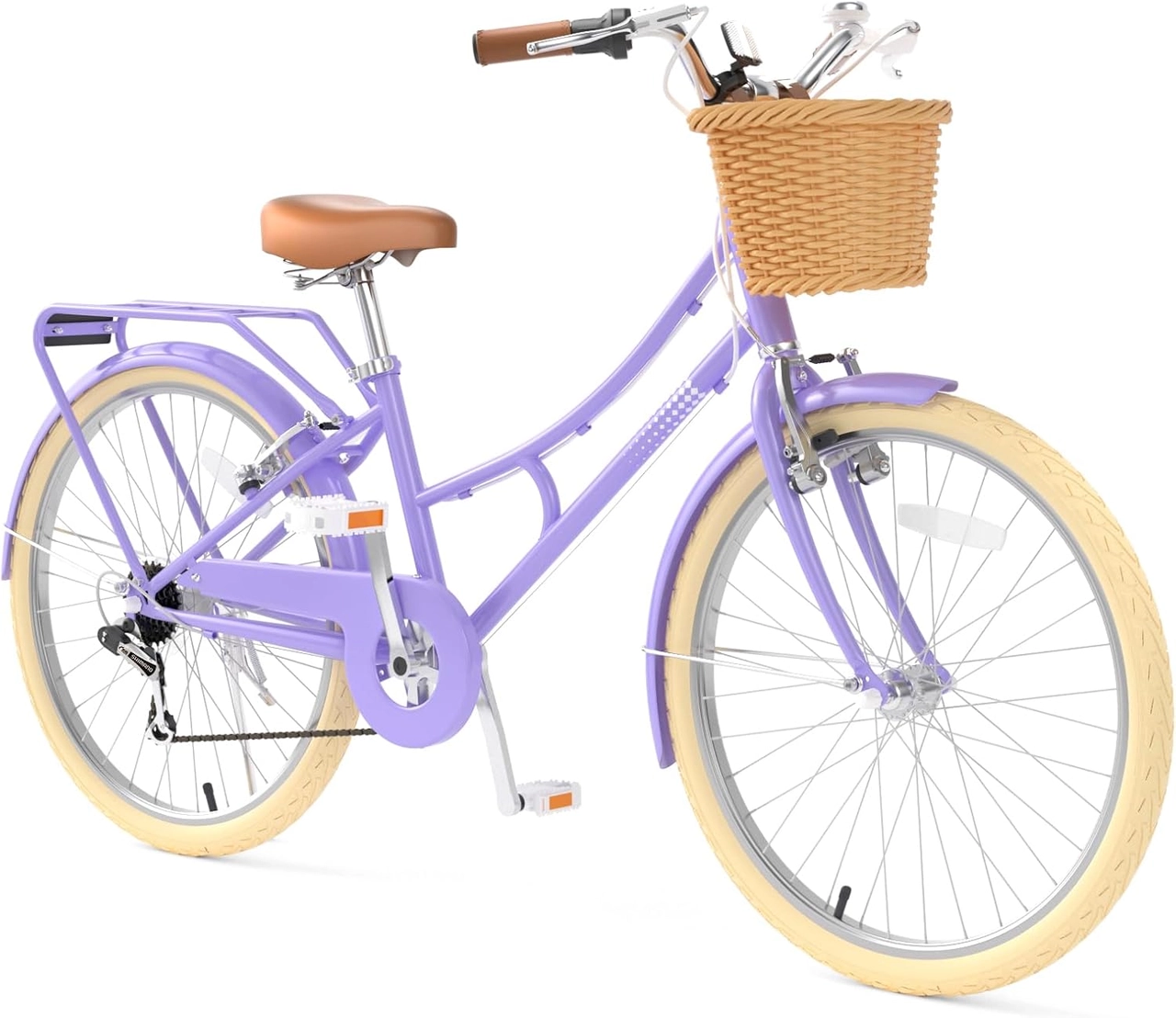
For an independent rider, use the 24-inch starting point of ages 10–14 and 54–64 inches / 137–163 cm, then require an individual fit check. For a passenger, disregard wheel-size matching and select only a seat whose manual confirms the child’s fit and the carrying bicycle’s compatibility.
Your next decision
- Decide whether the child will be a passenger or an independent rider.
- For a passenger, record current height and weight, identify the exact carrying bicycle, and compare both manuals before buying.
- For an independent rider, measure height and inseam, choose a wheel-size starting point, and arrange an in-person check of stand-over, reach, brake access and control.
Choose the child bike seat only when every child-fit and bicycle-compatibility requirement is confirmed; otherwise use a qualified bicycle mechanic or continue comparing documented alternatives.
Bikes for your next adventure
-
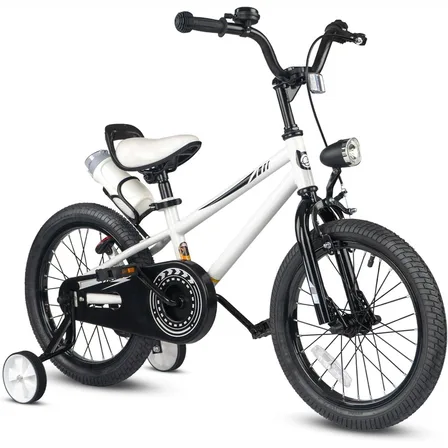
XJD Kids' Training Wheel Bike for Boys & Girls, 12/14/16 Inch – White
The XJD kids' training wheel bike in White is made for riders ages 3–8 (roughly …$169
$199 -

Blue XJD Girls Bike with Training Wheels – 12/14/16 Inch
If you're shopping for a first pedal bike for a daughter roughly 3 to 8 years ol…$149
$169 -
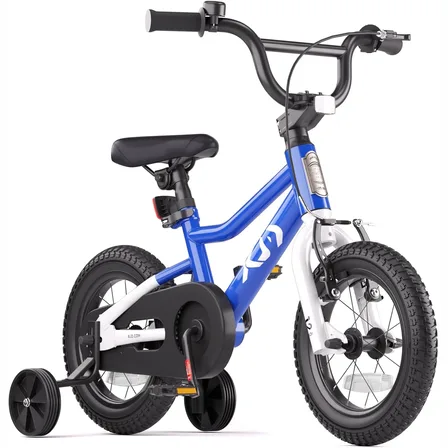
XJD Boys & Girls BMX Bike with Training Wheels, 12/14/16" – Blue
The XJD Boys & Girls BMX Bike in Blue is a first pedal bike for kids roughly age…$99.99
$119.99