When can a kid ride a bike with training wheels
A kid can ride a bike with training wheels when they can sit securely, reach the controls, and pedal and steer with supervision. Age is only a starting point: measure the child and check the actual bike before riding.
Start with readiness, not a birthday
Many children first fall within the XBikes 12-inch starting range at ages 3–4, but an age match does not prove that a bicycle fits. A child should be willing to practice, able to follow simple stop-and-go directions, and comfortable sitting on the bike without becoming overwhelmed.
Training wheels provide side-to-side support at low speeds, but they do not make an oversized or poorly controlled bicycle suitable. Do not buy a larger bike solely to leave room for growth. The child needs usable control now.
Measure height and inseam
Measure height without shoes, with the child standing straight against a wall. Then measure inseam from the floor to the crotch while the child stands with feet slightly apart. Height narrows the wheel-size search; inseam helps you judge stand-over clearance and whether the child can get on, get off, and stabilize comfortably.
| Wheel size | XBikes age starting point | Rider height |
|---|---|---|
| 12 Inch | Ages 3–4 | 34–40 in / 86–102 cm |
| 14 Inch | Ages 3–6 | 37–45 in / 94–114 cm |
| 16 Inch | Ages 4–7 | 40–48 in / 102–122 cm |
Overlapping ranges are intentional starting points, not permission to choose either size blindly. When measurements overlap, compare both bikes in person and favor the one the child can control confidently.
Perform the fit and control check
Have the child try the fully assembled bicycle while wearing ordinary riding shoes. A useful fit check answers these questions:
- Can the child straddle the frame without being pressed against it?
- Can they sit securely and place their feet where the bicycle’s instructions require?
- Can they reach the handlebar without locking their elbows or stretching their torso?
- Can they turn the handlebar while remaining balanced and looking ahead?
- Can they operate every fitted brake control reliably with their hands in the normal riding position?
- Can they start, pedal, stop, and get off without panic or an adult holding them upright?
If the answer to any essential control question is no, adjust the bike only within the exact product manual’s instructions or compare another size. For uncertain assembly, training-wheel setup, compatibility, maintenance, or adjustment, use the exact manual or a qualified bicycle mechanic.
How the supplied bikes help with the decision
The three catalog options are relevant because each is listed in the Training Wheel Bikes category and offers the same 12 Inch, 14 Inch, and 16 Inch size labels. That lets a parent compare the child’s measured height with the three starting ranges, then verify individual fit rather than choosing by color or age alone.
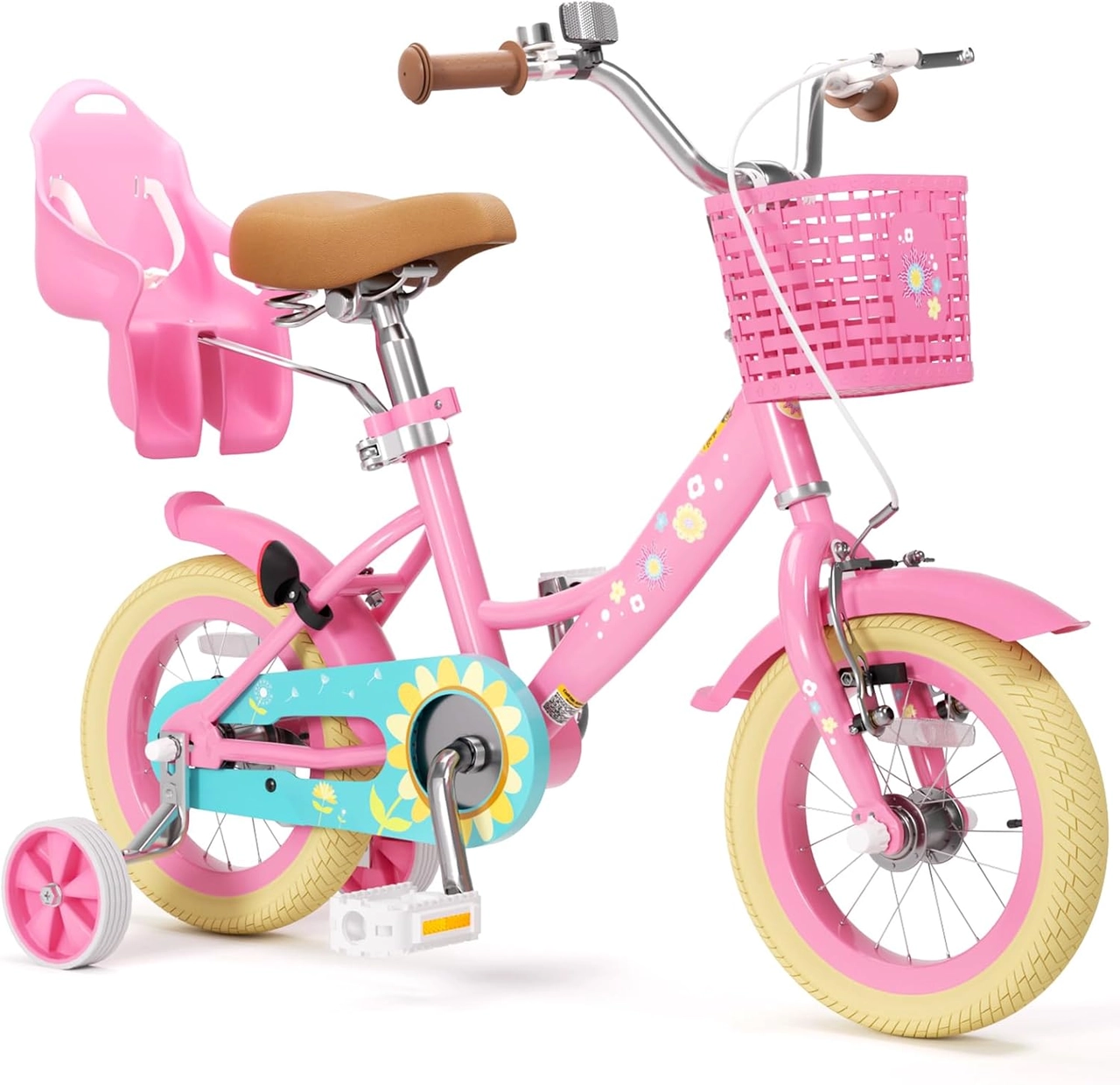 Flower Pink XJD Girls Bike with Doll Seat & Basket
A Training Wheel Bikes option offered in 12 Inch, 14 Inch, and 16 Inch labels. Compare the child’s measured height with the relevant XBikes starting range, then verify stand-over, reach, braking, and control on the actual bike.
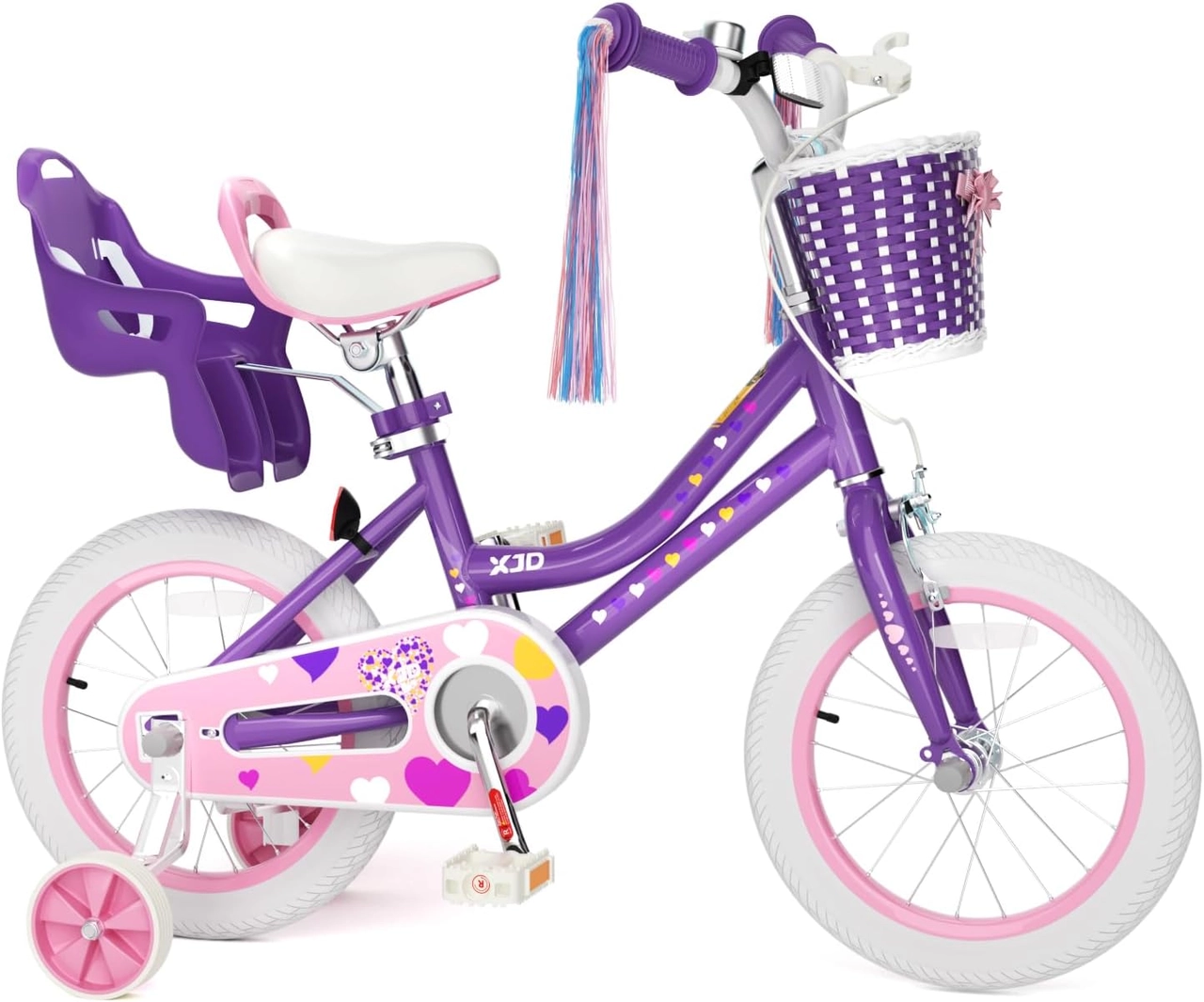 Purple XJD Girls' Bike with Doll Seat & Basket
This Training Wheel Bikes model provides 12 Inch, 14 Inch, and 16 Inch size choices. Its purple color, doll seat, and basket distinguish the catalog title, while sizing still requires the child’s measurements and an individual fit check.
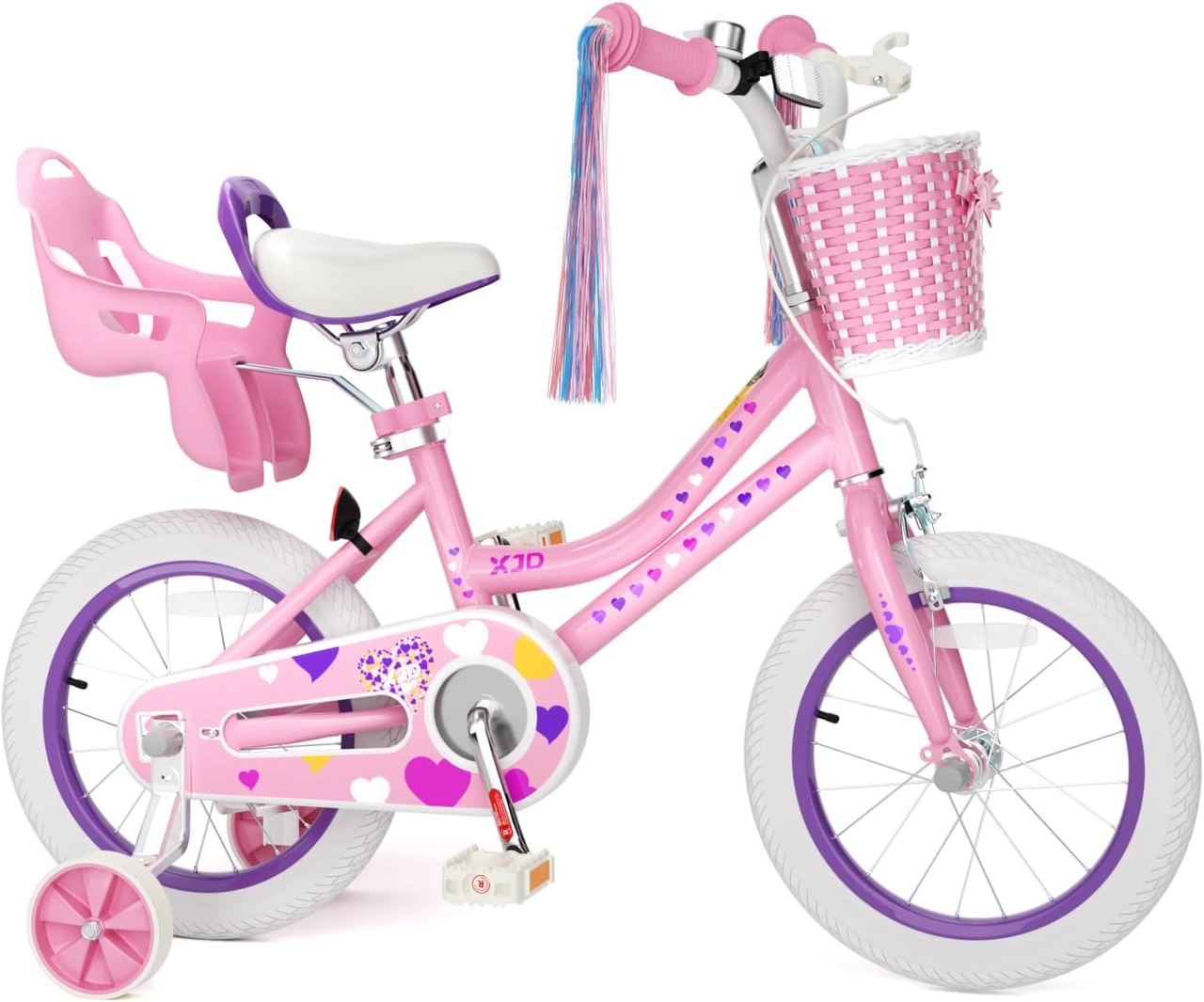 Pink Girls' 12/14/16" Bike by XJD – Basket & Doll Seat
Its exact title highlights 12-, 14-, and 16-inch choices plus a basket and doll seat. Use those wheel labels as comparison points only; readiness depends on measured height, inseam, reach, brake control, and confidence.
Flower Pink XJD Girls Bike with Doll Seat & Basket, Purple XJD Girls' Bike with Doll Seat & Basket, and Pink Girls' 12/14/16" Bike by XJD – Basket & Doll Seat are all size-comparison candidates across those three wheel labels. Their supplied titles also identify basket and doll-seat features, but those features do not establish fit or readiness.
The catalog facts do not provide brake type, weight, load limits, material, assembly details, or training-wheel adjustment instructions. Confirm those matters in the manual or with a qualified bicycle mechanic. Availability of a size label also does not mean it fits a particular child.
Prepare the first rides
Use a properly fitting bicycle helmet every time. It should sit level and be secured with its straps according to the helmet manufacturer’s instructions. Choose a flat, open practice area away from traffic, slopes, obstacles, and crowded paths. Provide close adult supervision.
- Let the child practice getting on, holding the handlebar, and getting off.
- Practice braking before adding continuous pedaling.
- Use short sessions focused on looking ahead, steering gently, and stopping on request.
- Stop if the child cannot maintain control, repeatedly catches a foot, cannot use the brakes, or becomes frightened.
Check the bicycle before each ride and follow its manual for inspection and maintenance. Training wheels should not be improvised, modified, or fitted using guessed hardware or torque values.
Make the decision
A child is ready to ride with training wheels when a correctly sized bike matches their measured height range and they pass the real-world stand-over, reach, braking, steering, and confidence checks. Measure first, compare the appropriate 12-, 14-, or 16-inch option, and choose only the bicycle the child can control today.
Recommended products
-
Save 11%
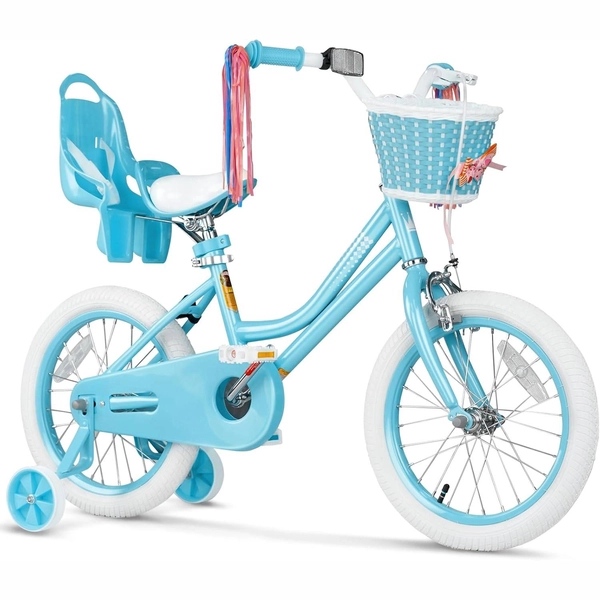
Blue XJD Girls Bike with Training Wheels – 12/14/16 Inch
If you're shopping for a first pedal bike for a daughter roughly 3 to 8 years ol…
Training Wheel Bikes Wheel Size 12 Inch / 14 Inch / 16 Inch Recommended Height 86–122 cm Training Wheels Yes 16 Inch -
Save 12%
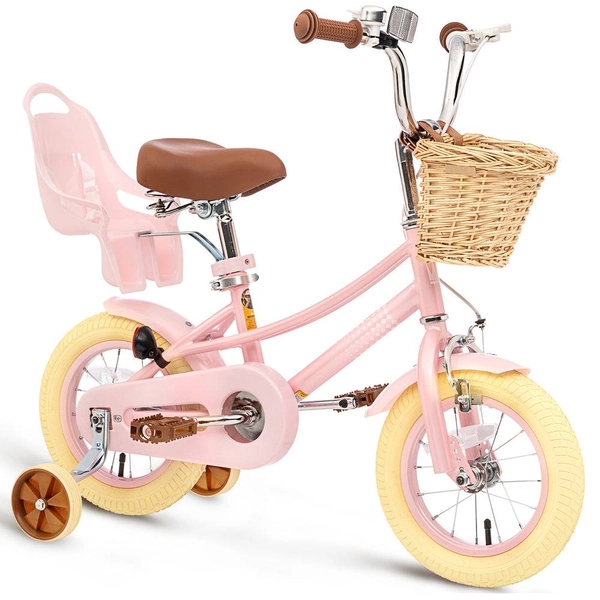
XJD Kids Bike for Girls – Pink, 12/14/16/20 Inch with Training Wheels
The XJD Kids Bike for Girls in Pink is a training-wheel bike built to carry your…
Training Wheel Bikes Wheel Size 12 Inch / 14 Inch / 16 Inch / 20 Inch Recommended Height 86–152 cm Training Wheels Yes 12 Inch -
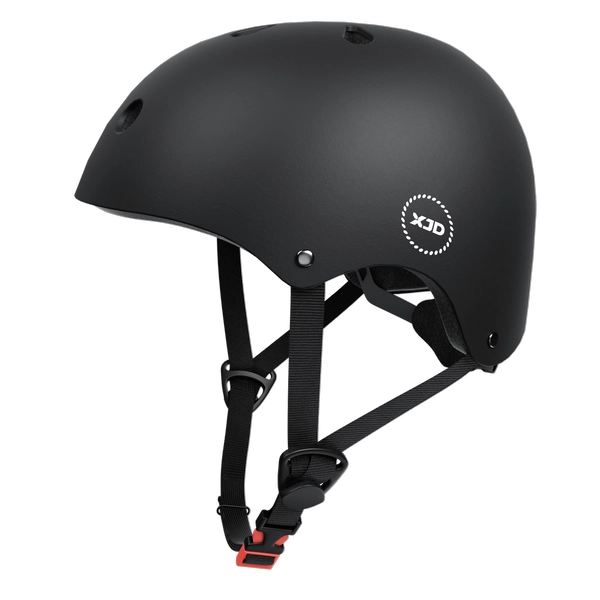
7-in-1 Kids Helmet & Protective Gear Set from XJD – Black or Blue
If you're outfitting one kid (or a couple of siblings) for biking, scootering, o…
Bike Helmets Black / L:21.65"-22.83" / 55-58 cm -
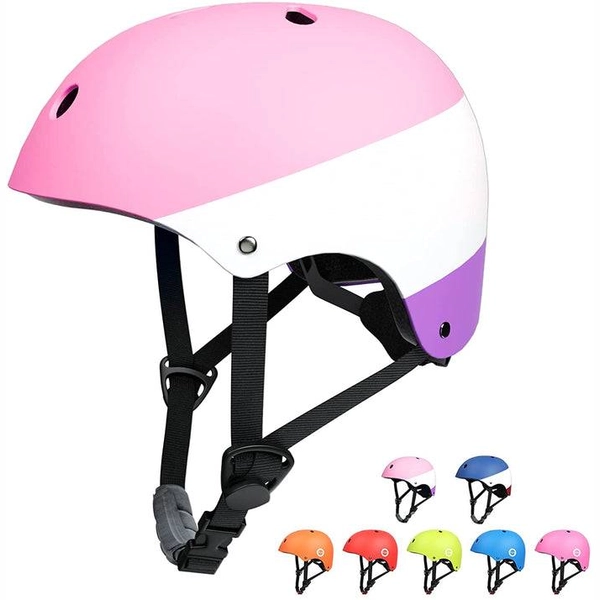
XJD Kids Bike Helmet for Boys & Girls, B White / Pink White
The XJD Kids Bike Helmet covers a wide age range — suggested for ages 2 through …
Bike Helmets Out of stock B White / L:21.65"-22.83" / 55-58 cm