

Are rear mounted baby bike seatssafe
Rear-mounted baby bike seats can be safe only when the seat fits the child and bicycle, is installed exactly as directed, and does not prevent the adult from controlling the bike.
What to measure before choosing a seat
Measure the child’s current weight and height, then compare both with the seat manufacturer’s stated limits. Check any developmental or minimum-use requirements in that exact seat manual; do not estimate readiness from age alone or use a seat after the child exceeds a limit.
Next, identify the bicycle’s exact model, frame size and any rear rack already fitted. Measure the mounting area and the clearance around the rear wheel, saddle, rack and moving parts as directed by the seat manufacturer. Confirm that the mounting system is approved for that bicycle or rack. If either manual is unclear, have a qualified bicycle mechanic check compatibility.
What makes a rear-mounted seat appropriate
- Verified compatibility: The bicycle, rack if used, mounting hardware and child seat must be approved to work together by their manufacturers.
- Correct child fit: The restraint, foot supports and foot protection must adjust to the child as the seat manual describes.
- Secure installation: Use every required fastener, retention device and guard. Follow the manual’s order and torque instructions rather than inventing a procedure.
- Unrestricted bicycle operation: The seat must not interfere with steering, pedalling, braking, cables, the rear wheel or the rider’s normal position.
- Controlled total load: Compare the child, seat and carried items with every applicable limit in the bicycle, rack and seat manuals. The lowest relevant limit governs.
A seat is not appropriate when compatibility is assumed, hardware is missing, the bicycle becomes difficult to mount or balance, the child cannot be secured correctly, or any component exceeds its stated limit.
Compare the complete setup, not just the seat
A rear passenger raises and shifts the bicycle’s load. Before carrying a child, the adult should practise mounting, starting, braking, turning and stopping with an equivalent non-living load only if the seat manual permits that check. Practise away from traffic and stop if the bike feels unstable or braking and steering are not fully controlled.
Inspect the installation before each ride using the seat manufacturer’s checklist. Check for looseness, damaged restraints, wheel or spoke access, and anything hanging near moving parts. Maintenance intervals and fastener torque must come from the exact manuals or a qualified mechanic.
Helmet and ride preparation
The child and adult should wear bicycle helmets appropriate to them. A child’s helmet must fit properly, sit level and have its straps adjusted according to the helmet manufacturer’s instructions. A loose, tilted or incorrectly strapped helmet is not corrected by tightening the seat restraint.
Choose a quiet, predictable route and avoid conditions that reduce control. Never leave a child in the seat while the bicycle is parked or supported only by a stand. Load and unload where the adult can hold the bicycle securely, following the seat maker’s sequence.
How the supplied XBikes products relate
None of the supplied catalog products is identified as a rear-mounted baby seat or as a bicycle approved to carry one. They therefore cannot establish seat compatibility. They are useful only as future independent-rider comparison points: their wheel sizes show when measuring the child for their own bicycle may become relevant.
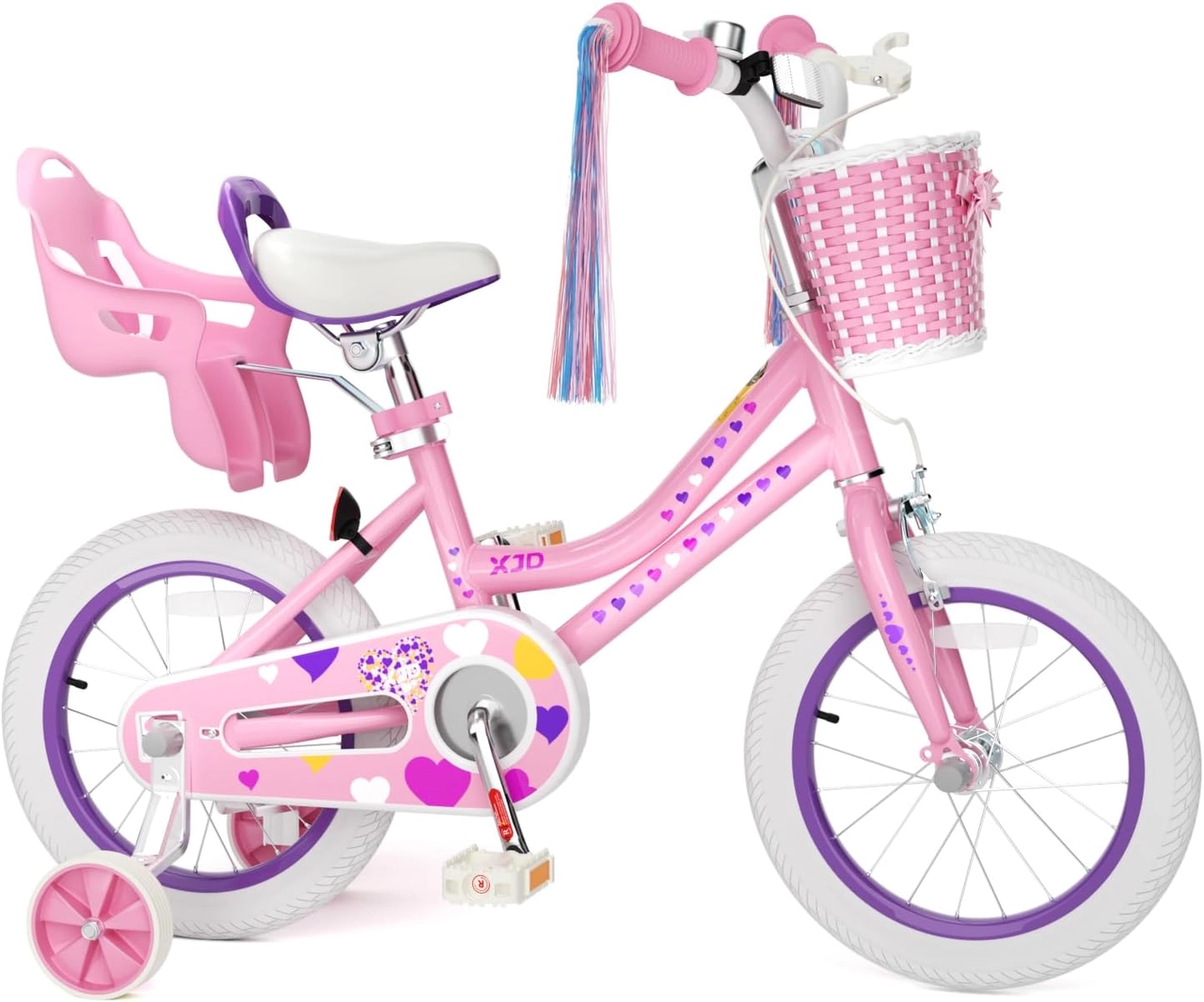 Pink Girls' 12/14/16" Bike by XJD – Basket & Doll Seat
A 12-, 14- or 16-inch training-wheel bike offered as a future independent-rider comparison. Its titled doll seat does not establish suitability for carrying a child passenger.
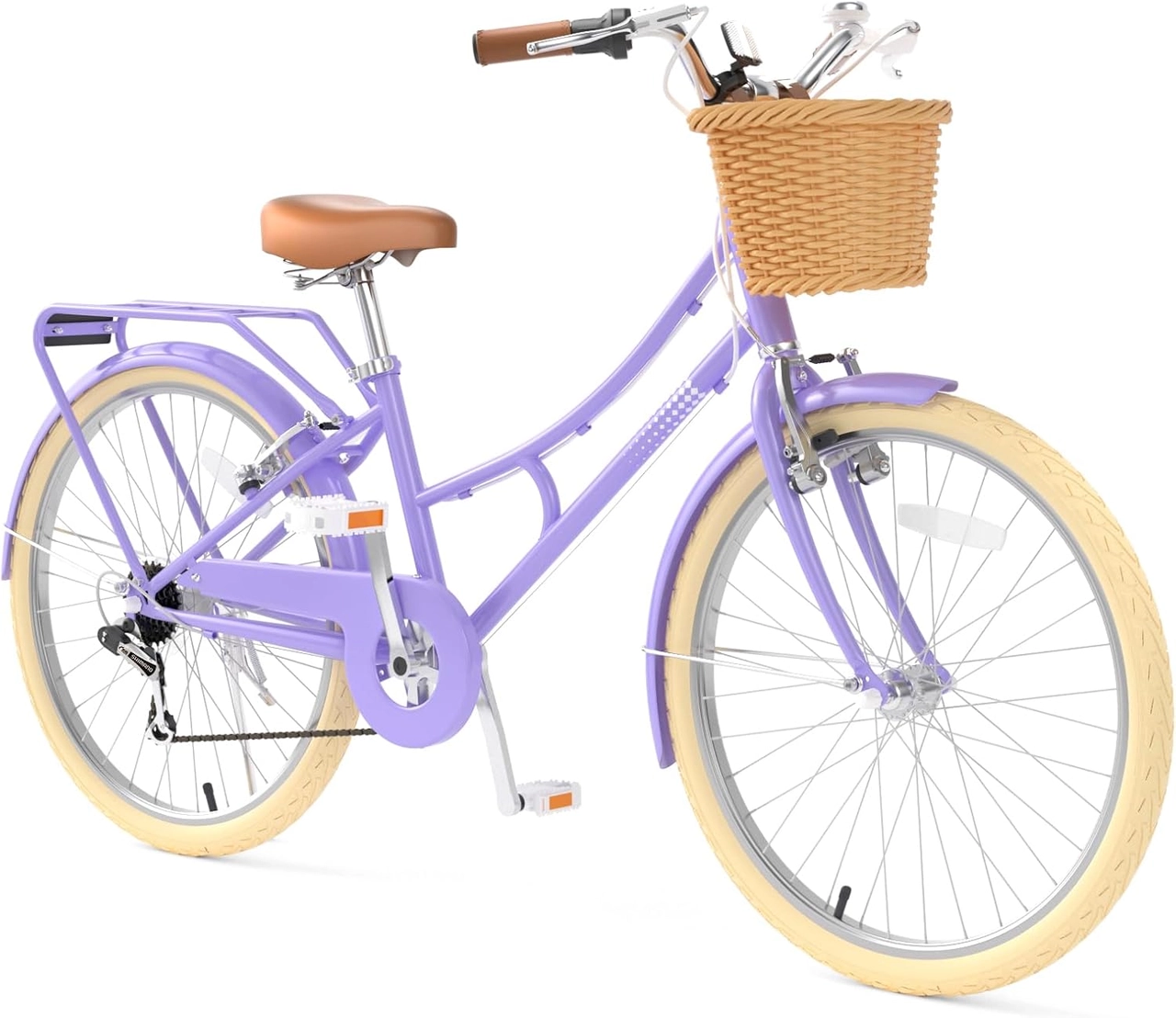 24-Inch Purple XJD Beach Cruiser Bike with U-Brake
A 24-inch beach cruiser comparison for an independently riding child within the supplied fit starting point, subject to an individual fit check; no rear child-seat compatibility is supplied.
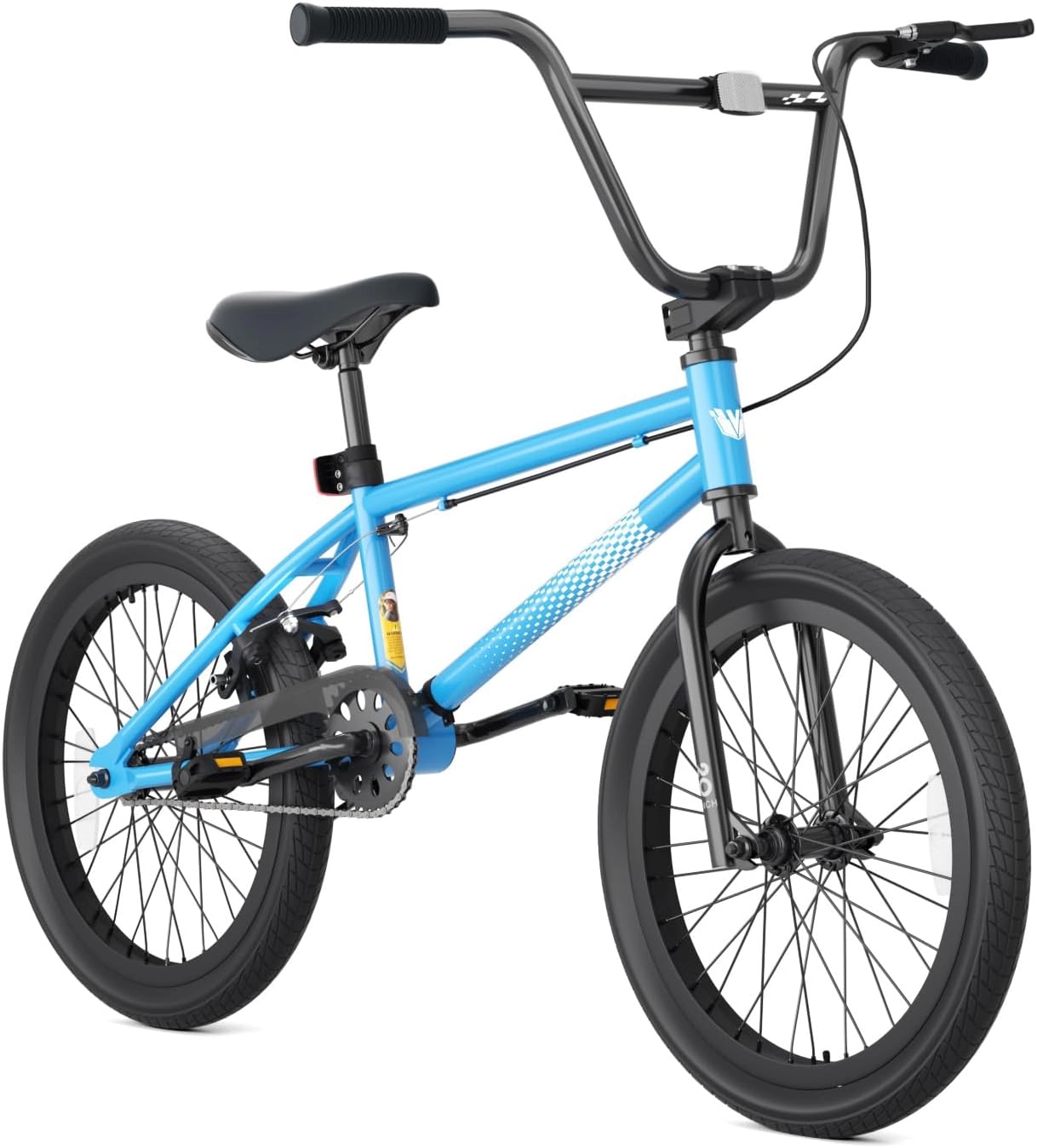 Blue XJD Freestyle BMX Bike, 20-Inch – No Pegs
A 20-inch kids’ BMX comparison for an independent rider. The catalog facts do not identify it as compatible with a rear-mounted baby seat.
Pink Girls' 12/14/16" Bike by XJD – Basket & Doll Seat is offered in 12 Inch, 14 Inch and 16 Inch labels. XBikes’ starting points are 34–40 inches for 12 Inch, 37–45 inches for 14 Inch and 40–48 inches for 16 Inch. Its doll seat is part of the exact catalog title; it is not evidence of passenger-carrying suitability.
Blue XJD Freestyle BMX Bike, 20-Inch – No Pegs is a 20-inch kids’ BMX comparison. The XBikes starting range is 48–60 inches. 24-Inch Purple XJD Beach Cruiser Bike with U-Brake is a 24-inch beach cruiser comparison, with a 54–64-inch starting range. Neither product is described as a rear child-seat carrier.
For any child moving to an independent bicycle, measure height first, then check inseam, stand-over clearance, reach, brake control and confidence on the actual bike. Have the child try it; do not choose an oversized bicycle merely for growth. Ages are only starting points, never proof of fit.
The decision to make now
Use a rear-mounted baby seat only after the child’s measurements, the seat limits, the bicycle or rack compatibility, the complete load and the adult’s control all check out. If one item cannot be verified from the exact manuals, pause the ride and ask a qualified bicycle mechanic. Consider the three supplied bicycles only when the child is ready to ride independently and individually fits the relevant wheel size.
Bikes for your next adventure
-

Kids Bike Helmet by XJD for Boys & Girls – Black, Blue, Green, Pink, Purple
The XJD Kids Bike Helmet covers a wide 2-to-8-year age range thanks to two head-…$59.99
-

Kids Bike Helmet by XJD for Girls – Pink
The XJD Kids Bike Helmet in Pink is a lightweight multi-sport helmet for girls r…$59.99
$99 -

XJD Kids Bike for Girls – Pink, 12/14/16/20 Inch with Training Wheels
The XJD Kids Bike for Girls in Pink is a training-wheel bike built to carry your…$139
$159