

Can you remove hand brakes from kids bikes
You can remove hand brakes from some kids’ bikes, but you should not do so merely because a child struggles to reach or use them.
When removal is—and is not—appropriate
A hand brake is part of the bicycle’s intended stopping system. Removing it may leave the rider without sufficient braking control or create a configuration the manufacturer did not approve. Keep it installed unless the exact bicycle manual permits removal and a qualified bicycle mechanic confirms that the completed bike has an appropriate, fully functioning braking system.
Do not assume that another brake is present or that it can replace the hand brake. Check the actual bike and its manual. If brake construction, compatibility, adjustment limits or required torque is not documented, have a qualified mechanic inspect the bicycle rather than experimenting.
If the child cannot operate the lever comfortably, removal does not solve the underlying problem. The bicycle may be too large, the reach may be unsuitable, the lever may need an approved adjustment, or the child may need more practice in a controlled area.
Measure before changing the brake
Measure the child’s standing height and inseam while they wear the shoes normally used for riding. Then have the child try the bicycle rather than selecting it from age alone. The rider should be able to stand over it, reach the controls without stretching, steer confidently and operate the brake through its usable range while maintaining a secure grip.
Compare these observations:
- Height and inseam: Do the frame and wheel size allow a comfortable stand-over position?
- Reach: Can the child hold the handlebar naturally without locking the elbows or leaning excessively?
- Brake access: Can the child reach the lever from a normal riding grip?
- Brake control: Can the child apply and release it deliberately without losing steering control?
- Confidence: Can the child start, steer, slow and stop predictably in a controlled practice area?
Compare the wheel-size starting points
Use measured height first; the age ranges below are only starting points. An individual fit check still decides whether the rider can control the particular bicycle and its brakes.
| Wheel size | Age starting point | Rider height |
|---|---|---|
| 12 Inch | 3–4 | 34–40 in / 86–102 cm |
| 14 Inch | 3–6 | 37–45 in / 94–114 cm |
| 16 Inch | 4–7 | 40–48 in / 102–122 cm |
| 18 Inch | 5–9 | 43–52 in / 109–132 cm |
| 20 Inch | 7–12 | 48–60 in / 122–152 cm |
| 24 Inch | 10–14 | 54–64 in / 137–163 cm |
| 26 Inch | Youth and adults | Over 60 in / 153 cm |
Do not buy an oversized bike for future growth. A size that makes the brake lever difficult to reach or the bicycle difficult to control is not corrected by taking the brake away.
What to do when the lever is hard to use
- Record the child’s height and inseam, then compare them with the wheel-size starting points.
- With the bicycle stationary and supported, observe stand-over, seated reach and access to the lever.
- Consult the exact product manual for permitted brake-lever adjustments, maintenance instructions and required torque.
- Ask a qualified bicycle mechanic to assess lever reach, braking operation and whether the bicycle fits the child.
- After any approved work, let the child practise starting, slowing and stopping in a controlled area before ordinary riding.
Never loosen, reroute or remove brake parts based on a generic procedure. Brake designs differ, so the bicycle’s manual and a mechanic’s inspection should govern the work.
How the supplied bikes help with the comparison
These catalog options show relevant wheel-size and brake-control comparisons: a 12/14/16-inch training-wheel model, a 20-inch BMX model and a 24-inch cruiser explicitly identified as having a U-brake. They help you compare fit stages, but their titles alone do not establish whether a particular child can reach or operate the controls.
 Pink Girls' 12/14/16" Bike by XJD – Basket & Doll Seat
Available in 12, 14 and 16 Inch sizes, this training-wheel bike supports size-stage comparisons. Its supplied facts do not identify a brake type, so check the exact manual and the child’s individual fit.
 24-Inch Purple XJD Beach Cruiser Bike with U-Brake
This 24-inch beach cruiser is explicitly titled with a U-brake, making brake reach and control directly relevant. Use the 24-inch height starting point, then confirm individual fit and follow its exact manual.
 Blue XJD Freestyle BMX Bike, 20-Inch – No Pegs
This 20-inch kids' BMX bike supplies a useful wheel-size comparison for riders in the stated 20-inch starting range. No brake type is supplied, so do not assume its braking configuration.
Pink Girls' 12/14/16" Bike by XJD – Basket & Doll Seat is offered in 12 Inch, 14 Inch and 16 Inch sizes in the Training Wheel Bikes category. Compare the child’s measured height with the matching size range, then check stand-over, reach and brake control on the actual bicycle. No brake type is supplied here, so consult its exact manual.
Blue XJD Freestyle BMX Bike, 20-Inch – No Pegs provides a 20-inch comparison point in the Kids' BMX Bikes category. The XBikes starting range is ages 7–12 and heights 48–60 in / 122–152 cm, but measured fit and control take priority. Its supplied facts do not identify a brake type.
24-Inch Purple XJD Beach Cruiser Bike with U-Brake is a 24-inch Beach Cruiser Bike whose title identifies a U-brake. The 24-inch starting range is ages 10–14 and heights 54–64 in / 137–163 cm. Confirm that the rider can reach and control that brake; do not infer removal instructions from the title.
Make the decision safely
Keep the hand brake if the manual does not expressly support the proposed configuration or if a mechanic cannot confirm suitable braking afterward. If reach is the problem, reassess fit and approved adjustment before considering removal. Finally, use a properly fitting bicycle helmet that sits level, with its straps arranged according to the helmet manufacturer’s instructions.
The next step is specific: measure the child, test brake reach on the exact bike, read its manual and obtain a mechanic’s confirmation before removing any hand-brake component.
Bikes for your next adventure
-
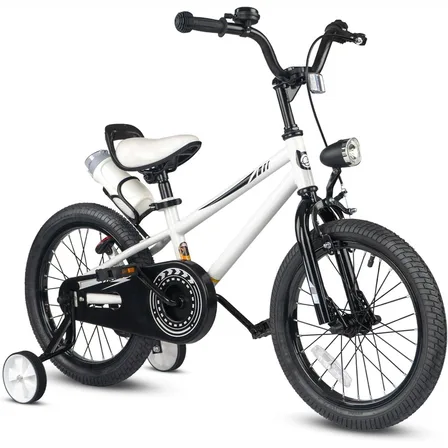
XJD Kids' Training Wheel Bike for Boys & Girls, 12/14/16 Inch – White
The XJD kids' training wheel bike in White is made for riders ages 3–8 (roughly …$169
$199 -
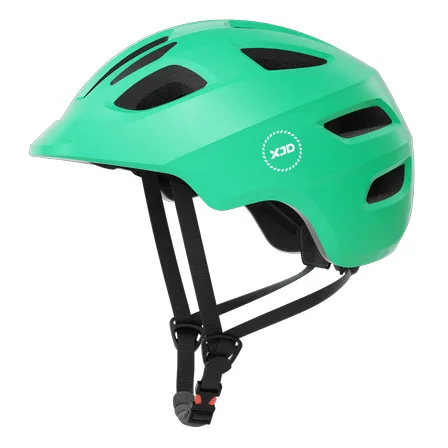
Green XJD Kids Bike Helmet for Boys & Girls
The Green XJD Kids Bike Helmet is a lightweight multi-sport helmet for toddlers …$59.99
$99 -

Kids Bike Helmet by XJD for Boys & Girls – Black, Blue, Green, Pink, Purple
The XJD Kids Bike Helmet covers a wide 2-to-8-year age range thanks to two head-…$59.99