

What age is a 18 inch bike for
An 18-inch bike is generally for children ages 5–9 who are 43–52 inches (109–132 cm) tall. Age is only a starting point: measure the child and confirm that the bicycle fits before buying.
Start with height, then check inseam
Measure the child without shoes, standing straight against a wall. Compare that height with the 18-inch starting range of 43–52 inches (109–132 cm). A child outside that range should be compared with another wheel size rather than placed on an 18-inch bike simply because of age.
Next, measure inseam from the floor to the crotch while the child stands with feet slightly apart. The supplied sizing standard does not give a numerical inseam range, so use this measurement to assess the actual bicycle: the child needs adequate stand-over clearance and must be able to get on, stop and dismount comfortably. Bicycle frames and saddle positions can differ even when wheel sizes match.
How an 18-inch bike compares with nearby sizes
| Wheel size | Age starting point | Rider-height starting point |
|---|---|---|
| 16 Inch | 4–7 | 40–48 in / 102–122 cm |
| 18 Inch | 5–9 | 43–52 in / 109–132 cm |
| 20 Inch | 7–12 | 48–60 in / 122–152 cm |
The overlapping ranges are intentional starting points, not proof that two sizes fit equally. For example, a rider who is 48 inches tall appears in all three height ranges. That child still needs to try the specific bicycle so a parent can compare stand-over clearance, reach, braking and confidence.
Do not move up to a 20-inch bike solely to leave growing room. An oversized bicycle can make starting, steering and stopping harder. Likewise, do not keep a confident child on a cramped 16-inch bicycle merely because the age range still includes them.
What to check during an individual fit test
Have the child try the bicycle in a controlled area with adult supervision. Clothing and footwear should be similar to what they will normally wear while riding.
- Stand-over: Ask the child to straddle the bicycle with feet flat on the ground. There should be comfortable clearance rather than contact or a forced tiptoe stance.
- Reach: With hands on the controls, the child should sit naturally without stretching, locking the arms or crowding the knees.
- Brake control: Confirm that the child can reach and operate the bicycle's braking controls confidently while maintaining steering control.
- Starting and stopping: The rider should be able to set off, steer at low speed, stop predictably and put a foot down without panic.
- Confidence: Watch the child rather than coaching them through an unsuitable fit. Hesitation caused by excessive height or reach is a reason to compare another size.
Follow the exact product manual for assembly, adjustment, maintenance, compatibility and load limits. If the required setup is unclear, use a qualified bicycle mechanic rather than guessing at a procedure or torque.
How the supplied XBikes products relate
Neither supplied catalog product has an 18-inch option. They are nearest-size comparison points, not substitutes for an 18-inch bicycle. Their listed wheel sizes can help you compare the child against the adjacent XBikes height ranges before deciding what to try.
 Black XJD Kids' BMX Bicycle with Training Wheels
Available in 12 Inch, 14 Inch and 16 Inch sizes. Its 16 Inch option is the nearest supplied comparison below an 18-inch bike, but it requires its own individual fit check.
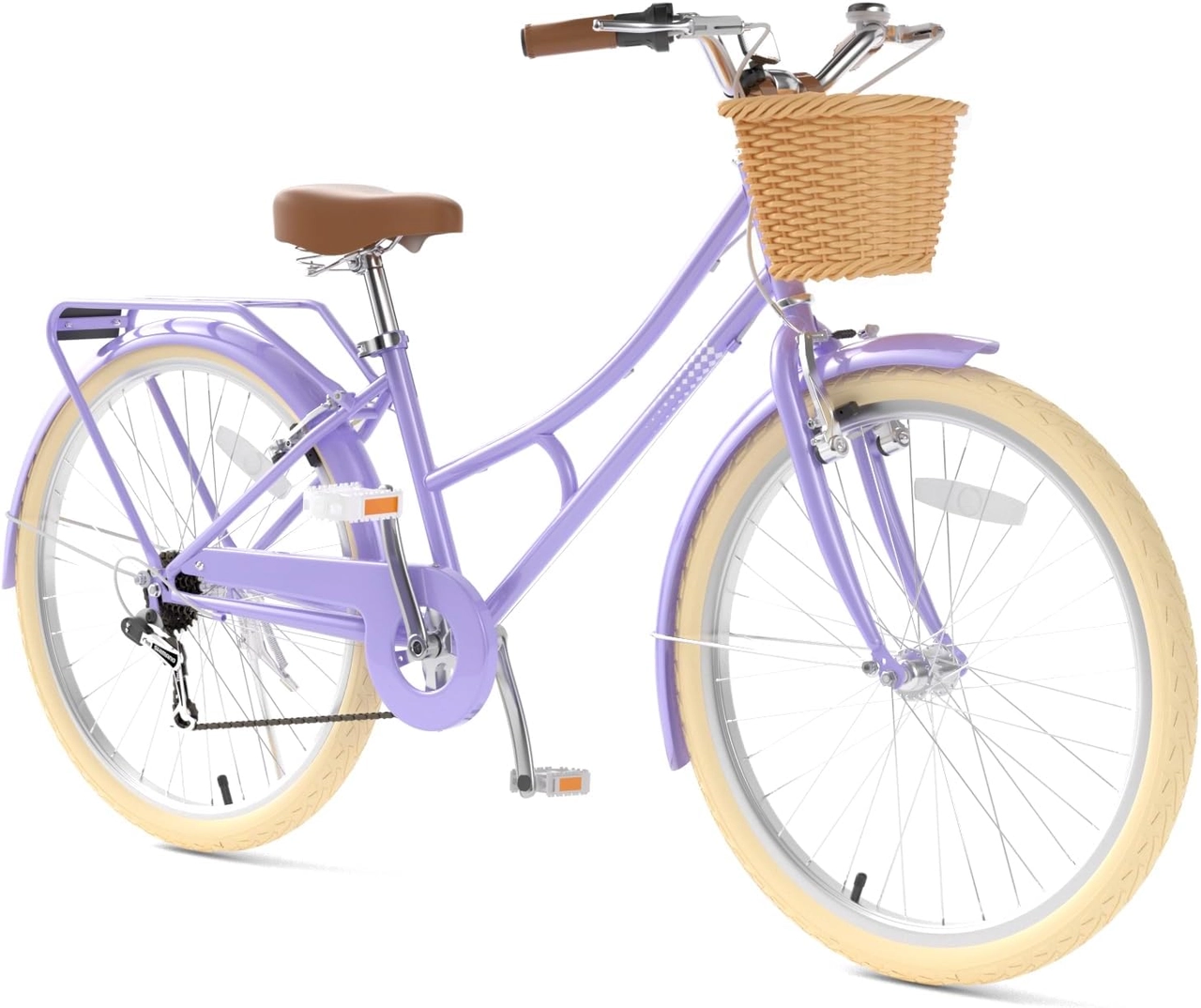 26-Inch XJD Beach Cruiser Bike for Girls – Purple, V-Brake
Its supplied 20 Inch option is the nearest catalog comparison above 18 inches; 24 Inch and 26 Inch options are also listed. None is an 18-inch substitute, so compare fit individually.
The Black XJD Kids' BMX Bicycle with Training Wheels is listed in 12 Inch, 14 Inch and 16 Inch options. Its 16 Inch option is the closest supplied size below 18 inches. The 16-inch starting point is ages 4–7 and a rider height of 40–48 inches (102–122 cm), but the individual fit checks above still decide whether it is appropriate.
The 26-Inch XJD Beach Cruiser Bike for Girls – Purple, V-Brake has supplied options in 20 Inch, 24 Inch and 26 Inch, across its listed colors. Its 20 Inch option is the closest supplied size above 18 inches. The 20-inch starting point is ages 7–12 and 48–60 inches (122–152 cm); it should not be treated as equivalent to an 18-inch bike or chosen just for future growth.
Make the 18-inch decision
An 18-inch bicycle is the size to try when the child is around ages 5–9 and measures 43–52 inches (109–132 cm). If their height falls in an overlap, compare the actual 16-, 18- and 20-inch candidates as relevant, then choose the one that provides comfortable stand-over, natural reach, reliable brake control and confident starts and stops today.
Finish the setup with a properly fitting bicycle helmet. It should sit level, fit correctly and have its straps adjusted according to the helmet manufacturer's instructions. The next step is therefore simple: record the child's height and inseam, arrange an in-person fit check on an 18-inch bike, and move to a neighboring size only if the child's measured fit and control support that decision.
Bikes for your next adventure
-
XJD Kids Beach Cruiser Bicycle, Rear Rack & V-Brakes, Mint Green
The XJD Beach Cruiser in Mint Green is a geared, multi-speed cruiser bike for ol…$179.99
$209.99 -
24-Inch Purple XJD Beach Cruiser Bike with U-Brake
The XJD 24-Inch Purple Beach Cruiser is built for girls and young women roughly …$159.99
-
Blue XJD Freestyle BMX Bike, 20-Inch – No Pegs
The XJD 20-Inch Blue Freestyle BMX is an entry-level BMX bike for boys and girls…$189.99