

What is the best bike for a 13 year old
For most 13-year-olds, start with a 24-inch bike; consider 26 inches only when the rider is over 60 in (153 cm) and passes a hands-on fit check.
Measure first, then choose the wheel size
Age narrows the search, but it cannot confirm fit. Measure the rider’s height without shoes, then compare it with these XBikes starting points. If the measurement falls near a boundary, try both neighboring sizes rather than guessing.
| Wheel size | XBikes starting point | Relevance at age 13 |
|---|---|---|
| 20 Inch | Ages 7–12; 48–60 in / 122–152 cm | Usually below the age starting point, but potentially worth checking for a shorter rider. |
| 24 Inch | Ages 10–14; 54–64 in / 137–163 cm | The main starting point for many 13-year-olds. |
| 26 Inch | Youth and adults over 60 in / 153 cm | A candidate only when the measured height qualifies and the rider can control it. |
Also measure inseam for the in-person stand-over check. The purpose is not to turn one measurement into a guaranteed size; it is to identify which bicycle or bicycles the child should actually try.
What a successful fit looks like
Have the 13-year-old sit on and stand over the complete bicycle. They should be able to mount and dismount without struggling, stand over it comfortably, and maintain balance during starts and stops. Their position should allow an easy reach to the handlebar without excessive stretching or crowding.
Ask the rider to place both hands in the normal riding position and operate the brakes. They need to reach and apply the controls reliably while maintaining steering control. Brake reach and control matter more than the age printed beside a wheel size.
Current confidence matters too. A taller but hesitant rider may control one candidate better than another, while a confident rider still should not be moved onto a bicycle that is too large. Do not buy an oversized bike merely to leave growing room.
Compare the relevant XBikes options
The supplied cruiser listings provide useful 20-, 24-, and 26-inch comparison options around the likely fit range. They help a parent compare the central 24-inch starting point with adjacent sizes while still requiring an individual fit check.
 XJD Pink Beach Cruiser for Girls – Rear Rack & V-Brake
Offers 20 Inch, 24 Inch, and 26 Inch SKU labels, making it useful for comparing adjacent starting sizes after measuring the 13-year-old and completing an individual fit check.
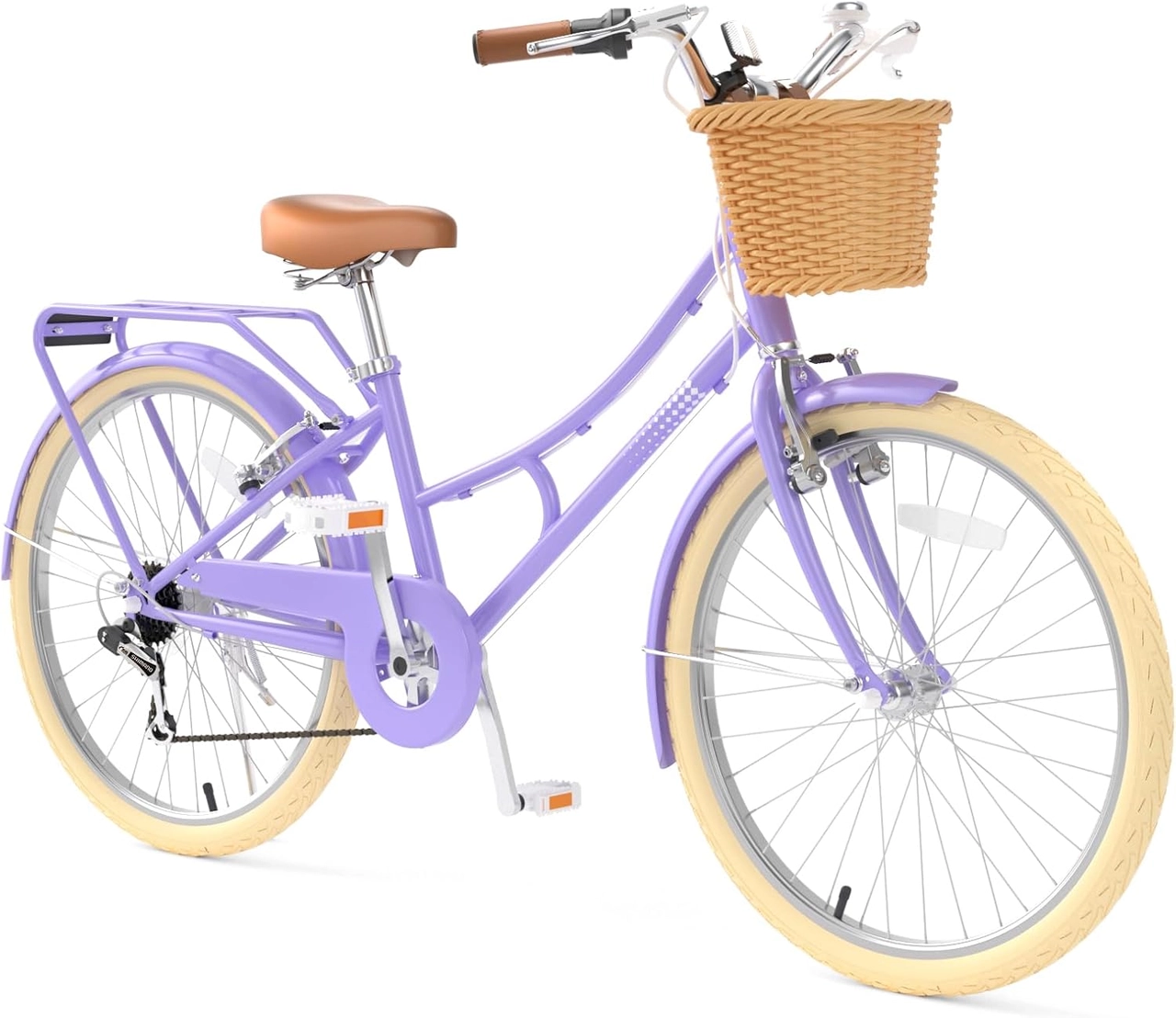 24-Inch Purple XJD Beach Cruiser Bike with U-Brake
This 24-inch beach cruiser aligns with the XBikes 24-inch starting range for ages 10–14 and heights 54–64 inches, but still requires stand-over, reach, brake-control, and confidence checks.
XJD Pink Beach Cruiser for Girls – Rear Rack & V-Brake has available SKU labels of 20 Inch, 24 Inch, and 26 Inch. That makes the listing relevant when measurements suggest comparing adjacent wheel sizes. Select a label only after confirming that the corresponding bicycle fits; the labels alone do not establish fit.
24-Inch Purple XJD Beach Cruiser Bike with U-Brake is explicitly a 24-inch model, matching the XBikes starting range of ages 10–14 and heights 54–64 in (137–163 cm). It is therefore a relevant candidate for a measured rider in that range, but it is not automatically suitable for every 13-year-old.
These are beach cruiser bikes, so first confirm that this bicycle category suits the intended riding. The supplied facts do not establish weight, material, gearing, load limits, or other equipment details. Consult the exact product information and manual rather than assuming those features.
What to compare during a trial
- Stand-over: Check that the rider can stand over the bicycle comfortably and get on and off without awkward movement.
- Reach: Look for relaxed control of the handlebar rather than locked arms, crowding, or a pronounced forward stretch.
- Braking: Confirm that the rider can reach and operate the brake controls confidently from the normal hand position.
- Low-speed control: In a suitable traffic-free area, check starting, steering, stopping, and putting a foot down under close adult supervision.
- Confidence: Reject a size that makes the child tense or hesitant even when the height chart appears to allow it.
If the bicycle needs assembly, adjustment, maintenance, or a compatibility decision, follow its exact product manual or use a qualified bicycle mechanic. Do not improvise torque settings or procedures.
Complete the safety check
A properly fitting bicycle helmet is essential. It should sit level and use its straps according to the helmet manufacturer’s instructions. Check the helmet on the child rather than relying only on its labeled size.
Before riding, verify that the bicycle is assembled and operating as its manual specifies. Choose a controlled practice area appropriate to the rider’s skill, especially when changing wheel size or bicycle style.
The decision for a 13-year-old
Measure height and inseam now. Begin with 24 inches if the rider is 54–64 in (137–163 cm); add a 26-inch comparison only above 60 in (153 cm), or check 20 inches for a shorter rider near its stated range. Then choose the candidate that passes stand-over, reach, brake-control, low-speed-control, and confidence checks—never the largest bike the child may eventually grow into.
Bikes for your next adventure
-
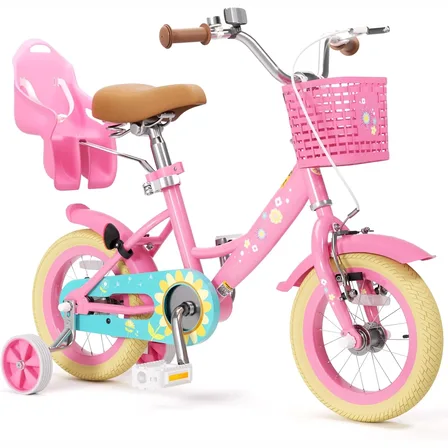
Flower Pink XJD Girls Bike with Doll Seat & Basket
The XJD Flower Pink girls' bike is made for riders 71–122 cm tall (roughly ages …$69.99
-

Light Purple XJD Toddler Bike Helmet, Adjustable, Size XS (46–51 cm)
This Light Purple XJD toddler bike helmet is made for the smallest riders — the …$20.39
-

Black XJD Toddler Bike Helmet, Adjustable – Kids' Protective Helmet
The XJD Toddler Bike Helmet in black is an adjustable protective helmet for kids…$20.39