

What size bike fram for 11 year old
For most 11-year-olds, start by comparing a 20-inch and 24-inch bike, using measured height—not age—to decide. XBikes places 20-inch bikes at 48–60 in (122–152 cm) and 24-inch bikes at 54–64 in (137–163 cm); riders over 60 in (153 cm) can also begin checking 26-inch bikes.
Measure the rider before choosing
Measure your child in the shoes they normally wear for riding. Record total height, then measure inseam from the floor to the crotch while the child stands upright. Height identifies the useful wheel-size starting points; inseam helps you judge stand-over clearance on the actual bicycle.
Age eleven falls within both the XBikes 20-inch range of ages 7–12 and the 24-inch range of ages 10–14. That overlap is why age alone cannot settle the choice. Body proportions, reach, brake control and current confidence all matter.
Compare the relevant wheel sizes
| Wheel size | XBikes starting range | What it means for an 11-year-old |
|---|---|---|
| 20 Inch | Ages 7–12; 48–60 in / 122–152 cm | Check when the measured height falls in this range, especially if the rider needs an easier-to-control starting point. |
| 24 Inch | Ages 10–14; 54–64 in / 137–163 cm | Check when the measured height falls in this range and the child can comfortably manage the complete fit test. |
| 26 Inch | Youth and adults over 60 in / 153 cm | Consider only when the rider is over this height threshold and can control the actual bicycle. |
A child between 54 and 60 inches (137 and 152 cm) sits in the overlap between 20-inch and 24-inch starting ranges. Do not automatically select the larger option for longer use. Compare both in person and favor the bicycle the child can mount, balance, steer and stop confidently now.
Perform a fit check on the actual bike
Have the child try each candidate rather than relying on a label. With the child standing over the bicycle, confirm there is comfortable clearance and no contact that makes mounting or stopping awkward. Then place the child in the riding position and check that the handlebars are reachable without an extreme stretch or cramped posture.
Ask the rider to demonstrate the controls. They should be able to grip the handlebar securely, reach and operate the brakes, steer at low speed, start and stop without struggling, and put a foot down promptly. A size that matches the height table still fails the fit check if reach or control is poor.
How the supplied bikes help with comparison
The catalog provides both 20-inch and 24-inch options, the two wheel sizes most likely to require comparison for an 11-year-old. It also includes a multi-size model whose 20-inch version can serve as another relevant candidate. These are options to try against the measurements and control checks, not proof of fit by themselves.
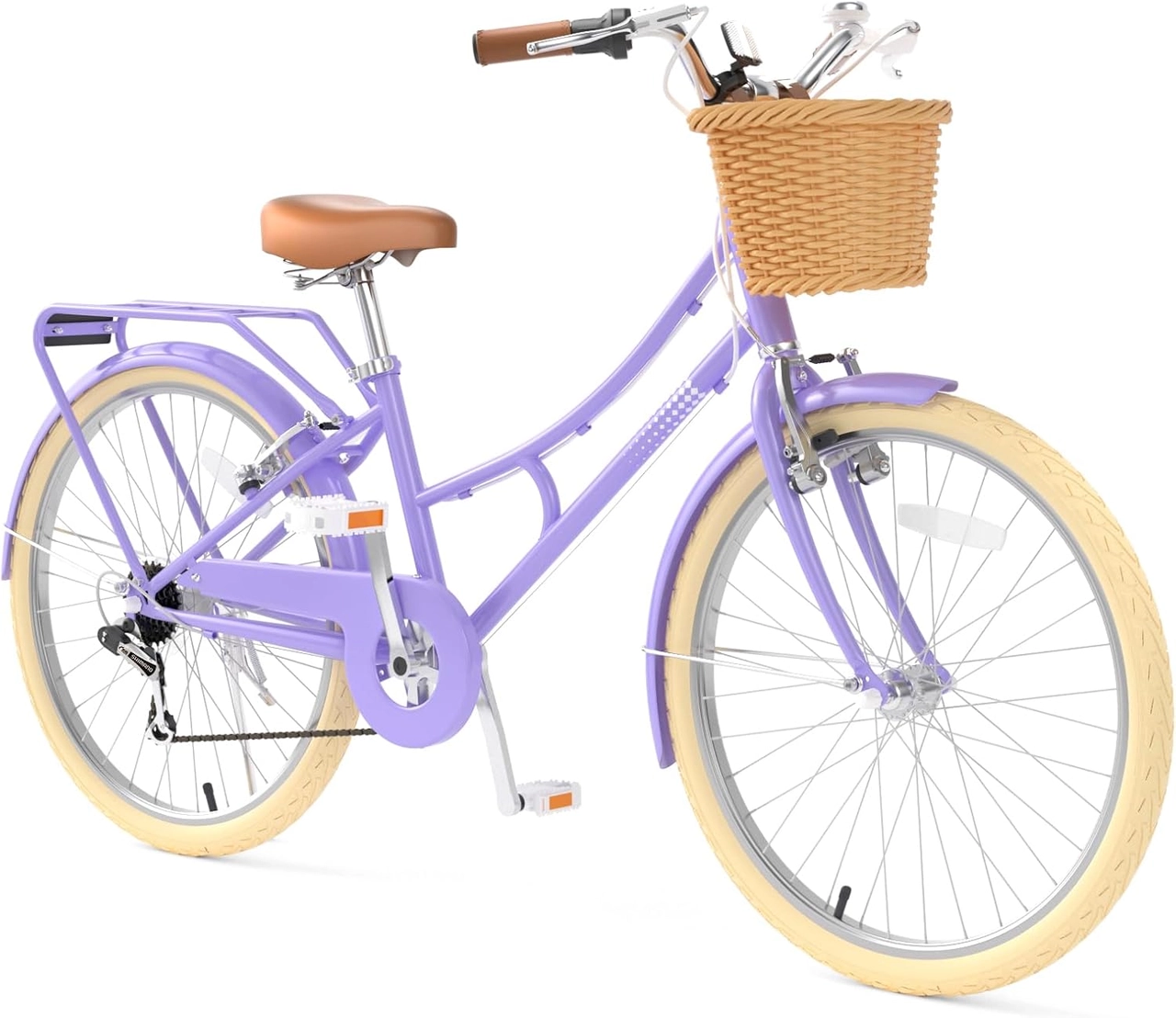 24-Inch Purple XJD Beach Cruiser Bike with U-Brake
A supplied 24-inch comparison for riders measuring within the XBikes 54–64 in (137–163 cm) starting range; confirm stand-over, reach and U-brake control in person.
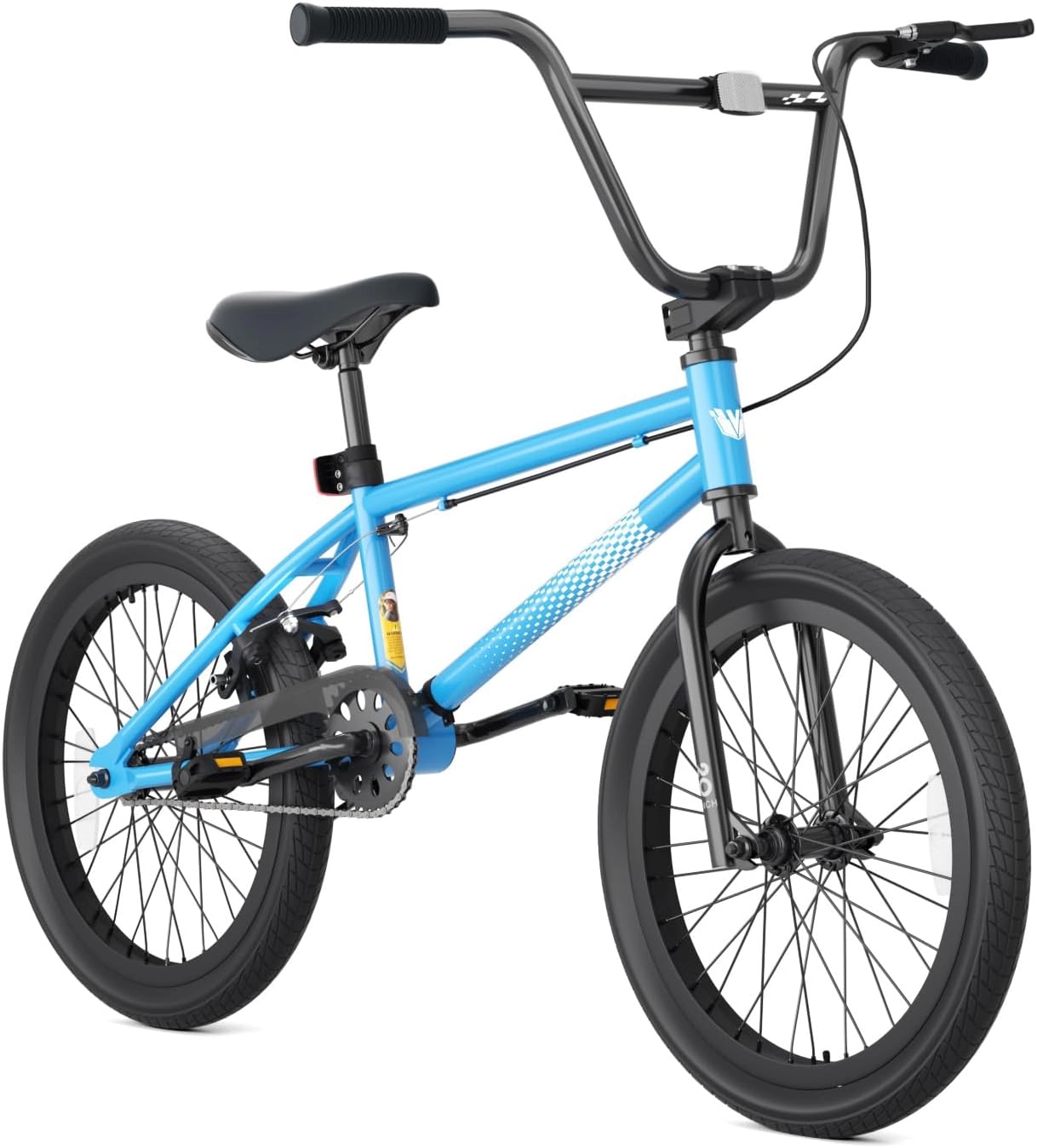 Blue XJD Freestyle BMX Bike, 20-Inch – No Pegs
A supplied 20-inch Kids' BMX Bike comparison for the XBikes 48–60 in (122–152 cm) starting range. Its catalog title specifies that it has no pegs.
 Pink 12/14/16/20" XJD Girls Bike with Training Wheels & Basket
This model offers 12-, 14-, 16- and 20-inch labels. For an 11-year-old, its 20-inch option is the relevant comparison when measured height and an individual fit check support it.
The 24-Inch Purple XJD Beach Cruiser Bike with U-Brake is the supplied 24-inch comparison. Its wheel size corresponds to the XBikes 54–64 in (137–163 cm) starting range, but the rider must still verify stand-over, reach and U-brake operation.
The Blue XJD Freestyle BMX Bike, 20-Inch – No Pegs supplies a 20-inch comparison in the Kids' BMX Bikes category. “No Pegs” is part of its catalog description; it does not change the need to evaluate the individual rider’s height, inseam and control.
The Pink 12/14/16/20" XJD Girls Bike with Training Wheels & Basket is offered in 12-, 14-, 16- and 20-inch labels. For this question, only its 20-inch choice aligns with the likely 11-year-old comparison range. The smaller labels correspond to younger and shorter XBikes starting ranges and should not be chosen merely from the product title.
Do not size up for growth
An oversized bicycle can make mounting, balancing, steering and braking harder. The American Academy of Pediatrics guidance supports trying the bicycle, checking stand-over and brake reach, and avoiding an oversized purchase intended solely for future growth. If the child cannot operate the bike comfortably today, move to the smaller appropriate candidate and check again.
For assembly, adjustments, compatibility, load limits, maintenance and torque requirements, follow the exact product manual or ask a qualified bicycle mechanic. Do not improvise settings from a different model.
Make the final 11-year-old size decision
- Measure height and inseam in riding shoes.
- Use height to shortlist 20, 24 or, above 60 inches (153 cm), possibly 26 inches.
- Try every shortlisted bicycle and compare stand-over, reach, braking, starts, stops and low-speed steering.
- Choose the size the child controls confidently now, not one intended for later growth.
Before riding, add a properly fitting bicycle helmet. It should sit level, with its straps used according to the helmet manufacturer’s instructions. For an 11-year-old, the decision is complete only when the measured range and the hands-on fit check agree.
Bikes for your next adventure
-

Light Purple XJD Toddler Bike Helmet, Adjustable, Size XS (46–51 cm)
This Light Purple XJD toddler bike helmet is made for the smallest riders — the …$20.39
-

Black XJD Toddler Bike Helmet, Adjustable – Kids' Protective Helmet
The XJD Toddler Bike Helmet in black is an adjustable protective helmet for kids…$20.39
-

XJD Girls Bike for Kids Ages 3-8, 12/14/16 Inch with Training Wheels – Purple
The XJD Girls Bike in Purple is a training-wheel bicycle for kids ages 3 to 8, f…$149
$169